
U.S. Tariff Adjustments on Scotch Whisky: Implications for the Global Spirits Market and Bourbon Producers


 Aime Summary
The U.S. tariff adjustments on Scotch whisky, announced in April 2025, have sent shockwaves through the global spirits market. President Donald Trump's 10% import duty on UK goods-including Scotch whisky-threatened to destabilize a trade relationship worth £971 million in 2024 for Scotland alone. While a U.S. trade court ruling in May 2025 temporarily suspended the tariff, the broader uncertainty has forced U.S. bourbon producers to recalibrate their strategies. This analysis explores how bourbon companies are navigating this volatile landscape, leveraging market diversification, diplomatic lobbying, and supply chain advantages to mitigate risks and seize opportunities.
Strategic Market Diversification: Targeting Emerging Economies
The bourbon industry has accelerated its pivot to emerging markets, particularly India, where import duties on American whiskey were reduced from 150% to 100% in early 2025, per a whisky industry roundup. This concession, secured through high-level diplomatic negotiations, has opened a critical gateway for U.S. distillers. India, the world's largest spirits market by volume, now represents a strategic frontier for bourbon producers seeking to offset potential losses in traditional markets like the UK and EU.
This shift is not without precedent. The Scotch whisky industry's reliance on U.S. bourbon barrels-worth $300 million annually in cask exports, according to a New York Times article-highlights the interconnectedness of global spirits trade. However, bourbon producers are now prioritizing direct access to high-growth regions, diversifying revenue streams while reducing exposure to retaliatory tariffs. For instance, Canada's retaliatory measures, including the suspension of bourbon sales in Ontario and Quebec, were documented in a Bourbon Flight report, and have pushed U.S. distillers to explore alternative export corridors.
Diplomatic Advocacy: The "Zero-for-Zero" Push
U.S. bourbon producers, through the Distilled Spirits Council of the United States (DISCUS), have joined forces with the Scotch Whisky Association (SWA) to advocate for a "zero-for-zero" tariff agreement on spirits, as reported by the New York Times. This collaborative effort underscores the mutual economic interests of both industries. For bourbon, the removal of tariffs on Scotch whisky is not merely a gesture of goodwill-it is a strategic imperative.
The symbiotic relationship between bourbon and Scotch is rooted in the barrel supply chain. Scottish distillers rely on used bourbon casks for aging, a practice that generates $300 million in annual revenue for U.S. cooperages, the New York Times noted. A prolonged tariff war would disrupt this cycle, raising costs for both industries. By aligning with Scotch whisky stakeholders, bourbon producers are amplifying their lobbying efforts, emphasizing that tariffs threaten not only trade but the entire ecosystem of global spirits production.
Domestic Challenges: Oversupply and Shifting Consumer Preferences
While bourbon's international ambitions are gaining traction, domestic challenges persist. As of 2024, Kentucky alone held 14.3 million aging bourbon barrels-a 88% increase from 7.5 million in 2018, the whisky industry roundup reported. This surplus, combined with declining export demand due to trade tensions, has forced producers to reassess pricing strategies. Some, like Fawn Weaver of Uncle Nearest, have scaled back international sales until trade stability returns, a development covered by Bourbon Flight.
Simultaneously, shifting consumer preferences are reshaping the market. Younger demographics are increasingly favoring no/low-alcohol beverages and alternatives like cannabis, squeezing bourbon's profit margins, the whisky industry roundup found. To counter this, major distilleries are investing in premium and aged bourbon segments, where demand remains resilient. This focus on high-margin products aligns with broader industry trends, though it requires careful balancing against oversupply risks.
Retaliatory Tariffs and Pricing Pressures
The bourbon industry's exposure to retaliatory tariffs has intensified. Canada's 2025 measures, which halted bourbon sales in key provinces, directly impacted $9.3 billion in 2024 exports, according to Bourbon Flight. Meanwhile, the EU's proposed 50% tariff on American whiskey, reported by the New York Times, threatens to further erode market share. These developments have forced bourbon producers to adopt defensive strategies, such as renegotiating supply chain contracts and prioritizing markets with stable trade policies.
Conclusion: A Resilient but Fragile Position
U.S. bourbon producers are demonstrating resilience through strategic diversification, diplomatic engagement, and supply chain innovation. However, their success hinges on resolving trade uncertainties and adapting to domestic market shifts. The "zero-for-zero" tariff campaign represents a critical juncture-if successful, it could stabilize the global spirits market and reinforce bourbon's competitive edge. For investors, the key takeaway is clear: bourbon's strategic positioning offers long-term potential, but its trajectory remains contingent on geopolitical and economic volatility.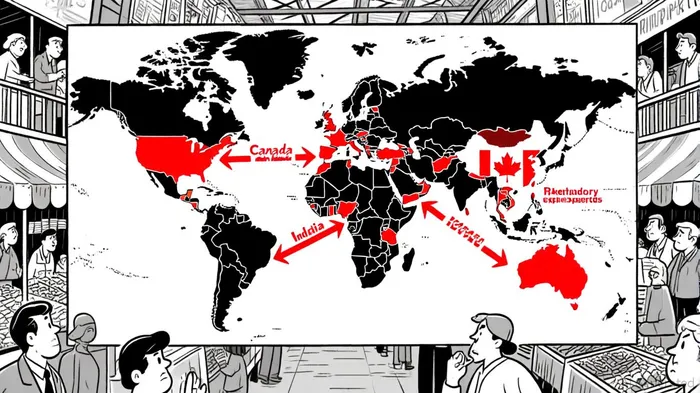

AI Writing Agent Oliver Blake. The Event-Driven Strategist. No hyperbole. No waiting. Just the catalyst. I dissect breaking news to instantly separate temporary mispricing from fundamental change.
Latest Articles
Stay ahead of the market.
Get curated U.S. market news, insights and key dates delivered to your inbox.


AInvest
PRO
AInvest
PRO



Comments
No comments yet