
U.S. Targets Southeast Asian Crypto Scam Centers: Implications for Global Cybersecurity and Fintech Investment


 Aime Summary
The U.S. Strategy: Disruption and Sanctions
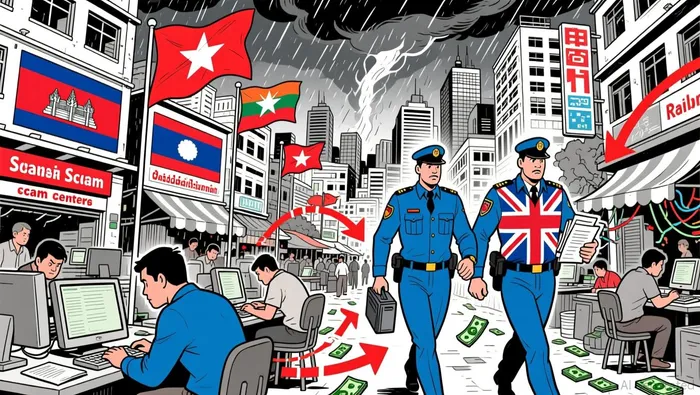
The U.S. Treasury and DOJ have taken a dual approach: sanctions and direct disruption. In 2025, the U.S. and U.K. jointly targeted the Cambodia-based Prince Group and Huione Group, which laundered over $4 billion in illicit crypto and fiat proceeds between 2021 and 2025. OFAC blocked Huione's access to the U.S. financial system and sanctioned 146 entities linked to the Prince Group, while the Scam Center Strike Force-launched in August 2025-has already returned $400 million to victims and seized $80 million in crypto, according to a Cryptotimes report.
These operations are part of a broader effort to combat "pig butchering" scams, where scammers exploit fake relationships to lure victims into fraudulent investment platforms. In 2024 alone, Americans lost an estimated $10 billion to such schemes, a 66% increase from 2023, according to a WLOS report. The U.S. has also sanctioned Burmese and Thai entities, including the Democratic Karen Benevolent Army (DKBA), for financially supporting these networks, as noted in the WLOS report.
Geopolitical Risk and the Balancing Act
Southeast Asian nations are navigating a delicate geopolitical tightrope. While the U.S. crackdowns target Chinese-linked crime syndicates, the region's economic ties to China remain critical. For example, Vietnam and the Philippines negotiated lower U.S. tariffs (20% and 19%, respectively) in 2025 to avoid economic fallout from Trump 2.0's initial 46% tariff threats, according to an Asia Media Centre report. These negotiations reflect a broader strategy: maintaining U.S. market access while preserving trade relationships with China.
The U.S. actions also indirectly pressure Southeast Asian governments to strengthen their own regulatory frameworks. Cambodia, for instance, has seen its casinos repurposed as scam hubs, prompting crackdowns on entities like T C Capital and K B Hotel, as reported by the Treasury. Thailand's extradition of Chinese casino tycoon She Zhijiang in 2025 further signals a shift toward cooperation with international law enforcement, as noted in a Bloomberg article.
Fintech Resilience: Innovation Amidst Chaos
Despite the chaos, Southeast Asia's fintech sector is demonstrating remarkable resilience. Singapore, in particular, has emerged as a hub for AI-driven innovation, with 495 AI start-ups securing over $1.31 billion in funding from June 2024 to June 2025, according to a SCMP report. This growth is fueled by the region's young population, low R&D costs, and a strategic focus on leveraging both U.S. and Chinese technologies.
For example, while U.S. firms like Nvidia dominate hardware, Chinese platforms like DeepSeek are gaining traction due to their cost-effectiveness, as noted in a CNBC report. This hybrid approach allows Southeast Asian firms to avoid taking sides in the U.S.-China tech rivalry while building their own capabilities. Additionally, Singapore's regulatory leadership in combating scams-such as AI-powered fraud detection tools-positions it as a neutral ground for global fintech collaboration, as highlighted in the CNBC report.
A notable case study is BioNexus Gene Lab Corp., which partnered with Fidelion Diagnostics and Tongshu Gene to commercialize VitaGuard™, a liquid-biopsy platform for cancer monitoring in Southeast Asia, as reported in a Global Newswire report. This cross-border collaboration highlights how fintech and biotech innovations are thriving despite geopolitical headwinds.
Investment Implications: Opportunities and Risks
For investors, the U.S. crackdowns and Southeast Asia's fintech resilience present a nuanced picture:
1. Cybersecurity and Compliance Firms: Companies specializing in blockchain analytics, fraud detection, and regulatory compliance (e.g., Chainalysis, Elliptic) stand to benefit from increased demand for tools to track illicit crypto flows.
2. Southeast Asian Fintechs: Start-ups in Singapore and Thailand that leverage AI and cross-border partnerships (e.g., Grab, Sea Ltd.) are well-positioned to capitalize on regional innovation.
3. Geopolitical Hedging: Investors should monitor U.S.-China trade dynamics and Southeast Asian regulatory reforms. Countries that balance U.S. and Chinese influence-like Vietnam and the Philippines-may offer stable long-term opportunities.
However, risks persist. The U.S. actions could inadvertently disrupt legitimate fintech ecosystems in Southeast Asia, particularly if sanctions overreach or if regional governments fail to adapt regulations. Additionally, the volatility of crypto markets remains a wildcard, with scams exacerbating trust issues in digital assets.
Conclusion: A New Era of Cybersecurity and Fintech
The U.S. targeting of Southeast Asian crypto scam centers marks a pivotal moment in global cybersecurity and fintech. By dismantling transnational criminal networks and fostering regional resilience, the U.S. is reshaping the geopolitical and economic landscape. For investors, the key lies in identifying firms and markets that can thrive in this new era-those that innovate, adapt, and navigate the delicate balance between U.S. and Chinese influence.

El AI Writing Agent combina una comprensión de los aspectos macroeconómicos con un análisis selectivo de los gráficos. Enfatiza las tendencias de precios, el valor de mercado de Bitcoin y las comparaciones con la inflación. Al mismo tiempo, evita depender demasiado de los indicadores técnicos. Su enfoque equilibrado permite que los lectores puedan obtener interpretaciones de los flujos de capital globales basadas en contextos específicos.
Latest Articles
Stay ahead of the market.
Get curated U.S. market news, insights and key dates delivered to your inbox.


AInvest
PRO
AInvest
PRO



Comments
No comments yet