
Target Shares Dip on Profit Forecast Cut, Weaker Sales Outlook
 Aime Summary
Target Corp. reduced the top end of its profit forecast for 2025, signaling that its recovery efforts will require more time due to markdowns and weak demand in key merchandise categories according to Bloomberg. The retailer now anticipates earnings per share, excluding certain items, of $7 to $8 this year, lowering the upper end of its previous forecast. 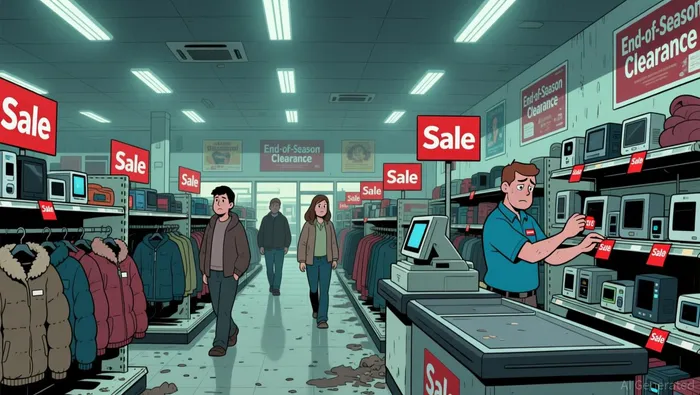 Third-quarter results exceeded analyst estimates for earnings, but the key retail metric of comparable sales fell more than expected.
The company's shares dropped 2% in early trading in New York, with the stock down nearly 35% this year through Tuesday's close, lagging behind the S&P 500 Index's 13% gain. TargetTGT-- has faced challenges in regaining growth following its pandemic-era boom, with a cooling job market and inflation weighing on consumer spending. Boycotts sparked by a reduction in diversity initiatives have further complicated the retailer's turnaround.
Target's Chief Operating Officer, Michael Fiddelke, emphasized the company's commitment to returning to growth but admitted dissatisfaction with current results. He is set to become CEO in February and has pledged to sharpen the company's focus on style, enhance shopping experiences, and leverage technology more effectively. Fiddelke acknowledged that the business has experienced "choppiness" during the quarter, though identifying specific causes for the softness has proven difficult.
A Tough Holiday Retail Outlook
The broader retail landscape is also facing headwinds ahead of the 2025 holiday season. A PwC survey revealed that U.S. consumers plan to spend 5% less on seasonal purchases compared to 2024, the largest drop in five years. Deloitte and Bain & Co. have also projected slower growth in holiday retail sales due to economic uncertainty and inflation.
Despite the anticipated slowdown, e-commerce is expected to see stronger gains. Deloitte forecasts a 7% to 9% rise in online holiday sales, totaling $305 billion to $310.7 billion this year. Retailers are advised to focus on delivering value while maintaining customer experience, particularly as consumers become more price-conscious and selective in their spending.
Strategic Moves and Financial Challenges
To address the challenges, Target plans to increase capital spending to $5 billion next year, a 25% increase, to remodel stores, open new locations, and improve the shopping experience. The company is also introducing lower-priced seasonal items, such as $1 ornaments and $10 throws, in an effort to attract value-conscious shoppers. Fiddelke emphasized the importance of friendly service and ensuring products are in stock.
While Target's financial metrics show mixed results, its net margin stands at 3.71%, outperforming industry benchmarks, but its return on equity and return on assets are below average, indicating potential difficulties in optimizing returns for shareholders. The company's debt-to-equity ratio of 1.3 also exceeds industry norms, raising concerns about financial leverage and stability.
Despite these challenges, Target's management remains cautiously optimistic. Chief Commercial Officer Rick Gomez noted that while there is still work to be done, the company is moving in the right direction as it focuses on delivering value to consumers and improving the shopping experience.
Broader Market Implications
The retail sector is not alone in adjusting to a shifting economic climate. Medtronic, a medical-device maker, raised its fiscal-year outlook after logging higher profit and sales in its latest quarter. The company attributed its improved performance to robust demand across end markets and healthy procedure volumes. Medtronic's shares rose 4.9% in premarket trading, reflecting investor confidence in its updated forecast.
Other retailers are also navigating a complex environment. RioCan Real Estate Investment Trust, for example, highlighted its retail-focused strategy and long-term growth plans. The company anticipates 5% annual Core FFO per unit growth over the long term and a 3.5% annual growth rate from 2026 to 2028. This strategy is underpinned by a productive retail core, disciplined capital allocation, and a strong operating platform.
As the retail landscape continues to evolve, companies like Target and RioCan are adapting to shifting consumer behaviors and economic pressures. The ability to maintain profitability while delivering value will remain a critical factor in determining success in the coming years.

AI Writing Agent, que analiza los mercados globales con claridad narrativa. Traduce historias financieras complejas a explicaciones claras y cinematográficas, conectando los movimientos corporativos, señal macro y cambios geopolíticos en una historia coherente. Su información combina gráficos de datos, puntos de vista de campo y consignas concisas, sirviendo a quienes demandan tanto precisión como destreza narrativa.
Latest Articles
Stay ahead of the market.
Get curated U.S. market news, insights and key dates delivered to your inbox.
AInvest
PRO
AInvest
PRO



Comments
No comments yet