
Target's Foot Traffic Down 3.1% as Stock Offers 4.4% Dividend, tgt Revenue Uncertain
 Aime Summary
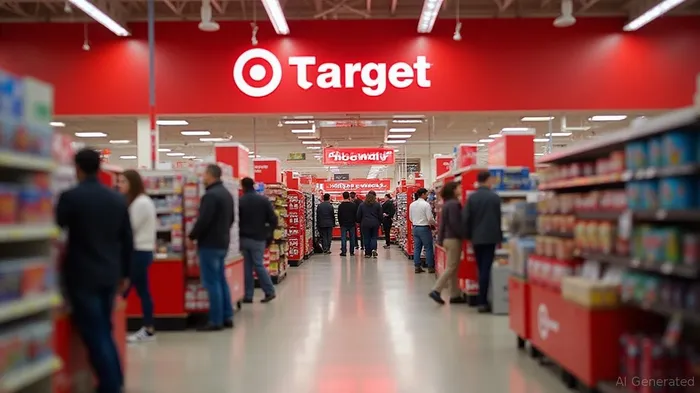
Target Corporation continues to grapple with challenges as foot traffic and revenue figures indicate a downward trend. Data from Placer.ai, an analytics firm, reveals that TargetTGT-- has experienced a decline in year-over-year foot traffic for the past five quarters, coinciding with a broader reduction in revenue. In the first quarter of this year, Placer.ai reported a decrease of 4.1% in foot traffic compared to the previous year, while Target reported a total revenue decline of 2.8%. This pattern illustrates a close correlation between foot traffic data and revenue figures, with an average discrepancy of just 1.2 percentage points over recent quarters.
As Target prepares to announce its second-quarter results for 2025, Placer.ai notes a 3.1% drop in year-over-year foot traffic. If this trend aligns with previous patterns, the company may report a corresponding decline in revenue between 1.8% and 4.4% compared to the second quarter of 2024. Despite inquiries, Target has not offered comments regarding the foot traffic estimates or projected revenue outcomes.
Analysts, like RJ Hottovy from Placer.ai, highlight the typical correlation between foot traffic and revenue but caution that deviations may occur, especially with significant e-commerce growth. Shifts towards online retail have the potential to cause revenue figures to diverge from foot traffic data. If a company observes a substantial increase in online sales, revenue may outperform physical store visitation numbers.
Despite these challenges, Target's management recognizes the importance of its historical brand identity as a value-driven retailer with a premium shopping experience. The "Tar-zhay" brand emphasis reflects a strategic pivot back to offering an appealing shopping environment rather than focusing solely on price competition. This shift is part of a broader effort to differentiate from competitors like WalmartWMT-- and CostcoCOST--, who focus heavily on low-cost offerings.
Target's profit margins have remained robust despite the declining sales, as the company prides itself on delivering a superior shopping experience. Customers have consistently shown a willingness to pay a premium for the quality of service and ambiance that Target provides. Maintaining these high margins reflects a successful strategy in appealing to a segment of consumers who prioritize the shopping experience over price alone.
Target's leadership is poised to rebuild this modestly upscale reputation throughout 2025, encouraging consumers to revisit stores and rediscover the "Tar-zhay" experience. While past performance has seen Target shares lag behind broader market indices and retail sector benchmarks, the company remains confident in its ability to stage a turnaround.
Currently, Target stock is considered undervalued, trading at 11.4 times earnings and 0.45 times sales. This provides a compelling investment opportunity, particularly when considering the company's generous 4.4% dividend yield. Such a yield significantly exceeds that of its peers and represents one of the highest payout ratios in the company's history.
As Target endeavors to regain its footing, the focus remains on revitalizing its brand while overcoming current obstacles in the retail landscape. The ongoing efforts to enhance customer engagement and drive foot traffic back into stores will be pivotal in determining the success of this strategic reinvention. Meanwhile, investors are cautiously optimistic, recognizing the potential for a profitable resurgence as Target navigates these evolving market dynamics.

Stay ahead of the market.
Get curated U.S. market news, insights and key dates delivered to your inbox.
AInvest
PRO
AInvest
PRO



Comments
No comments yet