
Why Target-Date Funds Are Ideal for IRA Investments in 2025
The financial markets of 2025 are a mosaicMOS-- of turbulence and opportunity. With inflation oscillating unpredictably and geopolitical risks casting long shadows over equity markets, retirement planning has never been more fraught with uncertainty. For IRA investors—especially those nearing retirement—the stakes are high. How can one navigate volatility while ensuring a stable income stream? The answer, as Morningstar's Jason Kephart and recent data underscore, lies in target-date funds. These vehicles are not just convenient; they are strategic masterpieces designed to automate risk management, reduce decision fatigue, and compound growth in an era of relentless uncertainty.
The Automation Advantage: Glide Paths as Volatility Shields
At the heart of target-date funds is the glide path—a pre-programmed roadmap that adjusts an investor's asset allocation over time. This dynamic rebalancing ensures that portfolios grow more conservative as retirement approaches, shielding investors from the emotional and financial toll of market swings.
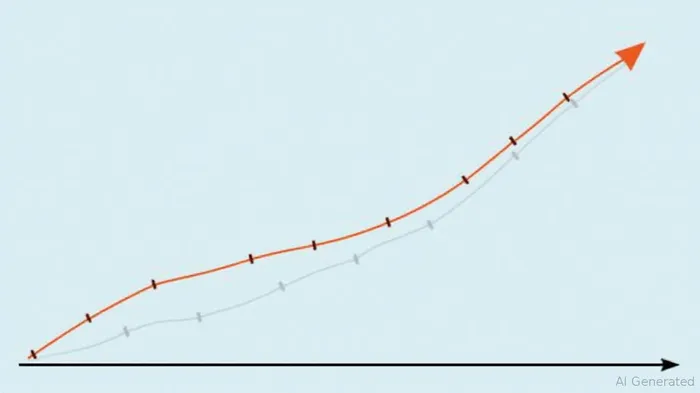
Consider the stark contrasts in glide paths among leading providers:
- Vanguard's 2025 Target Retirement Fund (VTTVX) starts with 90% equities for young investors and drops to 50% at retirement, aiming to replace 80% of pre-retirement income.
- iShares LifePath ETFs begin with 99% equities but reduce to 40% at retirement, minimizing late-stage volatility.
- T. Rowe Price's actively managed series retains over 50% equities post-retirement, prioritizing growth at the cost of higher volatility.
Investors must align their risk tolerance with these paths. A 25-year-old might favor iShares' aggressive start, while a 65-year-old nearing retirement would gravitate toward its conservative endpoint. The key takeaway? Glide paths are not one-size-fits-all—they are precision instruments for volatility management.
Fees: The Silent Killer of Retirement Savings
Fees, however, are the unseen adversary. Even small differences in expense ratios—measured in basis points—can erode IRA balances over decades. Morningstar's 2025 data reveals a stark hierarchy:
- Vanguard's Target Retirement series leads with an ultra-low 0.08% expense ratio, thanks to its index-based construction.
- iShares LifePath ETFs follow at ~0.10%, while T. Rowe Price's actively managed funds edge closer to 0.20%.
Kephart warns that brokerage fees or hidden charges can negate these advantages. IRA investors must shop beyond their brokerage's offerings to secure the cheapest share classes—a task that grows critical as compounding amplifies fee differences.
Performance Consistency and Inflation Hedging
Critics argue that target-date funds underperform during market peaks. Yet data shows they thrive in the long run. Take Vanguard's VTTVX: Despite a recent US equity underweight due to its 2015 glide path adjustments, its long-term process rating remains “Above Average”. Its market-cap weighting (60% US equities) may introduce home bias risks, but its tax efficiency in IRAs—avoiding rebalancing-triggered capital gains—gives it an edge.
For IRA holders, these funds offer two critical inflation hedges:
1. Diversification: Exposure to global equities and bonds reduces reliance on any single market.
2. Automatic Rebalancing: Selling high and buying low during dips ensures portfolios don't overreact to short-term noise.
A Strategic Hedge for Nervous Markets
In 2025's volatile climate, target-date funds are not just safe—they're smart. Their glide paths systematically reduce equity exposure as retirees near retirement, mitigating the risk of catastrophic losses in a market crash. For example, if a 65-year-old investor held 50% equities (Vanguard's target) versus a 70% allocation, the difference in drawdown risk during a bear market could be stark.
Investment advice for IRA holders:
- Match your timeline to the glide path: A 2025 fund's 50% equity allocation at retirement is ideal for those retiring now.
- Avoid fee traps: Even a 0.1% fee differential over 30 years can cost tens of thousands in a $500,000 IRA.
- Consider active vs passive: Active funds like T. Rowe Price's may add alpha, but only if you're confident in their managers' skill.
Final Verdict: Automation for the Ages
In a world where market volatility is the norm, not the exception, target-date funds offer IRA investors a rare combination of simplicity and sophistication. They automate decisions that even seasoned investors might bungle under stress—like rebalancing during a crash or maintaining discipline through inflation.
For 2025 and beyond, the message is clear: Let glide paths steer your risk, let fees shrink your costs, and let time compound your patience. The best retirement plans are those that require the least heroics—and that's precisely what target-date funds deliver.
Invest wisely.
Gary Alexander
June 06, 2025

Stay ahead of the market.
Get curated U.S. market news, insights and key dates delivered to your inbox.


AInvest
PRO
AInvest
PRO



Comments
No comments yet