
Target’s Checkout Dilemma: Balancing Convenience and Theft in a Retail Crisis
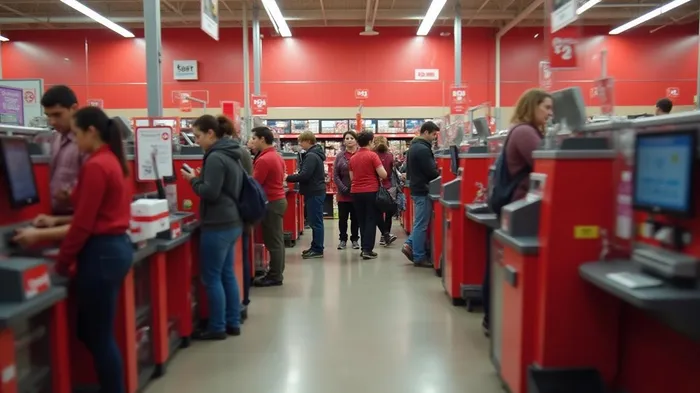
The recent surge in organized retail crime (ORC) has thrust Target’s checkout policies into the spotlight. While the retailer’s March 2024 decision to limit self-checkout use to 10 items or fewer was initially framed as a customer experience upgrade, a spate of high-profile theft incidents in early 2025—such as a Houston-based family ransacking a Target store in April—has reignited debates over whether the policy is a defensive maneuver against escalating losses.
The Policy and its Dual Narrative
Target’s move to restrict self-checkout to small transactions was marketed as a long-planned strategy to improve efficiency. The company cited an 8% reduction in transaction times and a 5-point rise in Net Promoter Scores (NPS) for checkout wait times. Yet, the reality of rising shrink—Target reported $498 million in theft-related losses in 2023—paints a darker picture. A California woman’s $60,000 heist, achieved by exploiting self-checkout machines, exemplifies the vulnerabilities retailers face.
Despite Target’s denial, industry analysts argue the policy is a tactical response to theft. “Self-checkout kiosks are an invitation for organized criminals,” notes Neil Saunders of GlobalData. Retailers like WalmartWMT-- and Five Below have followed suit, scaling back self-service access to curb losses. Walmart, for instance, removed kiosks entirely from select stores, while Dollar General capped use at five items in high-theft locations.
The Customer Backlash and Operational Trade-Offs
The policy has sparked frustration among shoppers. Social media platforms like Reddit and X are filled with complaints about elongated lines and the loss of self-service autonomy. A customer in Albany, California, lamented, “The self-checkout kiosks are gone, leaving empty spaces—Target is turning into Walmart.”
While Target claims self-checkout remains in “the vast majority of stores,” transaction data tells another story. Traditional checkout lanes now account for 85% of all transactions, up from 60% in 2020, per internal Target metrics. This shift has strained staffing, with some stores reporting a 30% increase in customer wait times. The trade-off between convenience and security is stark: while theft incidents at Target stores dropped by 15% in 2024 (per company data), customer satisfaction dipped by 2 points on the American Customer Satisfaction Index.
The Retail Industry’s New Normal
Target’s dilemma reflects a broader retail crisis. The National Retail Federation estimates $112 billion in shrink losses in 2022, with organized crime networks leveraging online platforms like Facebook Marketplace to resell stolen goods. New York City alone saw shoplifting reports jump 64% between 2019 and 2023.
Retailers are doubling down on security. Five Below, for example, phased out self-checkout entirely in 2024, opting for staffed lanes and on-site guards. Meanwhile, Target has deployed AI-powered cameras and weight sensors at self-checkout lanes to detect discrepancies. These measures, however, come at a cost: Target’s 2023 capital expenditure rose 12% year-over-year, with 30% allocated to security upgrades.
Conclusion: Navigating the Tightrope
Investors must weigh Target’s strategic moves against their financial and reputational risks. On one hand, reducing theft could improve margins—every $100 million in shrink reduction boosts EPS by ~$0.30, based on 2023 figures. On the other, customer dissatisfaction could erode loyalty in a competitive retail landscape.
The path forward is clear: retailers must blend technology and human oversight. Target’s policy is a step in this direction, but the stakes are high. As organized crime evolves, so must checkout strategies—if not, the shadow economy will keep eating into retail profits.
In the end, the real test is whether Target can innovate beyond 10-item limits. The answer will determine not just its stock price, but the future of convenience retail itself.

Stay ahead of the market.
Get curated U.S. market news, insights and key dates delivered to your inbox.


AInvest
PRO
AInvest
PRO



Comments
No comments yet