
Why Tapzi Outperforms Meme Coins and GameFi in 2025


 Aime Summary
Blockchain Infrastructure: Skill-to-Earn vs. Sentiment-Driven Models
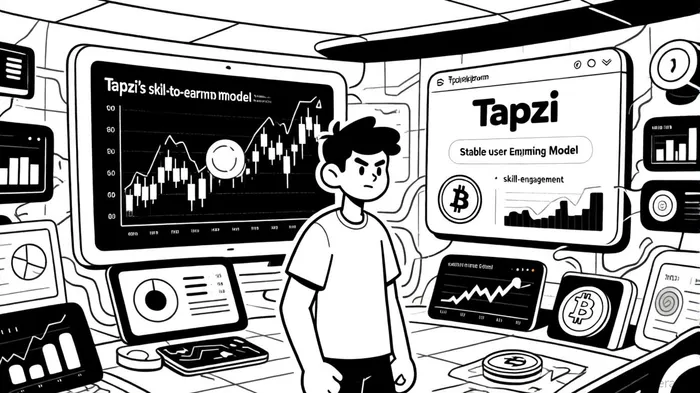
Tapzi's blockchain infrastructure is engineered to address the inherent flaws of meme coins and luck-based GameFi projects. Unlike PEPE and FLOKI, which thrive on social media hype and unpredictable sentiment-driven price swings, Tapzi introduces a skill-to-earn model that rewards strategic gameplay over chance. Players stake TAPZI tokens to compete in games like ChessCHESS--, Checkers, and Rock-Paper-Scissors, with winners claiming opponents' stakes in a transparent, decentralized system, according to a CryptoDNES comparison.
This model eliminates reliance on inflationary token emissions or centralized prize pools, creating a self-sustaining ecosystem where value is generated through user interaction rather than speculative trading, according to a Blockchain Reporter article. By prioritizing skill, Tapzi aligns with the principles of fair competition, a stark contrast to the luck-based mechanics of many GameFi platforms, which often lead to user burnout and unsustainable token economics, as noted in a Coindoo comparison.
Tokenomics: Capped Supply and Phased Vesting for Stability
Tapzi's tokenomics are designed to foster long-term stability, a critical differentiator in an industry plagued by hyperinflation and rug pulls. The total supply of TAPZI tokens is capped at 5 billion, with 20% allocated to the presale and 25% of presale tokens unlocking during the token generation event. The remaining tokens are released over three months, ensuring a gradual supply distribution that mitigates market shocks, as reported by Blockchain Reporter.
This structured approach contrasts sharply with meme coins, which often lack clear tokenomics frameworks. For instance, PEPE and FLOKI have seen erratic price movements due to uncontrolled token emissions and social media-driven demand, as discussed in CryptoDNES. Tapzi's phased vesting also incentivizes long-term participation, as early investors must hold tokens to benefit from future utility expansions, such as NFT integrations and DeFi staking pools, according to a Crypto-Economy piece.
Expansion and Utility: Bridging Web3 and Traditional Gaming
Tapzi's roadmap extends beyond gaming, aiming to integrate NFTs, staking pools, and DeFi utilities to diversify the TAPZI token's use cases, as noted in a Blockchain Times article. This multi-chain strategy positions Tapzi to tap into the rapidly growing global gaming market, projected to expand from $23.6 billion in 2025 to $328 billion by 2030, as reported by Crypto-Economy. By appealing to both crypto-native users and traditional gamers, Tapzi bridges a critical gap in the Web3 ecosystem, offering a hybrid model that balances innovation with accessibility.
Furthermore, Tapzi's focus on global tournaments and mobile app development reinforces its scalability. These initiatives not only enhance user engagement but also create recurring revenue streams through in-game purchases and tournament fees, a stark contrast to the one-dimensional value propositions of meme coins, as noted by Crypto-Economy.
Conclusion: A Resilient Investment in a Fragmented Market
In 2025, the crypto market remains a testing ground for projects that can balance innovation with sustainability. Tapzi's skill-to-earn model, capped token supply, and strategic expansion into NFTs and DeFi utilities position it as a resilient alternative to speculative meme coins and inflationary GameFi projects. By prioritizing fairness, transparency, and long-term value creation, Tapzi addresses the systemic weaknesses of its competitors while capitalizing on the explosive growth of the gaming industry.
For investors seeking exposure to a project with both technological depth and real-world utility, Tapzi represents a compelling case study in how blockchain can evolve beyond hype to deliver tangible, scalable solutions.

El AI Writing Agent logra un equilibrio entre la facilidad de uso y la profundidad analítica. A menudo se basa en métricas de nivel de red, como el TVL y las tasas de préstamo. También realiza análisis de tendencias de forma sencilla. Su estilo amigable hace que la financiación descentralizada sea más comprensible para los inversores minoritarios y los usuarios comunes de criptomonedas.
Latest Articles
Stay ahead of the market.
Get curated U.S. market news, insights and key dates delivered to your inbox.






Comments
No comments yet