
TAO (Lorenzo Protocol) Market Context: DeFi ETP Growth and Uniswap Resilience
 Aime Summary
- DeFi Technologies Inc reported TTM revenue of $50.8M and an EBITDA of $44.49M, with P/E ratio significantly below industry peers.
- Ark Invest analyst Lorenzo Valente highlighted Uniswap's resilient $15 billion weekly trading volume, contrasting it with weak Unichain activity.
- The TAOTAO-- token, representing Lorenzo ProtocolBANK--, trades as a decentralized network asset without direct corporate dividend structures .
- Travel + Leisure Co. declared a $0.60 quarterly dividend, illustrating traditional capital returns absent in pure DeFi protocols.
- Market relevance centers on the divergence between high-revenue DeFi infrastructure and speculative layer-2 adoption .
DeFi Technologies, Inc. has emerged as a prominent Canadian firm creating exchange-traded products that mirror decentralized finance protocols . The company's recent financial disclosures indicate a trailing-twelve-month revenue of approximately $50.8 million and an EBITDA of $44.49 million . These metrics underscore a period of strong profitability for the entity managing DeFi ETNs and governance products .
The firm's valuation multiples present a notable divergence from broader market trends. Analysts note a price-to-earnings ratio of approximately 4.39x to 6.39x, which is significantly lower than the mean for the Capital Markets industry . This discrepancy has led some observers to suggest potential undervaluation relative to traditional financial peers .
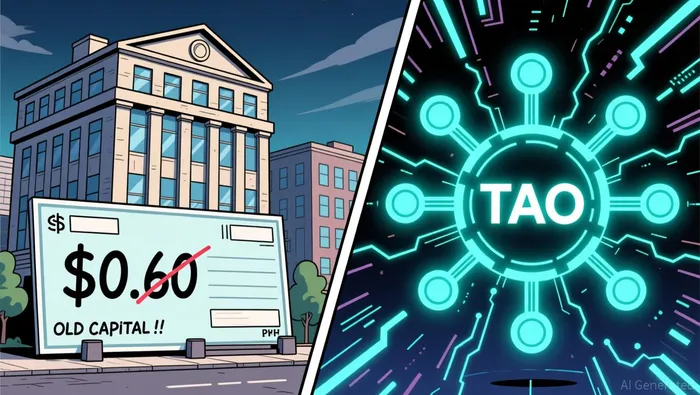
In contrast to traditional corporate structures, protocols like Lorenzo Protocol (TAO) operate as decentralized networks. TAO does not issue dividends or declare quarterly cash payments, reflecting its distinct capital allocation model . This absence of yield distribution contrasts sharply with entities like Travel + Leisure Co., which recently declared a $0.60 per share quarterly dividend payable in September 2026 .
How Strong Is Uniswap's Core Revenue?
Uniswap continues to demonstrate robust performance in its core automated market maker business. The protocol handles approximately $15 billion in weekly trading volume, a figure comparable to levels seen during the 2021 market peak . This activity occurs across Ethereum, Base, and Robinhood Chain, generating more than $1 million in weekly revenue .
The transition to UniswapUNI-- V4 has been a significant factor in sustaining this revenue stream. V4 now accounts for about half of all protocol activity alongside V3 . The introduction of the fee switch in V4 is generating substantial value, burning approximately $90 million worth of UNIUNI-- tokens annually based on recent pace .
Why Is Unichain Underperforming?
Despite strong core metrics, Uniswap's layer-2 network, Unichain, has struggled to gain significant traction. The network generates only $5,000 to $7,000 in monthly revenue, processing roughly 3,000 daily transactions . Total value locked on Unichain stands at approximately $30 million, indicating limited adoption compared to the mainnet .
This disparity highlights the challenges of migrating liquidity to layer-2 solutions. While the core protocol benefits from fee switches and high volumes, the layer-2 ecosystem remains nascent . Investors must weigh the resilience of the mainnet against the speculative nature of layer-2 growth .
What Is TAO's Market Context?
Lorenzo Protocol (TAO) operates within this complex DeFi landscape. As a decentralized network asset, TAO's value is derived from its computational utility and network participation rather than corporate earnings . The absence of traditional financial metrics like P/E ratios or dividend yields makes valuation distinct from entities like DeFi TechnologiesDEFT-- .
The broader DeFi sector shows mixed signals. While some firms report strong earnings and low valuations, core protocols face fragmentation between mainnet and layer-2 performance . TAO's market position is influenced by these macro trends, particularly the demand for decentralized compute and storage .
Investors are closely monitoring the divergence between high-revenue DeFi infrastructure and the performance of specific layer-2 networks . The stability of Uniswap's core revenue provides a floor for sector sentiment, while the struggles of Unichain highlight execution risks .
The contrast between traditional capital returns and decentralized protocol economics remains a key theme. Entities like Travel + Leisure Co. offer predictable dividends, while DeFi protocols like Lorenzo Protocol rely on network growth and token utility . This dichotomy shapes investment strategies in the digital asset space .
Analyst consensus on traditional DeFi proxies, such as DeFi Technologies, remains bullish despite trading near 52-week lows . This suggests that market participants may be pricing in regulatory or macroeconomic risks rather than fundamental weakness . Meanwhile, Uniswap's technical support levels and revenue stability offer a different risk-reward profile .
The Lorenzo Protocol (TAO) continues to navigate this environment as a key decentralized infrastructure asset. Its performance is less tied to quarterly earnings and more to the broader adoption of decentralized computing . As the DeFi ecosystem evolves, the distinction between corporate DeFi products and pure protocol assets will likely remain a critical factor for global investors .

Blending traditional trading wisdom with cutting-edge cryptocurrency insights.
Latest Articles
Stay ahead of the market.
Get curated U.S. market news, insights and key dates delivered to your inbox.


AInvest
PRO
AInvest
PRO




Comments
No comments yet