
Tanker Rate Surge: Teekay Benefits from Middle East Tensions
ByAinvest
Tuesday, Jun 24, 2025 8:29 pm ET2min read
LAKE--
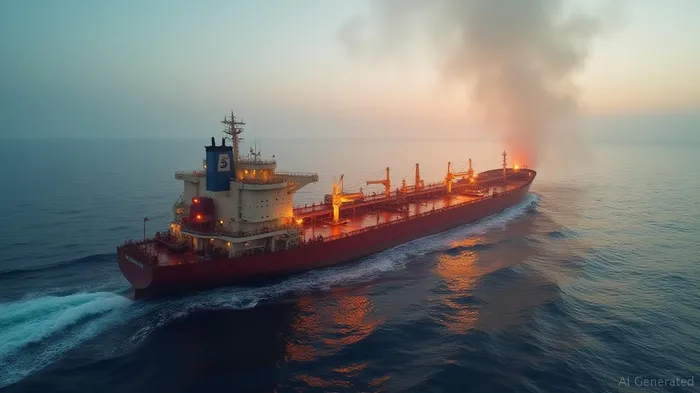
The conflict has resulted in supertankers rerouting near the Strait of Hormuz, a critical chokepoint for oil and gas shipments. At least two supertankers, the Coswisdom Lake and the South Loyalty, have made abrupt U-turns near the strait, highlighting the growing geopolitical risks. The rerouting of these vessels has led to a significant increase in rates, with VLCCs (Very Large Crude Carriers) crossing $60,000 per day in freight costs [3].
The uncertainty surrounding the conflict has pushed oil prices to five-month highs, with markets swinging on fears of further escalation. Analysts are now bracing for oil prices to potentially spike to $100 a barrel. While this volatility presents challenges for the global economy, it also presents opportunities for shipping companies that can capitalize on the short-term gains.
Teekay, for example, has seen its stock price increase due to the significant rate increases. However, investors should be cautious when evaluating shipping stocks, as the long-term outlook depends on the resolution of geopolitical tensions and their impact on global trade routes.
In Germany, despite geopolitical uncertainties, business sentiment remains positive. The closely-watched IFO index rose in June, indicating that firms are optimistic about the business climate despite the uncertainty [2]. This optimism is driven by factors such as the government's pledge to increase spending and the ECB's lowering of interest rates.
However, the conflict in the Middle East is likely to have a knock-on effect on global air travel as well. Airports in Dubai and Doha have temporarily halted operations, leading to significant disruption for passengers and crew [1]. This disruption is likely to continue as long as the conflict persists.
In conclusion, the escalating Middle East tensions have led to a significant surge in supertanker rates, presenting both challenges and opportunities for shipping stocks. Investors should consider geopolitical risks when evaluating these stocks, as the volatility in shipping rates is likely to continue until the conflict is resolved.
References:
[1] https://www.bbc.co.uk/news/articles/cx20kxdl3nlo
[2] https://finance.yahoo.com/news/german-business-sentiment-rises-ifo-125855564.html
[3] https://timesofindia.indiatimes.com/world/middle-east/middle-east-crisis-supertankers-making-u-turns-near-strait-of-hormuz-at-least-5-rerouted/articleshow/122027828.cms
TK--
Escalating Middle East tensions have led to a 12% surge in supertanker rates from the Middle East to China, with Teekay (TK) benefiting from significant rate increases. Investors should consider geopolitical risks when evaluating shipping stocks, as the volatility in shipping rates presents both challenges and opportunities. While companies like Teekay may capitalize on short-term gains, the long-term outlook depends on the resolution of geopolitical tensions and their impact on global trade routes.
Escalating tensions in the Middle East have led to a significant surge in supertanker rates, particularly for routes from the Middle East to China. The conflict between Israel and Iran has disrupted global energy supplies, prompting supertankers to reroute and causing a 12% increase in rates. This volatility has presented both challenges and opportunities for shipping stocks, with Teekay (TK) being one of the beneficiaries of the rate increases.The conflict has resulted in supertankers rerouting near the Strait of Hormuz, a critical chokepoint for oil and gas shipments. At least two supertankers, the Coswisdom Lake and the South Loyalty, have made abrupt U-turns near the strait, highlighting the growing geopolitical risks. The rerouting of these vessels has led to a significant increase in rates, with VLCCs (Very Large Crude Carriers) crossing $60,000 per day in freight costs [3].
The uncertainty surrounding the conflict has pushed oil prices to five-month highs, with markets swinging on fears of further escalation. Analysts are now bracing for oil prices to potentially spike to $100 a barrel. While this volatility presents challenges for the global economy, it also presents opportunities for shipping companies that can capitalize on the short-term gains.
Teekay, for example, has seen its stock price increase due to the significant rate increases. However, investors should be cautious when evaluating shipping stocks, as the long-term outlook depends on the resolution of geopolitical tensions and their impact on global trade routes.
In Germany, despite geopolitical uncertainties, business sentiment remains positive. The closely-watched IFO index rose in June, indicating that firms are optimistic about the business climate despite the uncertainty [2]. This optimism is driven by factors such as the government's pledge to increase spending and the ECB's lowering of interest rates.
However, the conflict in the Middle East is likely to have a knock-on effect on global air travel as well. Airports in Dubai and Doha have temporarily halted operations, leading to significant disruption for passengers and crew [1]. This disruption is likely to continue as long as the conflict persists.
In conclusion, the escalating Middle East tensions have led to a significant surge in supertanker rates, presenting both challenges and opportunities for shipping stocks. Investors should consider geopolitical risks when evaluating these stocks, as the volatility in shipping rates is likely to continue until the conflict is resolved.
References:
[1] https://www.bbc.co.uk/news/articles/cx20kxdl3nlo
[2] https://finance.yahoo.com/news/german-business-sentiment-rises-ifo-125855564.html
[3] https://timesofindia.indiatimes.com/world/middle-east/middle-east-crisis-supertankers-making-u-turns-near-strait-of-hormuz-at-least-5-rerouted/articleshow/122027828.cms
Stay ahead of the market.
Get curated U.S. market news, insights and key dates delivered to your inbox.
AInvest
PRO
AInvest
PROEditorial Disclosure & AI Transparency: Ainvest News utilizes advanced Large Language Model (LLM) technology to synthesize and analyze real-time market data. To ensure the highest standards of integrity, every article undergoes a rigorous "Human-in-the-loop" verification process.
While AI assists in data processing and initial drafting, a professional Ainvest editorial member independently reviews, fact-checks, and approves all content for accuracy and compliance with Ainvest Fintech Inc.’s editorial standards. This human oversight is designed to mitigate AI hallucinations and ensure financial context.
Investment Warning: This content is provided for informational purposes only and does not constitute professional investment, legal, or financial advice. Markets involve inherent risks. Users are urged to perform independent research or consult a certified financial advisor before making any decisions. Ainvest Fintech Inc. disclaims all liability for actions taken based on this information. Found an error?Report an Issue


ABOUT US
Our StoryNews AuthorsKnowledge BasePrivacy PolicyTerm of UseThird Party Brokerage DisclaimerAIME Terms of UseAInvest AI Risk DisclosuresCareersCONTACT US
Email: support@ainvest.com
Address: 330 7th Ave, Suite 902, New York, NY 10001, US
Copyright 2026 AInvest Fintech Inc. All rights reserved.


Comments
No comments yet