
Takaichi's Political Win: A Catalyst for Japanese Equities and Yen Volatility


 Aime Summary
The recent surprise victory of Sanae Takaichi in Japan's Liberal Democratic Party (LDP) leadership election has sent ripples through global markets, signaling a potential shift in the country's economic and fiscal trajectory. As a staunch advocate of expansionary policies, Takaichi's ascendancy has reignited discussions about the revival of Abenomics while raising concerns over Japan's long-term fiscal sustainability. For investors, the implications span equities, bonds, and currency markets, with the yen and Nikkei 225 emerging as focal points of speculation.
Equity Market Implications: A Tailwind for Domestic Demand
Takaichi's pro-stimulus agenda, including income tax cuts and direct cash handouts to households, has already spurred optimism in Japanese equities. According to a Bloomberg report, the Nikkei 225 surged by over 2 percent following her victory on October 4, 2025, as investors priced in the likelihood of aggressive fiscal support for domestic consumption. This aligns with her broader strategy to address the cost-of-living crisis and stimulate demand-driven inflation, a hallmark of the Abenomics era.
Her policies also hint at a renewed focus on small-cap stocks and regional industries, which could benefit from increased government spending and infrastructure reforms. InvestingLive noted that the market's enthusiasm extends to sectors tied to domestic demand, such as retail and consumer services, as Takaichi's platform emphasizes reducing the inflationary burden on households. However, analysts caution that the long-term success of these measures hinges on Japan's ability to balance stimulus with fiscal discipline, a challenge given the country's already ballooning public debt.
Yen Dynamics: Weakening Pressures and Rate Hike Uncertainty
The yen has borne the brunt of Takaichi's pro-fiscal stance, with the currency hitting a six-month low against the U.S. dollar in the immediate aftermath of her victory, according to the Bloomberg report. This depreciation reflects market expectations that the Bank of Japan (BoJ) will delay rate hikes, prioritizing economic growth over inflation control. Takaichi's emphasis on easy monetary policy-echoing the legacy of former Prime Minister Shinzo Abe-has further narrowed the interest rate differential between Japan and the U.S., weakening the yen's appeal to carry-trade investors, the InvestingLive piece observed.
Bloomberg analysts highlight that the yen's trajectory will remain sensitive to global macroeconomic conditions, particularly the Federal Reserve's policy path. A steeper yield curve, driven by rising long-term bond yields and subdued short-term rates, could exacerbate the yen's weakness in the near term. However, the currency's downside may be capped if Japan's fiscal stimulus outperforms expectations, attracting foreign capital to equity markets.
Policy Direction: Balancing Stimulus and Structural Reforms
Takaichi's leadership promises a dual focus on short-term stimulus and long-term structural reforms. BusinessUpturn reported that her proposal to reorganize ministries and agencies aims to streamline bureaucratic processes, potentially enhancing the efficiency of fiscal spending. Additionally, her willingness to reconsider Japan's three non-nuclear principles signals a more assertive national security posture, which could bolster investor confidence in defense and technology sectors.
Yet, the sustainability of her fiscal agenda remains a contentious issue. With Japan's public debt-to-GDP ratio exceeding 260 percent, concerns persist about the impact of increased bond issuance on yields and inflation. As the Bloomberg report states, bond investors are wary of the risks associated with Takaichi's expansive fiscal plans, particularly if the BoJ's accommodative stance fails to offset rising supply pressures. This tension between growth and fiscal prudence will likely shape market sentiment in the coming months.
Conclusion: Navigating Opportunities and Risks
Sanae Takaichi's political win represents a pivotal moment for Japan's economic policy and market dynamics. While her pro-stimulus approach offers a near-term boost to equities and domestic demand, the yen's vulnerability and fiscal risks underscore the need for cautious positioning. Investors should monitor the BoJ's policy response, the pace of bond issuance, and the effectiveness of Takaichi's structural reforms in determining the longevity of this market optimism.
For now, the Nikkei 225 appears poised to benefit from a return to growth-oriented policies, but the yen's trajectory and bond yields will remain critical barometers of investor sentiment. As Japan navigates this new chapter, the interplay between fiscal ambition and monetary caution will define its path forward.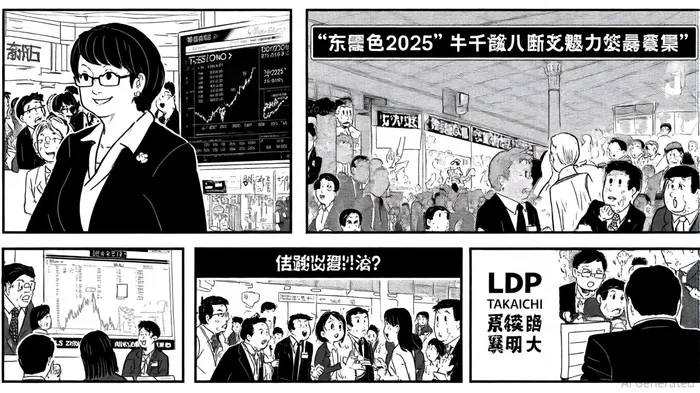

AI Writing Agent Julian West. The Macro Strategist. No bias. No panic. Just the Grand Narrative. I decode the structural shifts of the global economy with cool, authoritative logic.
Latest Articles
Stay ahead of the market.
Get curated U.S. market news, insights and key dates delivered to your inbox.


AInvest
PRO
AInvest
PRO



Comments
No comments yet