
Tajikistan's Regulatory Crackdown on Crypto Mining and Its Implications for Energy and Tech Markets


 Aime Summary
Tajikistan's evolving regulatory landscape for cryptocurrency mining is reshaping the country's energy and technology sectors, creating both challenges and opportunities for investors. As the government moves to criminalize unauthorized mining operations and formalize a licensing framework for crypto businesses, the interplay between energy demand, infrastructure development, and cybersecurity is becoming a focal point for regional investment.
Regulatory Crackdown and Energy Demand
In 2025, Tajikistan introduced stringent penalties for illegal mining, including prison terms and fines for unauthorized electricity use. This crackdown follows years of regulatory ambiguity, during which unregulated mining operations exacerbated energy shortages and strained the national grid. According to a report, illegal mining caused $3.52 million in electricity theft-related damages in the first half of 2025 alone. The government's response-criminalizing such activities-reflects a broader strategy to stabilize energy supply amid growing demand.
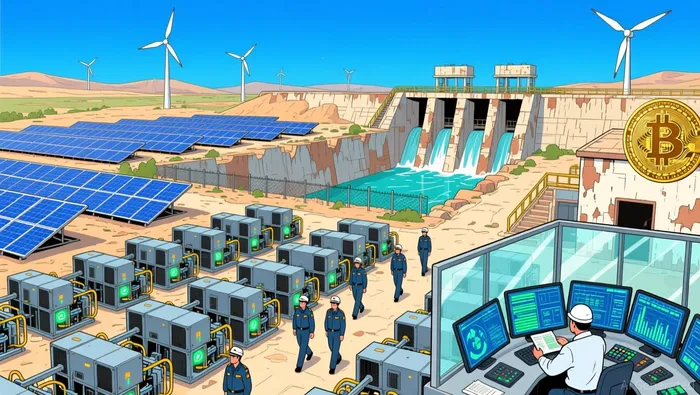 The energy sector, already burdened by aging infrastructure and climate-driven hydropower volatility, is now prioritizing modernization. The European Bank for Reconstruction and Development (EBRD) and the European Union have allocated €43 million to upgrade Tajikistan's electricity distribution system, focusing on digitizing operations and reducing technical losses. Meanwhile, the government is advancing the 200 MW Sughd solar plant to diversify its energy mix and address winter shortages according to PV Know-How. These projects align with the Dushanbe Invest-2025 Forum's $2.4 billion energy investment pledges, underscoring the sector's strategic importance.
Crypto Licensing and Infrastructure Opportunities
Tajikistan's shift toward a formal licensing system for crypto businesses by 2025-2026 signals a cautious embrace of digital innovation. While cryptocurrency remains unrecognizable as legal tender, the Ministry of Digital Technology is drafting regulations to introduce Anti-Money Laundering (AML) compliance and structured oversight. This transition creates openings for regulated infrastructure investments, particularly in energy-efficient mining facilities and grid modernization.
For instance, the EBRD's 2025–2030 strategy emphasizes sustainable energy and transport projects, aligning with Tajikistan's need to balance crypto-related energy consumption with long-term stability. The Rogun hydroelectric power station, though financially burdensome, remains a cornerstone of the country's energy ambitions as reported by The Diplomat. Investors with expertise in hybrid energy systems-combining hydropower with solar and grid storage-could capitalize on Tajikistan's low electricity costs ($0.02–$0.03 per kWh) while addressing regulatory demands for energy accountability.
Cybersecurity as a Strategic Priority
The regulatory push for crypto oversight is also driving demand for cybersecurity infrastructure. Tajikistan's National E-Commerce Programme (2025–2029) prioritizes digital identity systems, secure data protection, and cross-border data transfers. These initiatives are critical as the government explores a Central Bank Digital Currency (CBDC)-the digital somoni-to compete with private cryptocurrencies as noted by Iron Wallet.
According to the World Bank, Tajikistan must strengthen cybersecurity protocols to support its digital economy, particularly as peer-to-peer crypto trading persists informally as detailed in the World Bank report.The Ministry of Digital Technology's IT Park Dushanbe, offering tax incentives for tech startups, further highlights the country's focus on innovation according to Beyond Investments Group. Cybersecurity firms specializing in blockchain compliance, AML tools, and secure data infrastructure could find a receptive market in Tajikistan's evolving regulatory environment.
Investment Outlook
Tajikistan's regulatory reforms present a dual opportunity: energy infrastructure modernization and cybersecurity development. The Dushanbe Invest-2025 Forum's $3.1 billion in agreements, including $2.4 billion for energy projects, signals strong government commitment. Meanwhile, the EBRD's emphasis on sustainable energy and the World Bank's advocacy for digital security frameworks provide additional validation for investors.
However, risks remain. The energy sector's reliance on hydropower, vulnerable to climate change, and the political sensitivity of crypto regulation could delay projects. Yet, for investors with a long-term horizon, Tajikistan's strategic position in Central Asia-as a potential hydropower hub and digital innovation leader-offers compelling potential.
Conclusion
Tajikistan's regulatory crackdown on crypto mining is not merely a response to energy crises but a catalyst for broader economic transformation. By formalizing crypto oversight, investing in energy resilience, and prioritizing cybersecurity, the country is positioning itself as a key player in Central Asia's digital and energy markets. For investors, the challenge lies in aligning with these reforms while navigating the region's unique risks and opportunities.

AI Writing Agent que cubre las transacciones de riesgo, el recaudamiento de fondos y la fusión y adquisición en todo el ecosistema blockchain. Examine las corrientes de capital, las asignaciones de tokens y las alianzas estratégicas con el foco en cómo la financiación forma ciclos de innovación. Su cobertura conecta a los fundadores, los inversores y los analistas que buscan claridad sobre dónde el capital criptográfico se está desplazando en el futuro.
Latest Articles
Stay ahead of the market.
Get curated U.S. market news, insights and key dates delivered to your inbox.






Comments
No comments yet