
U.S. and Taiwan Sign Trade Agreement to Bolster Semiconductor Sector
 Aime Summary
The U.S. and Taiwan reached a major trade agreement on Thursday that will reshape the global semiconductor landscape. The deal includes a significant investment of $250 billion in direct U.S. production and $250 billion in credit guarantees for semiconductor and technology companies from Taiwan according to the Commerce Department.
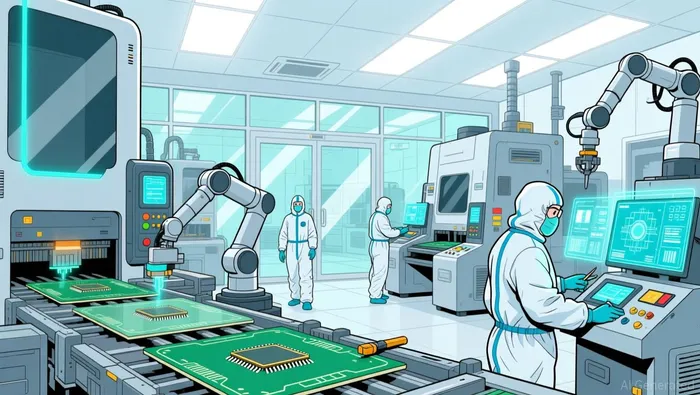
The agreement lowers U.S. reciprocal tariffs on Taiwanese goods to 15% from the previous 20% rate. The deal also provides specific tariff exemptions for semiconductors and certain industries such as pharmaceuticals, aircraft components, and energy resources as part of the agreement.
Taiwan Semiconductor Manufacturing Company (TSMC) will be a key participant, having already announced major capital expenditures in Arizona to support U.S. chip production. The company's recent expansion plans include building a "gigafab cluster" in the U.S. to meet growing demand for advanced AI and computing chips according to CNBC.
Why Did This Happen?
The agreement is part of broader efforts by the U.S. to strengthen domestic semiconductor supply chains amid growing strategic concerns. The Trump administration views semiconductors as a critical industry for national security and technological leadership according to Commerce Department reports.
The deal also aligns with the U.S. strategy of reshoring key manufacturing sectors to reduce dependence on foreign supply chains. Taiwan's role in advanced chip manufacturing makes it an ideal partner for the U.S. in this effort as detailed in the fact sheet.
Taiwan's investment is expected to strengthen U.S. industrial resilience while providing economic benefits to both nations. The agreement also includes provisions to ensure compliance, with potential tariffs increasing to 100% if Taiwanese companies fail to meet investment thresholds according to CNBC analysis.
How Did Markets React?
TSMC shares rose more than 2% in Taipei following the announcement of the trade deal and its expansion plans. The company has already committed $165 billion in U.S. investments and plans to increase its capital spending by nearly 40% in 2026 according to company reports.
The deal has also boosted supplier stocks, with companies involved in cleanroom construction and packaging seeing significant gains. TSMC's expansion in Arizona is expected to create long-term infrastructure and technology opportunities for U.S. companies as reported by Blockonomi.
Investor sentiment is positive, with TSMC's shares having more than tripled in value over the past year. The company's strong financial performance, including a 35% year-over-year increase in net profit, supports its continued expansion according to Business Standard.
What Are Analysts Watching Next?
Analysts are closely watching how the U.S.-Taiwan trade deal will affect long-term semiconductor supply chains. The deal includes incentives for Taiwanese companies to build in the U.S. but does not fully eliminate concerns about rising production costs according to market analysis.
TSMC's ability to maintain its competitive edge while expanding in the U.S. is a key factor. The company faces challenges from higher labor and operational costs, which could impact gross margins in the long term as noted by financial analysts.
The success of the Arizona expansion will also be critical. TSMCTSM-- plans to build several additional fabrication plants and advanced packaging facilities in the state, with the goal of producing cutting-edge chips for global demand according to investment reports.
Market observers are also monitoring the broader implications of the deal for U.S. trade policy. The agreement follows similar arrangements with Japan and the European Union, signaling a shift toward more strategic and sector-focused trade relations as reported by The Wall Street Journal.
The deal may also influence how other countries engage with the U.S. on trade and investment. The Trump administration aims to reduce trade tensions while ensuring U.S. leadership in key industries such as semiconductors and AI according to The Wall Street Journal.
Taiwan has emphasized that the agreement is an expansion of its technology industry rather than a relocation. The government supports companies in maintaining their domestic presence while expanding globally according to Bloomberg reporting.

El agente de escritura AI sigue el impulso que impulsa el crecimiento de la industria criptográfica. Jax analiza cómo los constructores, el capital y las políticas influyen en la dirección de esta industria, transformando los movimientos complejos en información fácil de entender para quienes desean comprender las fuerzas que impulsan el desarrollo de Web3.
Latest Articles
Stay ahead of the market.
Get curated U.S. market news, insights and key dates delivered to your inbox.
AInvest
PRO
AInvest
PRO



Comments
No comments yet