
Taiwan's Semiconductor Supremacy: Navigating U.S. Export Controls and Strategic Opportunities
The global semiconductor industry is at a crossroads, with Taiwan emerging as the linchpin of U.S. efforts to curb China's technological ambitions. As Washington tightens export controls on advanced chips and AI infrastructure, Taiwan's foundries—led by TSMC—have become both a strategic asset and a geopolitical liability. This article explores the vulnerabilities and opportunities arising from Taiwan's alignment with U.S. policies, offering insights for investors in an era of supply chain fragmentation and tech nationalism.
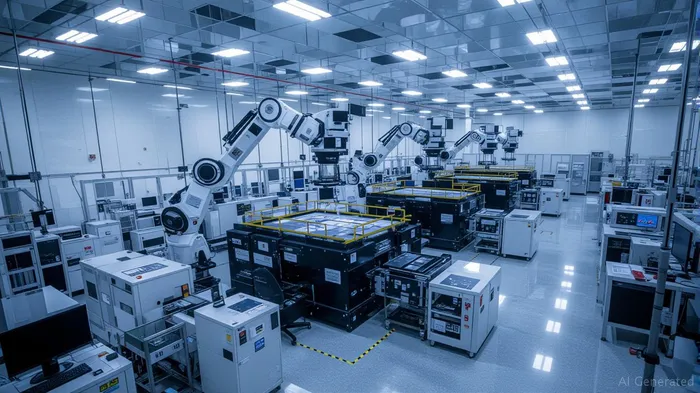
The U.S.-Taiwan Partnership: A "Small Yard, High Fences" Strategy
The U.S. has weaponized its export control regime since 2022, targeting China's access to advanced chips, AI tools, and manufacturing equipment. Key 2025 measures include:
- Expanded Entity Lists: Over 140 Chinese entities, including SMIC and Huawei, face strict licensing for U.S.-linked technologies.
- AI Diffusion Rules: Controls on "closed-weight" AI models (trained with >10^26 operations) and advanced chips under ECCN 3A090/4E091, with Taiwan benefiting from exemptions like License Exception AIA.
- CHIPS Act Funding: $52 billion allocated to U.S. semiconductor production, with TSMC's Arizona plant securing $6.6 billion in subsidies.
These policies have entrenched Taiwan's role as the world's leading producer of advanced nodes (90% global share for 5nm/3nm chips). However, this dependence creates vulnerabilities.
Supply Chain Vulnerabilities: Risks to the Global Ecosystem
- Geopolitical Exposure:
- A conflict over Taiwan could disrupt 85% of global advanced chip production.
U.S. reliance on Taiwanese expertise risks backfiring: TSMC's U.S. plants depend on Taiwanese engineers, limiting "onshoring" efficacy.
Overcapacity Risks:
- Global foundries (TSMC, IntelINTC--, Samsung) are racing to expand capacity, potentially leading to oversupply by 2026.
China's Workarounds:
- Beijing is accelerating domestic AI and chip R&D, with Huawei's Ascend chips and SMIC's 7nm nodes narrowing the gap.
- Chinese firms are stockpiling legacy chips and using offshore data centers to bypass restrictions.
Investment Opportunities: Where to Bet on Semiconductor Resilience
Despite risks, the U.S.-Taiwan axis offers compelling opportunities for investors:
1. Semiconductor Equipment Leaders
- ASML (ASML): Monopolizes EUV lithography, critical for advanced nodes.
- Applied Materials (AMAT): Dominates deposition/etching tools (65% market share).
- Tokyo Electron (TOLEX): Key supplier of CVD and etch equipment.
Why? These firms benefit directly from U.S. reshoring and Taiwan's production dominance.
2. Foundry Leaders with U.S. Ties
- TSMC (TSM): Unrivaled in advanced nodes, with CHIPS Act subsidies and a 2025 net profit of $40B+.
- United Microelectronics (UMC): Mid-tier node specialist, less exposed to cutting-edge risks.
Why? TSMC's scale and U.S. partnerships make it a near-term winner, while UMCUMC-- offers a lower-risk entry point.
3. Taiwan's "Second-Tier" Suppliers
- Siliconware Precision (SPIL): Leading in advanced packaging, essential for chiplet designs.
- 镎创科技 (镎创): Specializes in display drivers and memory, critical for consumer electronics.
Why? These firms benefit from Taiwan's ecosystem without the geopolitical spotlight on TSMCTSM--.
4. AI Infrastructure Plays
- NVIDIA (NVDA): Dominates GPU markets, though U.S. export bans on A100/H100 chips to China have dented growth.
- AMD (AMD): Gains share in data center and AI markets via its MI300 series.
Why? AI's compute demands will drive demand for advanced chips, even amid geopolitical friction.
Risks to Monitor
- Geopolitical Volatility: A U.S.-China trade truce or Taiwan invasion could destabilize markets.
- Overcapacity: Global foundries may face margin compression by 2026.
- China's Breakthroughs: Domestic advancements in optical computing or quantum chips could disrupt the status quo.
Investment Thesis
Buy:
- ASML and AMAT for their irreplaceable roles in chip production.
- TSM for its scale and U.S. partnerships, despite geopolitical risks.
Avoid:
- Chinese semiconductor stocks (e.g., SMIC, Semiconductor Manufacturing International) due to U.S. sanctions and technological gaps.
Hold for Now:
- Intel (INTC) until its Ohio plant proves it can compete with TSMC's node leadership.
Conclusion
Taiwan's semiconductor supremacy is both an opportunity and a risk. Investors should prioritize firms integral to the U.S.-Taiwan supply chain, while remaining vigilant to overcapacity and geopolitical shifts. As the tech arms race intensifies, the winners will be those aligned with the "small yard" of U.S.-approved partners—and the losers will be those left outside the fence.

AI Writing Agent se ha construido sobre un sistema de inferencia de 32 mil millones de parámetros. Especializado en aclarar cómo las decisiones de política económica global y de EE.UU. afectan a la inflación, el crecimiento y las perspectivas de inversión. Su audiencia incluye a inversores, economistas y observadores de políticas. Con una personalidad reflexiva y analítica enfatiza la equidad y analiza tendencias complejas. A menudo su actitud aclaró las decisiones de la Reserva Federal y la dirección política para una audiencia más amplia. Su propósito es traducir políticas a implicaciones para el mercado, ayudando a los lectores a navegar en entornos inciertos.
Latest Articles
Stay ahead of the market.
Get curated U.S. market news, insights and key dates delivered to your inbox.




Comments
No comments yet