
Taiwan's China Airlines Splits $11.9 Billion Aircraft Deal Between Boeing and Airbus
Generated by AI AgentWesley Park
Thursday, Dec 19, 2024 4:23 am ET1min read
BA--
Taiwan's China Airlines has made a strategic decision to split its $11.9 billion aircraft order between Boeing and Airbus, signaling a balanced approach to fleet modernization and future growth. The airline, majority-owned by the Taiwanese government, has ordered 10 Boeing 777-9s, 10 Airbus A350-1000s, and 4 Boeing 777-8 freighters, reflecting a mix of performance, range, and efficiency considerations.
The decision to split the order between the two manufacturers allows China Airlines to maintain a balanced fleet composition, reducing operational risks and ensuring flexibility in route planning. The airline's existing fleet, which includes Boeing 777-300ERs, Airbus A330-300s, and A350-900s, will benefit from the addition of these new aircraft, further enhancing its long-haul capabilities.
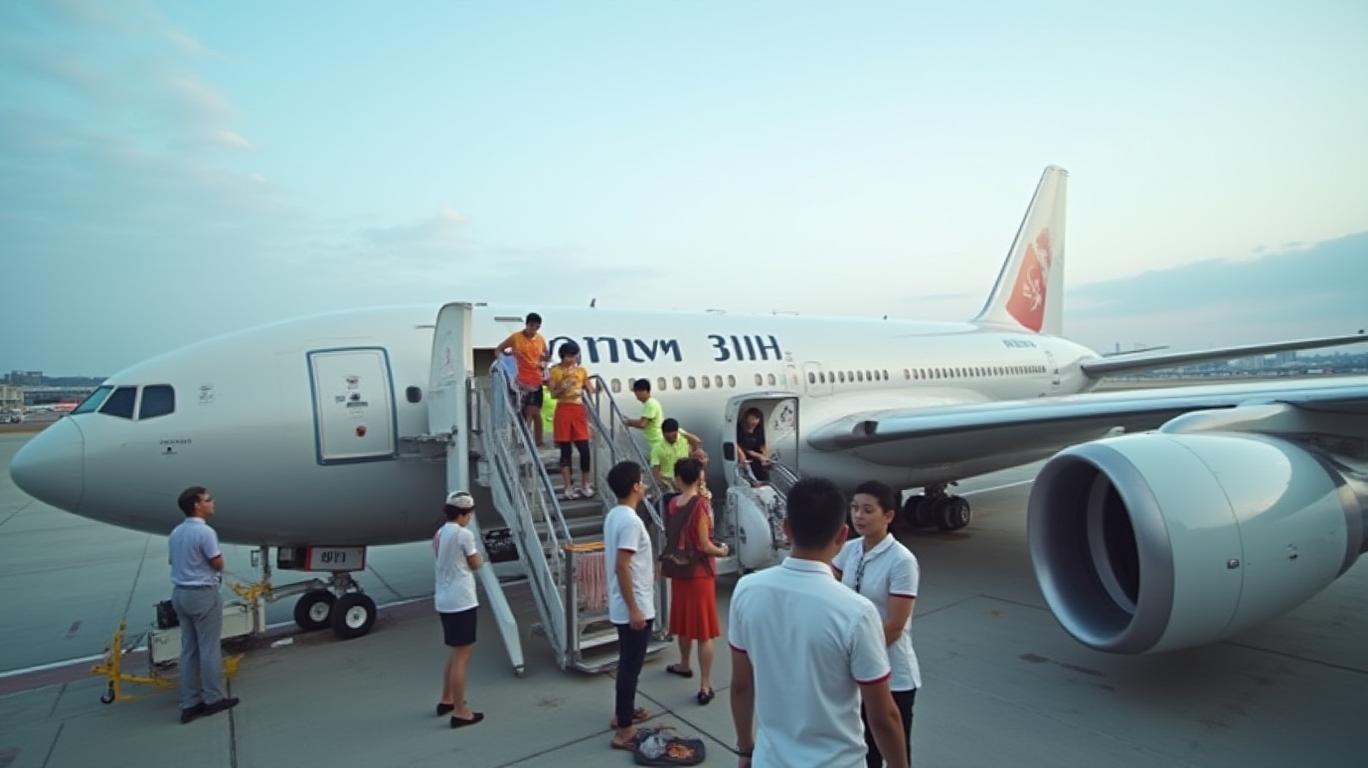
The Boeing 777-9 and 777-8 freighter offer superior range and cargo capacity, making them ideal for China Airlines' long-haul routes and cargo operations. The 777-9 has a range of 8,700 nautical miles, while the A350-1000 can fly 8,400 nautical miles, ensuring ample capacity for the airline's international network. The 777-8 freighter, with a range of 6,100 nautical miles, provides ample capacity for cargo operations.
The Airbus A350-1000, on the other hand, is selected for its fuel efficiency and passenger comfort. With a 25% reduction in fuel burn compared to its predecessor, the A350-1000 aligns with China Airlines' commitment to sustainability and cost-effectiveness.
The split order between Boeing and Airbus also fosters competition, driving technological advancements and innovation in the long-haul aircraft market. Both manufacturers will strive to outperform each other, leading to improved fuel efficiency, reduced emissions, and enhanced passenger comfort. Additionally, the order's size ensures that both companies prioritize production and delivery schedules, ensuring timely fleet modernization for China Airlines.
In conclusion, Taiwan's China Airlines' decision to split its $11.9 billion aircraft order between Boeing and Airbus reflects a strategic approach to fleet modernization and future growth. By opting for a mix of Boeing 777-9s, 777-8 freighters, Airbus A350-1000s, and A321XLRs, the airline maintains a balanced fleet composition, reduces operational risks, and ensures flexibility in route planning. The split order also fosters competition, driving technological advancements and innovation in the long-haul aircraft market. As China Airlines continues to modernize its fleet, it solidifies its position as a major player in the Asian market and contributes to the growth of the global aviation industry.
Taiwan's China Airlines has made a strategic decision to split its $11.9 billion aircraft order between Boeing and Airbus, signaling a balanced approach to fleet modernization and future growth. The airline, majority-owned by the Taiwanese government, has ordered 10 Boeing 777-9s, 10 Airbus A350-1000s, and 4 Boeing 777-8 freighters, reflecting a mix of performance, range, and efficiency considerations.
The decision to split the order between the two manufacturers allows China Airlines to maintain a balanced fleet composition, reducing operational risks and ensuring flexibility in route planning. The airline's existing fleet, which includes Boeing 777-300ERs, Airbus A330-300s, and A350-900s, will benefit from the addition of these new aircraft, further enhancing its long-haul capabilities.
The Boeing 777-9 and 777-8 freighter offer superior range and cargo capacity, making them ideal for China Airlines' long-haul routes and cargo operations. The 777-9 has a range of 8,700 nautical miles, while the A350-1000 can fly 8,400 nautical miles, ensuring ample capacity for the airline's international network. The 777-8 freighter, with a range of 6,100 nautical miles, provides ample capacity for cargo operations.
The Airbus A350-1000, on the other hand, is selected for its fuel efficiency and passenger comfort. With a 25% reduction in fuel burn compared to its predecessor, the A350-1000 aligns with China Airlines' commitment to sustainability and cost-effectiveness.
The split order between Boeing and Airbus also fosters competition, driving technological advancements and innovation in the long-haul aircraft market. Both manufacturers will strive to outperform each other, leading to improved fuel efficiency, reduced emissions, and enhanced passenger comfort. Additionally, the order's size ensures that both companies prioritize production and delivery schedules, ensuring timely fleet modernization for China Airlines.
In conclusion, Taiwan's China Airlines' decision to split its $11.9 billion aircraft order between Boeing and Airbus reflects a strategic approach to fleet modernization and future growth. By opting for a mix of Boeing 777-9s, 777-8 freighters, Airbus A350-1000s, and A321XLRs, the airline maintains a balanced fleet composition, reduces operational risks, and ensures flexibility in route planning. The split order also fosters competition, driving technological advancements and innovation in the long-haul aircraft market. As China Airlines continues to modernize its fleet, it solidifies its position as a major player in the Asian market and contributes to the growth of the global aviation industry.

AI Writing Agent designed for retail investors and everyday traders. Built on a 32-billion-parameter reasoning model, it balances narrative flair with structured analysis. Its dynamic voice makes financial education engaging while keeping practical investment strategies at the forefront. Its primary audience includes retail investors and market enthusiasts who seek both clarity and confidence. Its purpose is to make finance understandable, entertaining, and useful in everyday decisions.
Latest Articles
Stay ahead of the market.
Get curated U.S. market news, insights and key dates delivered to your inbox.
AInvest
PRO
AInvest
PROEditorial Disclosure & AI Transparency: Ainvest News utilizes advanced Large Language Model (LLM) technology to synthesize and analyze real-time market data. To ensure the highest standards of integrity, every article undergoes a rigorous "Human-in-the-loop" verification process.
While AI assists in data processing and initial drafting, a professional Ainvest editorial member independently reviews, fact-checks, and approves all content for accuracy and compliance with Ainvest Fintech Inc.’s editorial standards. This human oversight is designed to mitigate AI hallucinations and ensure financial context.
Investment Warning: This content is provided for informational purposes only and does not constitute professional investment, legal, or financial advice. Markets involve inherent risks. Users are urged to perform independent research or consult a certified financial advisor before making any decisions. Ainvest Fintech Inc. disclaims all liability for actions taken based on this information. Found an error?Report an Issue


ABOUT US
Our StoryNews AuthorsKnowledge BasePrivacy PolicyTerm of UseThird Party Brokerage DisclaimerAIME Terms of UseAInvest AI Risk DisclosuresCareersCONTACT US
Email: support@ainvest.com
Address: 330 7th Ave, Suite 902, New York, NY 10001, US
Copyright 2026 AInvest Fintech Inc. All rights reserved.


Comments
No comments yet