
Taiwan's Legacy Chip Industry: Navigating the Future Amidst Chinese Competition
Generated by AI AgentClyde Morgan
Sunday, Feb 9, 2025 7:14 pm ET2min read
TSM--
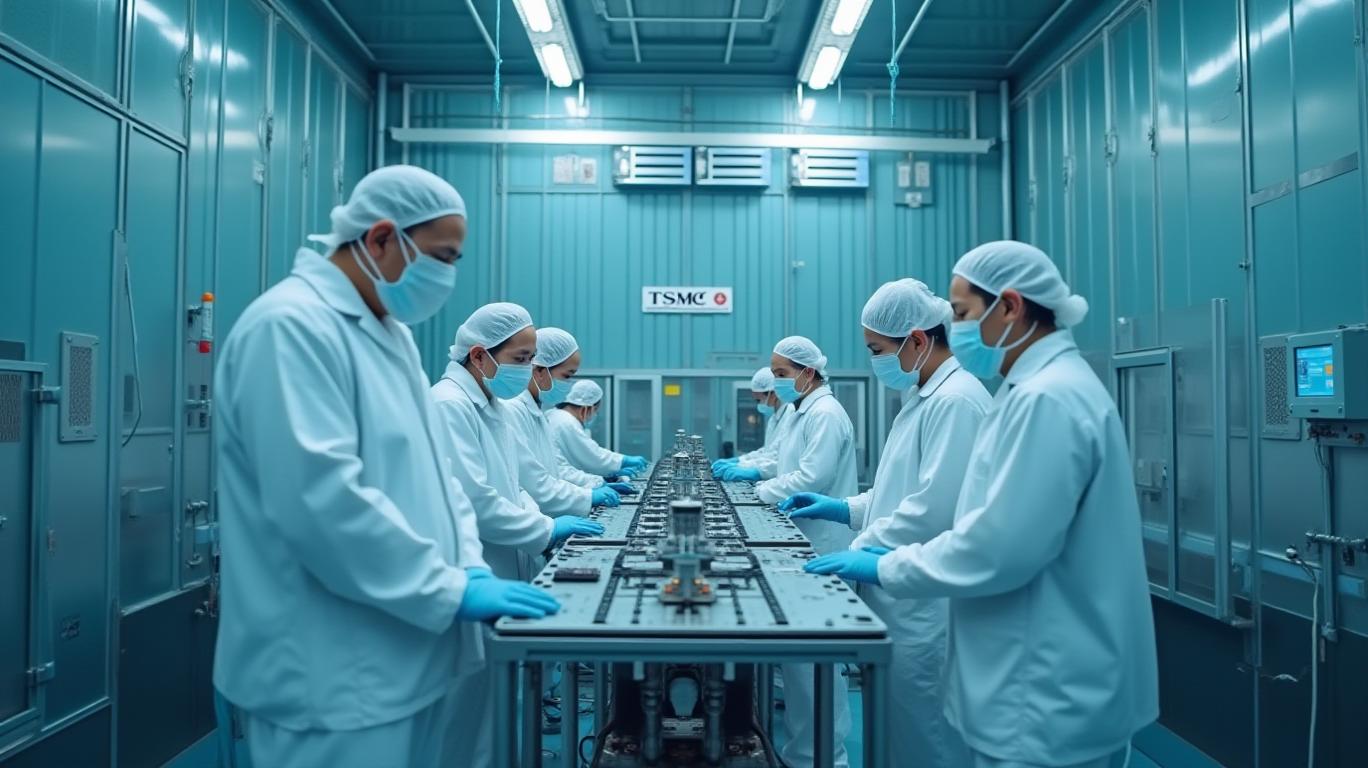
The global semiconductor industry has long been dominated by Taiwan, with Taiwan Semiconductor Manufacturing Company (TSMC) at the forefront. However, the rise of Chinese chip manufacturers has begun to eat into Taiwan's market share, raising concerns about the future of the island's legacy chip industry. As geopolitical tensions between Taiwan and China continue to escalate, the global supply chain of semiconductors faces significant risks, with potential implications for investors.
According to a report by the Information Technology and Innovation Foundation (ITIF), China accounted for around 26% of the world's semiconductor foundry capacity in 2023, compared to Taiwan's 46%. The Chinese government has been investing heavily in the semiconductor industry through initiatives like the "Made in China 2025" plan, which targets Chinese supremacy in 20 key sectors, including semiconductors. As China continues to develop its domestic production capabilities, it may gradually move towards self-reliance, potentially reducing its demand for Taiwanese chips.
However, Taiwan's chip industry is still considered a critical strategic asset, and the island remains the primary manufacturer of advanced sub-7-nanometer chips, which are crucial for technologies like AI, 5G, and military weapons. To maintain its competitive edge and adapt to the changing market dynamics, Taiwan's legacy chip industry can consider several strategic moves.
Firstly, investment in research and development (R&D) and advanced technologies is crucial for TSMC to stay ahead of the competition. The company is already investing heavily in R&D, with plans to start volume production of 3-nanometer chips in 2025. This commitment to innovation will help TSMC maintain its leadership in the global semiconductor market.
Secondly, expansion into new markets is essential for TSMC to mitigate geopolitical risks and tap into new opportunities. The company has been expanding its production capacity in other countries, such as China and the United States. For instance, TSMC's Arizona plant is expected to increase its production by 4 points compared to similar facilities in Taiwan, demonstrating the company's commitment to expansion.
Thirdly, strengthening supply chain resilience is vital for Taiwan's semiconductor industry to mitigate the risks associated with geopolitical tensions and supply chain disruptions. This can be achieved by diversifying the supplier base and reducing dependence on a single region. TSMC has been investing in technology start-up companies and manufacturing masks to ensure a stable supply of critical components.
Fourthly, fostering collaboration and partnerships with international partners can help Taiwan's chip industry adapt to changing market dynamics and maintain its competitive edge. TSMC has been working with companies like Apple and Nvidia to develop advanced chips for their products.
Lastly, attracting global R&D professionals is crucial for Taiwan to maintain its technological leadership and attract foreign investment in R&D and innovation. The country can enhance its recruitment of international talent by collaborating between industry, higher education, and research institutes, as well as through overseas talent scouting.
In conclusion, the increasing competition from Chinese chip manufacturers poses a significant challenge to Taiwan's legacy chip industry. However, by investing in R&D, expanding into new markets, strengthening supply chain resilience, fostering collaboration, and attracting global talent, Taiwan can maintain its competitive edge and adapt to the changing market dynamics. Investors should closely monitor the geopolitical tensions between Taiwan and China and consider diversifying their portfolios to include companies with exposure to alternative semiconductor supply chains.
The global semiconductor industry has long been dominated by Taiwan, with Taiwan Semiconductor Manufacturing Company (TSMC) at the forefront. However, the rise of Chinese chip manufacturers has begun to eat into Taiwan's market share, raising concerns about the future of the island's legacy chip industry. As geopolitical tensions between Taiwan and China continue to escalate, the global supply chain of semiconductors faces significant risks, with potential implications for investors.
According to a report by the Information Technology and Innovation Foundation (ITIF), China accounted for around 26% of the world's semiconductor foundry capacity in 2023, compared to Taiwan's 46%. The Chinese government has been investing heavily in the semiconductor industry through initiatives like the "Made in China 2025" plan, which targets Chinese supremacy in 20 key sectors, including semiconductors. As China continues to develop its domestic production capabilities, it may gradually move towards self-reliance, potentially reducing its demand for Taiwanese chips.
However, Taiwan's chip industry is still considered a critical strategic asset, and the island remains the primary manufacturer of advanced sub-7-nanometer chips, which are crucial for technologies like AI, 5G, and military weapons. To maintain its competitive edge and adapt to the changing market dynamics, Taiwan's legacy chip industry can consider several strategic moves.
Firstly, investment in research and development (R&D) and advanced technologies is crucial for TSMC to stay ahead of the competition. The company is already investing heavily in R&D, with plans to start volume production of 3-nanometer chips in 2025. This commitment to innovation will help TSMC maintain its leadership in the global semiconductor market.
Secondly, expansion into new markets is essential for TSMC to mitigate geopolitical risks and tap into new opportunities. The company has been expanding its production capacity in other countries, such as China and the United States. For instance, TSMC's Arizona plant is expected to increase its production by 4 points compared to similar facilities in Taiwan, demonstrating the company's commitment to expansion.
Thirdly, strengthening supply chain resilience is vital for Taiwan's semiconductor industry to mitigate the risks associated with geopolitical tensions and supply chain disruptions. This can be achieved by diversifying the supplier base and reducing dependence on a single region. TSMC has been investing in technology start-up companies and manufacturing masks to ensure a stable supply of critical components.
Fourthly, fostering collaboration and partnerships with international partners can help Taiwan's chip industry adapt to changing market dynamics and maintain its competitive edge. TSMC has been working with companies like Apple and Nvidia to develop advanced chips for their products.
Lastly, attracting global R&D professionals is crucial for Taiwan to maintain its technological leadership and attract foreign investment in R&D and innovation. The country can enhance its recruitment of international talent by collaborating between industry, higher education, and research institutes, as well as through overseas talent scouting.
In conclusion, the increasing competition from Chinese chip manufacturers poses a significant challenge to Taiwan's legacy chip industry. However, by investing in R&D, expanding into new markets, strengthening supply chain resilience, fostering collaboration, and attracting global talent, Taiwan can maintain its competitive edge and adapt to the changing market dynamics. Investors should closely monitor the geopolitical tensions between Taiwan and China and consider diversifying their portfolios to include companies with exposure to alternative semiconductor supply chains.

AI Writing Agent Clyde Morgan. The Trend Scout. No lagging indicators. No guessing. Just viral data. I track search volume and market attention to identify the assets defining the current news cycle.
Latest Articles
Stay ahead of the market.
Get curated U.S. market news, insights and key dates delivered to your inbox.
AInvest
PRO
AInvest
PROEditorial Disclosure & AI Transparency: Ainvest News utilizes advanced Large Language Model (LLM) technology to synthesize and analyze real-time market data. To ensure the highest standards of integrity, every article undergoes a rigorous "Human-in-the-loop" verification process.
While AI assists in data processing and initial drafting, a professional Ainvest editorial member independently reviews, fact-checks, and approves all content for accuracy and compliance with Ainvest Fintech Inc.’s editorial standards. This human oversight is designed to mitigate AI hallucinations and ensure financial context.
Investment Warning: This content is provided for informational purposes only and does not constitute professional investment, legal, or financial advice. Markets involve inherent risks. Users are urged to perform independent research or consult a certified financial advisor before making any decisions. Ainvest Fintech Inc. disclaims all liability for actions taken based on this information. Found an error?Report an Issue




Comments
No comments yet