
The Taiwan Invasion Market: Why the 0.6% Price Doesn't Tell the Full Story
 Aime Summary
Lead
The market predicting a Chinese invasion of Taiwan by September 2026 is priced for near-certain peace, trading at a mere 0.6% probability. This ultra-low price reflects a market consensus that, despite a steady drumbeat of military activity and geopolitical friction, Beijing will not launch an offensive to seize control of Taiwanese territory in the coming weeks. However, in deeply asymmetric prediction markets, price can diverge sharply from true tail risk. The current quote embeds not only a fundamental assessment of geopolitical intent but also significant rule-based constraints, liquidity dynamics, and the structural tendency of markets to heavily discount low-probability, high-impact events until the moment of crisis.
Event Definition
This Polymarket contract bets on whether China will "commence a military offensive intended to establish control over any portion of the Republic of China (Taiwan)" before 00:00 UTC on September 30, 2026. The settlement is binary: "Yes" if such an offensive occurs, "No" otherwise. Crucially, the contract specifies that inhabited islands count toward resolution, while uninhabited islands do not. The core disagreement is not about whether China will continue military pressure, but whether any kinetic action will cross the specific, high threshold of an invasion aimed at territorial control.
Latest News & Information Increments
The market is operating in a low-information regime regarding an imminent invasion, but against a backdrop of persistent military signaling. China conducted two days of live-fire drills in the Taiwan Strait near Fujian province on July 23, a move Taiwan condemned as a military provocation creating regional tensions. In a separate escalation, China’s coast guard conducted patrols in waters east of Taiwan on July 31, with vessels detected 151 nautical miles east of Orchid Island, an activity Taipei labeled a political operation to expand Beijing’s control. These actions represent a continuation of China’s gray-zone tactics, normalizing a security presence on Taiwan’s Pacific doorstep.
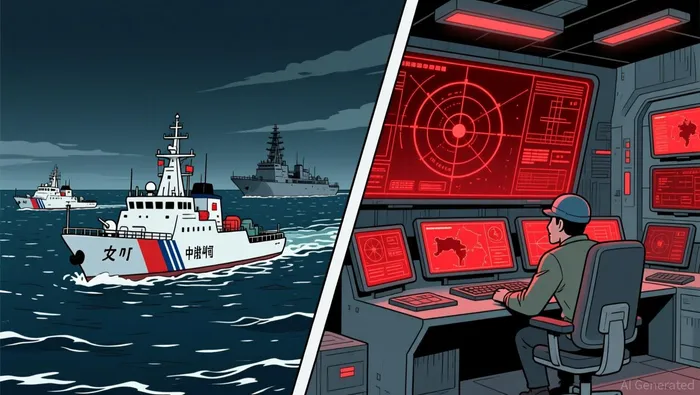
Offsetting this escalation, PLA fighter jet sorties near Taiwan dropped to a three-year low in the first half of 2026, with a new high in days with no jet detections and no large-scale drills, suggesting a deliberate operational pause rather than a prelude to invasion. Meanwhile, diplomatic channels remain active. Russian Deputy Foreign Minister Andrey Rudenko stated that Moscow and Beijing are discussing all aspects of the Ukrainian conflict settlement, with Russia expressing gratitude for China’s balanced position. This signals Beijing’s continued preference for leveraging diplomatic partnerships over initiating a second major military crisis. The net information increment is a stalemate: tactical pressure persists, but strategic indicators point away from an imminent offensive, reinforcing the market’s near-zero pricing.
Market Resolution Rules Analysis
The resolution hinges on official confirmation of a military offensive by China, Taiwan, the United Nations, or any permanent member of the UN Security Council. If such official confirmation is absent or delayed, a consensus of credible reporting will also be used. The event must be an "offensive intended to establish control," not merely a skirmish, incursion, or coercive patrol. Inhabited islands qualify for settlement; uninhabited territorial features do not. The time boundary is absolute: actions must commence before September 30, 2026.
Rule Risk Points & Disputed Scenarios
The primary risk lies in the qualitative threshold of an "offensive intended to establish control." A limited landing on an inhabited island, such as Kinmen or Matsu, could trigger intense dispute over whether the action constitutes an invasion or a coercive operation. A second risk emerges from the reliance on a consensus of credible reporting if official sources remain silent or issue ambiguous statements. In a fast-moving, fog-of-war scenario, the market could resolve on a contested narrative, introducing significant uncertainty for traders. For uninhabited features, any military seizure would be explicitly excluded, a clear but potentially misunderstood rule boundary.
Market Overview
With no active market price records available for a granular cross-market overview, the core analytical signal is the dominant contract’s ultra-low probability, which anchors the entire thematic complex. A 0.6% implied probability means the market assigns roughly 165-to-1 odds against an invasion. This pricing reflects a strong consensus that China’s current operational posture—coast guard patrols, live-fire drills, and diplomatic maneuvering—falls well short of the contract’s invasion threshold. The price effectively prices in the continuation of gray-zone harassment and a diplomatic resolution track, while treating a sudden offensive as a tail event that the market is structurally disinclined to price above a rounding error.
Market Dynamics (Volatility & Volume)
Price action has been exceptionally muted. The maximum single-day price change is a mere negative 0.2 percentage points, with the one-week and one-month maximum moves at negative 0.4 and 0.6 percentage points, respectively. This ultra-low volatility regime is characteristic of a market stuck at a floor price, where sellers have exhausted their conviction and buyers see no near-term catalyst to justify even a modest position. The overlapping prominence of the same market across daily, weekly, and monthly volatility rankings confirms that no alternative contract is generating meaningful repricing, reinforcing the picture of a market in stasis.
Volume, however, tells a different story. The event has accumulated over $1.78 million in total trading volume, with a massive 24-hour surge exceeding $344,000. This divergence—negligible price movement on surging volume—is a critical signal. It suggests high churn and position shuffling rather than directional conviction. Traders may be harvesting liquidity, rebalancing portfolios, or positioning for a volatility spike that has yet to materialize. The price is not moving because the order book is absorbing size without a fundamental shift in the consensus probability, but the elevated turnover indicates that the market is primed for a violent repricing should a genuine catalyst emerge.
Trading Judgment & Follow-up Observation Points
The current price is less a forecast of geopolitical reality and more a reflection of the contract’s stringent resolution criteria and the market’s structural tendency to underprice tail risk. The key variables to track are not the daily patrols or diplomatic statements, but rather any change in the operational posture of PLA amphibious forces, explicit warnings from Washington or Taipei about an imminent landing, and any credible report of Chinese forces seizing an inhabited island. A sudden shift in official language from "provocation" to "invasion" by a UN Security Council permanent member would be the most direct path to resolution. Until then, the market will likely remain a low-volatility, high-volume anomaly—quiet on the surface, but with significant latent energy beneath.

Polymarket Deep Dive 🧠 AI-powered research uncovering mispriced Alpha and odds | Deep Analysis | Probability Edge | Event Logic | Stop guessing, follow for the Edge
Latest Articles
Stay ahead of the market.
Get curated U.S. market news, insights and key dates delivered to your inbox.


AInvest
PRO
AInvest
PRO




Comments
No comments yet