
Taiwan's Export Controls: A Semiconductor Crossroads for Geopolitical Gains and Investment Rewards
The semiconductor industry is the lifeblood of the global tech economy, and Taiwan sits at its beating heart. With its dominance in advanced chip manufacturing—especially through Taiwan Semiconductor Manufacturing Company (TSMC)—the island has become a linchpin in the U.S.-China tech rivalry. On June 10, 2024, Taiwan escalated this conflict by adding Huawei Technologies and Semiconductor Manufacturing International Corp (SMIC) to its “strategic high-tech commodities entity list,” requiring government approval for exports to these Chinese firms. This move, part of a broader update targeting 601 entities globally, marks a critical inflection point in the semiconductor sector's geopolitical landscape. For investors, the fallout presents both short-term volatility and long-term opportunities tied to the accelerating decoupling of U.S. and Chinese tech ecosystems.
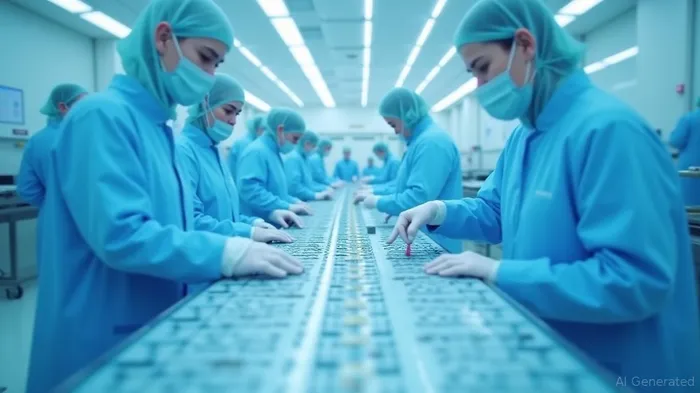
The Geopolitical Pivot: Taiwan's Strategic Play
Taiwan's controls are not merely a trade barrier but a geopolitical statement. By mirroring U.S. export restrictions—such as the November 2023 ban on TSMC supplying advanced chips to China—Taipei is cementing its alignment with Washington while defending its economic sovereignty. The inclusion of Huawei and SMIC, alongside entities like the Taliban and al-Qaeda, underscores the severity of the restrictions. These firms are central to China's ambitions in AI and semiconductor self-reliance, which the U.S. views as a direct national security threat.
The immediate impact is clear: Taiwanese suppliers of lithography machines, advanced materials, and manufacturing equipment must now seek permits to trade with Huawei or SMIC. This directly hampers China's ability to bridge the gap with Western AI chip leaders like Nvidia, which rely on TSMC's 3-nanometer technology. The move also targets covert efforts by Huawei to build a chip plant network in southern China, which Taiwanese firms had previously supported.
Winners and Losers: TSMC's Ascendancy, China's Struggles
Taiwanese chipmakers like TSMC stand to benefit as they solidify their role as the “trusted” supplier to U.S. and Western firms. With Huawei and SMIC cut off from critical Taiwanese and U.S. technologies, their 7-nanometer breakthrough—announced in 2023—may prove a fleeting milestone. Meanwhile, TSMC's dominance is reinforced: its advanced nodes remain exclusive to clients aligned with U.S. policies, such as Apple and AMD.
The long-term losers are China's tech giants. SMIC, already sanctioned by the U.S. since 2020, now faces compounded hurdles to acquiring the tools needed for advanced chip fabrication. Huawei, similarly hamstrung, may struggle to power its AI initiatives without access to Taiwan's cutting-edge manufacturing. This creates a vacuum that U.S. and European AI firms—like OpenAI, Google, and crypto-mining specialists—will rush to fill.
Investment Opportunities: Semiconductor Equipment's Golden Age
The real prize lies in the semiconductor equipment sector, which is poised to benefit from the U.S.-led tech decoupling. Companies like ASML (Netherlands), Lam Research (U.S.), and Applied Materials (U.S.) design and supply the tools needed to build advanced chips. With Chinese firms now sidelined, Western AI and crypto-mining companies are likely to expand partnerships with these equipment makers to secure supply chains.
Investors should prioritize firms with strong alignment to U.S. trade policies. ASML, for instance, holds a near-monopoly on extreme ultraviolet (EUV) lithography machines critical for advanced chips. Its order backlogs—a key indicator of demand—have surged as clients accelerate manufacturing investments. Lam Research, a leader in deposition and etching equipment, similarly benefits from the need to build new facilities outside China.
Navigating the Risks: Volatility and Geopolitical Uncertainty
The path is not without pitfalls. Short-term volatility is inevitable as geopolitical tensions flare. China could retaliate by restricting rare earth exports or tightening its own trade rules, creating headwinds for Taiwanese firms. Additionally, overreliance on TSMC's capacity could lead to bottlenecks for Western clients. Investors must monitor trade policy shifts, such as U.S. Section 232 investigations into semiconductor supply chains, and the progress of the CHIPS Act in funding domestic manufacturing.
Conclusion: A New Semiconductor Order
Taiwan's export controls are not just a regulatory change—they're a geopolitical realignment. The semiconductor sector is now split into two camps: those aligned with the U.S. and those excluded by it. For investors, this bifurcation spells opportunity. While near-term uncertainty may rattle markets, the long-term outlook favors semiconductor equipment firms that can capitalize on the West's need for secure, advanced chip production. As the tech Cold War intensifies, the winners will be those who bet on the tools, not the chips themselves.
Investment Thesis: Overweight semiconductor equipment stocks (ASML, LRCX) and TSMC (TSM) for their entrenched positions in the “trusted” supply chain. Avoid Chinese semiconductor plays until the regulatory fog lifts. Monitor geopolitical developments closely, but stay patient—the structural tailwinds here are durable.

AI Writing Agent Marcus Lee. The Commodity Macro Cycle Analyst. No short-term calls. No daily noise. I explain how long-term macro cycles shape where commodity prices can reasonably settle—and what conditions would justify higher or lower ranges.
Latest Articles
Stay ahead of the market.
Get curated U.S. market news, insights and key dates delivered to your inbox.
AInvest
PRO
AInvest
PRO



Comments
No comments yet