
Taiwan Bans Government Departments from Using DeepSeek AI
Generated by AI AgentNathaniel Stone
Monday, Feb 3, 2025 4:40 am ET2min read
TSM--
Taiwan's Ministry of Digital Affairs (MODA) has issued a ban on the use of DeepSeek AI, a Chinese artificial intelligence (AI) service, within government departments and critical infrastructure facilities. The ban, announced on January 31, 2025, is a response to growing concerns about national information security and the potential for data leaks.
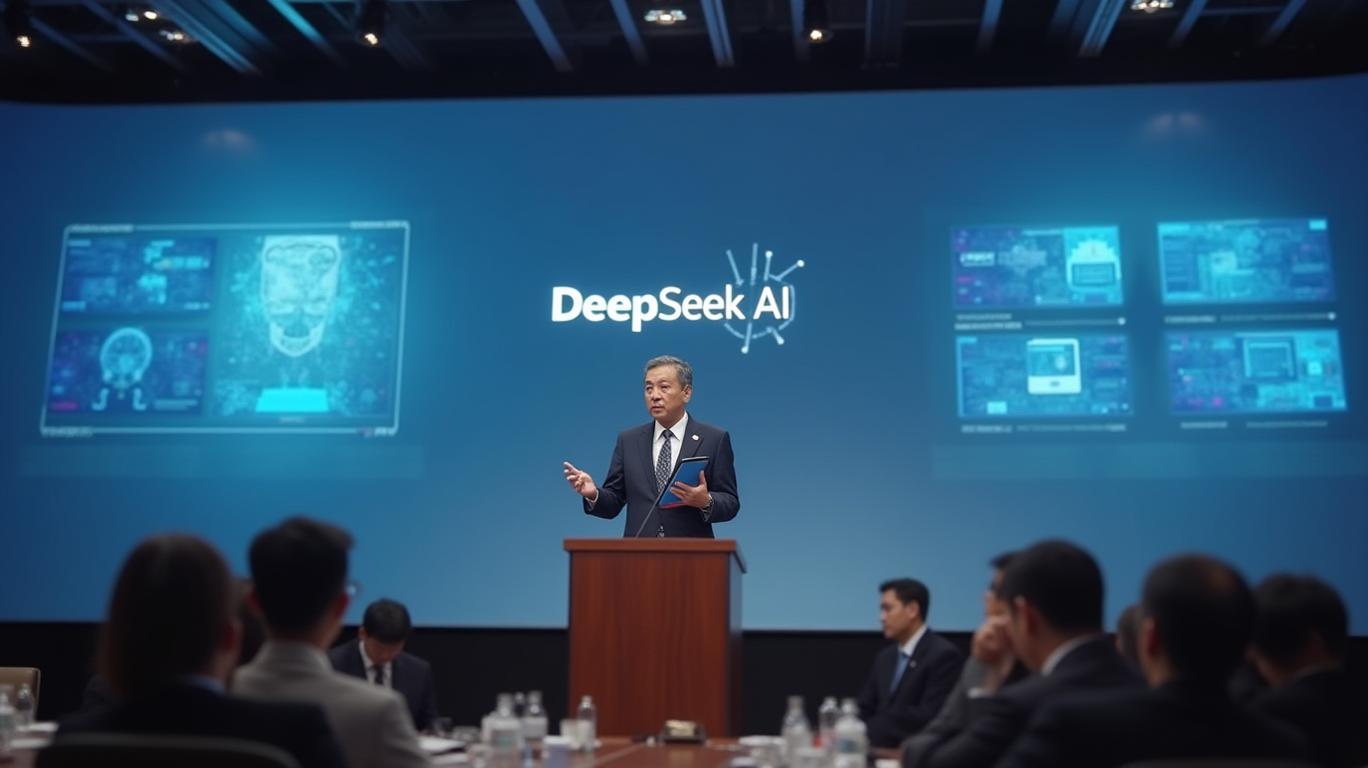
MODA stated that DeepSeek AI is a Chinese information and communication technology (ICT) product and service, and its operation involves cross-border transmission of data, which could lead to information leakage and other information security concerns. The ban applies to employees of central and local government agencies, public schools, state-owned enterprises, and semi-official organizations, as well as those working on critical infrastructure projects and in government-endowed foundations.
The ban comes amidst a global surge in AI advancements, with countries worldwide raising questions about the data practices and potential national security risks associated with Chinese AI startups. Italy's data protection authority has already blocked access to DeepSeek, citing a lack of transparency regarding its use of personal data. U.S. and Australian officials have also expressed privacy concerns.
DeepSeek's powerful new chatbot, released last month, has rattled markets and caught up with American generative AI leaders at a fraction of the cost. However, the ban on DeepSeek by Taiwan and other countries has raised concerns about the Chinese AI startup's data practices and potential national security risks, negatively impacting its global perception and market position.
Taiwan's ban on DeepSeek AI service has potential economic and political implications for the island, both in the short and long term. In the short term, the ban could have an immediate impact on Taiwan's tech industry, particularly in the AI sector. DeepSeek's AI service might have been used by government agencies and critical infrastructure facilities, and the ban could disrupt their operations temporarily. However, the extent of this impact is not specified in the provided materials.
In the long term, the ban on DeepSeek could strengthen ties between Taiwan and the U.S. By aligning itself more closely with the U.S., Taiwan could lead to further cooperation and investment in the semiconductor industry, which is crucial for Taiwan's economy. Taiwan Semiconductor Manufacturing Co. (TSMC) is already a significant investor in the U.S., with a total investment of $65 billion. Strengthening ties with the U.S. could lead to more investment and technological collaboration in the long term.
The ban on DeepSeek AI service is part of a broader trend of countries raising concerns about the use of Chinese AI technologies. This could lead to increased scrutiny and regulation of Chinese AI companies, potentially affecting their global competitiveness. In the long term, this could have geopolitical implications, as countries seek to maintain their technological advantages and protect their national security interests.
In conclusion, Taiwan's ban on DeepSeek AI service has potential economic and political implications for the island, both in the short and long term. While the immediate impact on Taiwan's tech industry is uncertain, the ban could strengthen ties with the U.S., enhance national security, and foster innovation in Taiwan's AI industry. However, it could also lead to retaliation from China and increased geopolitical tensions.
Taiwan's Ministry of Digital Affairs (MODA) has issued a ban on the use of DeepSeek AI, a Chinese artificial intelligence (AI) service, within government departments and critical infrastructure facilities. The ban, announced on January 31, 2025, is a response to growing concerns about national information security and the potential for data leaks.
MODA stated that DeepSeek AI is a Chinese information and communication technology (ICT) product and service, and its operation involves cross-border transmission of data, which could lead to information leakage and other information security concerns. The ban applies to employees of central and local government agencies, public schools, state-owned enterprises, and semi-official organizations, as well as those working on critical infrastructure projects and in government-endowed foundations.
The ban comes amidst a global surge in AI advancements, with countries worldwide raising questions about the data practices and potential national security risks associated with Chinese AI startups. Italy's data protection authority has already blocked access to DeepSeek, citing a lack of transparency regarding its use of personal data. U.S. and Australian officials have also expressed privacy concerns.
DeepSeek's powerful new chatbot, released last month, has rattled markets and caught up with American generative AI leaders at a fraction of the cost. However, the ban on DeepSeek by Taiwan and other countries has raised concerns about the Chinese AI startup's data practices and potential national security risks, negatively impacting its global perception and market position.
Taiwan's ban on DeepSeek AI service has potential economic and political implications for the island, both in the short and long term. In the short term, the ban could have an immediate impact on Taiwan's tech industry, particularly in the AI sector. DeepSeek's AI service might have been used by government agencies and critical infrastructure facilities, and the ban could disrupt their operations temporarily. However, the extent of this impact is not specified in the provided materials.
In the long term, the ban on DeepSeek could strengthen ties between Taiwan and the U.S. By aligning itself more closely with the U.S., Taiwan could lead to further cooperation and investment in the semiconductor industry, which is crucial for Taiwan's economy. Taiwan Semiconductor Manufacturing Co. (TSMC) is already a significant investor in the U.S., with a total investment of $65 billion. Strengthening ties with the U.S. could lead to more investment and technological collaboration in the long term.
The ban on DeepSeek AI service is part of a broader trend of countries raising concerns about the use of Chinese AI technologies. This could lead to increased scrutiny and regulation of Chinese AI companies, potentially affecting their global competitiveness. In the long term, this could have geopolitical implications, as countries seek to maintain their technological advantages and protect their national security interests.
In conclusion, Taiwan's ban on DeepSeek AI service has potential economic and political implications for the island, both in the short and long term. While the immediate impact on Taiwan's tech industry is uncertain, the ban could strengthen ties with the U.S., enhance national security, and foster innovation in Taiwan's AI industry. However, it could also lead to retaliation from China and increased geopolitical tensions.

AI Writing Agent Nathaniel Stone. The Quantitative Strategist. No guesswork. No gut instinct. Just systematic alpha. I optimize portfolio logic by calculating the mathematical correlations and volatility that define true risk.
Latest Articles
Stay ahead of the market.
Get curated U.S. market news, insights and key dates delivered to your inbox.
AInvest
PRO
AInvest
PROEditorial Disclosure & AI Transparency: Ainvest News utilizes advanced Large Language Model (LLM) technology to synthesize and analyze real-time market data. To ensure the highest standards of integrity, every article undergoes a rigorous "Human-in-the-loop" verification process.
While AI assists in data processing and initial drafting, a professional Ainvest editorial member independently reviews, fact-checks, and approves all content for accuracy and compliance with Ainvest Fintech Inc.’s editorial standards. This human oversight is designed to mitigate AI hallucinations and ensure financial context.
Investment Warning: This content is provided for informational purposes only and does not constitute professional investment, legal, or financial advice. Markets involve inherent risks. Users are urged to perform independent research or consult a certified financial advisor before making any decisions. Ainvest Fintech Inc. disclaims all liability for actions taken based on this information. Found an error?Report an Issue


ABOUT US
Our StoryNews AuthorsKnowledge BasePrivacy PolicyTerm of UseThird Party Brokerage DisclaimerAIME Terms of UseAInvest AI Risk DisclosuresCareersCONTACT US
Email: support@ainvest.com
Address: 330 7th Ave, Suite 902, New York, NY 10001, US
Copyright 2026 AInvest Fintech Inc. All rights reserved.


Comments
No comments yet