
TAE Technologies: A Fusion of Innovation and Market Momentum in 2025


 Aime Summary
The clean energy sector has long been a battleground for technological ambition and financial risk, but few companies have captured the imagination of investors and scientists alike as effectively as TAE Technologies. In 2025, the California-based fusion energy firm has demonstrated a rare confluence of scientific breakthroughs and market validation, positioning itself as a potential leader in the race to commercialize fusion power. With a recent
funding round, a groundbreaking reactor design
achieved through a neutral beam injection approach, and a high-profile merger
valued at $6 billion, TAE is accelerating its path to delivering what it calls "limitless energy."
Technological Breakthroughs: Simplifying Fusion's Complexity
TAE's most significant achievement this year is the development of its "Norm" machine, a reactor prototype that
reduces the size, complexity, and cost of its fusion technology by up to 50%. This innovation, achieved through a neutral beam injection (NBI)-only approach to plasma stabilization, marks a departure from traditional methods that rely on complex magnetic confinement systems. By eliminating the need for external magnetic fields, Norm not only streamlines reactor design but also
enhances plasma stability at temperatures exceeding 70 million °C. 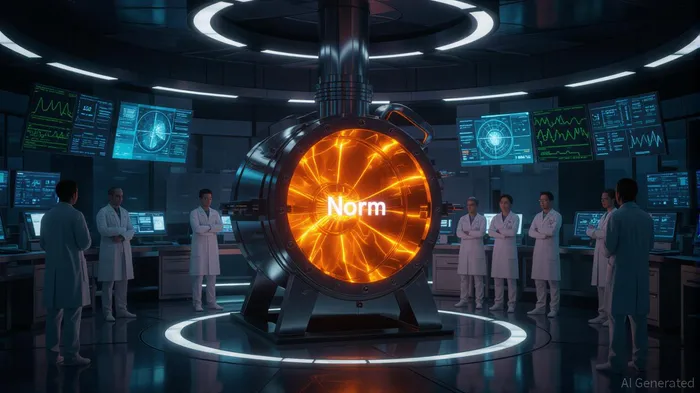
The implications are profound. As stated by TAE, this advancement
dramatically reduces the cost of a future power plant, a critical factor in making fusion economically viable. The results,
published in Nature Communications, have been hailed as a "major inflection point" in fusion research, with analysts noting that the breakthrough de-risks TAE's next-generation Copernicus reactor, which is
slated to achieve net energy generation before the end of the decade.
Financial Momentum: Capital and Confidence
TAE's technological progress has been matched by robust financial backing. In June 2025, the company
secured over $150 million in a funding round, surpassing its initial target and bringing total equity raised to
a $1.3 billion figure since inception. This influx of capital-particularly from energy and tech giants-underscores growing investor confidence in TAE's Field-Reversed Configuration (FRC) approach, which is designed for seamless integration with existing grid infrastructure.
The company's strategic alliances have further amplified its momentum. In December 2025, TAE announced a merger with Trump Media & Technology Group (TMTG),
creating one of the first publicly traded fusion companies. The merger,
valued at $6 billion, provides TAE with access to public market capital and accelerates its construction timeline for a 50 MWe utility-scale fusion plant by 2026. This move has been interpreted as a vote of confidence from TMTG's shareholders, who approved the deal amid heightened global demand for decarbonization solutions.
Market Reactions: A New Era for Fusion Investing
The merger with TMTG has already triggered a surge in investor sentiment. While TAE's stock (trading under the DJT ticker post-merger) has historically been volatile, the deal's announcement in late 2025 coincided with a broader market appetite for clean energy innovation. Analysts at CleanEnergy-Platform note that TAE's
roadmap from Copernicus to Da Vinci-a prototype power plant targeting the early 2030s-has redefined expectations for commercial fusion timelines.
However, skeptics caution that fusion remains a high-risk, long-term bet. The company's reliance on continuous capital infusions and its history of delayed milestones have drawn scrutiny. Yet, the involvement of Chevron and Google-both of which have deep pockets and long-term energy strategies-suggests that TAE's technology is being viewed through a lens of strategic necessity rather than speculative hype.
Conclusion: A High-Stakes Bet with High Rewards
TAE Technologies' 2025 trajectory reflects a company at the intersection of scientific ingenuity and financial pragmatism. The Norm breakthrough
achieved through a neutral beam injection approach, combined with the Copernicus and Da Vinci roadmaps
to advance development of utility-scale fusion power plant, positions TAE to potentially deliver the first commercially viable fusion power plant. Meanwhile, the merger with TMTG
valued at $6 billion and the $1.3 billion in equity raised
since inception signal that investors are willing to tolerate the inherent risks of fusion R&D in exchange for the promise of a transformative energy source.
For investors, the key question is whether TAE can maintain this momentum. The company's ability to scale its FRC technology, secure regulatory approvals, and navigate the technical challenges of net energy generation will determine its long-term success. But in a world increasingly desperate for clean energy solutions, TAE's progress has already proven that fusion is no longer a distant dream-it's a race with real contenders.

Stay ahead of the market.
Get curated U.S. market news, insights and key dates delivered to your inbox.


AInvest
PRO
AInvest
PRO



Comments
No comments yet