
Tacoma's Storm-Stricken Grid: A Wake-Up Call for Energy Resilience
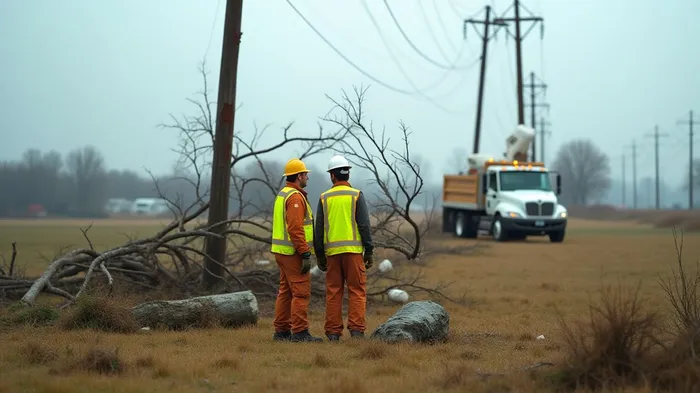
The Pacific Northwest’s recent bout of extreme weather has turned Tacoma, Washington, into a case study in grid vulnerability. On May 7, 2025, a fierce storm knocked out power to 50 households near the Tacoma Nature Reserve, underscoring a growing crisis: aging infrastructure and climate-driven disasters are colliding to create a ticking time bomb for utilities—and investors.
The Perfect Storm: Weather, Age, and Inaction
The May 7 outage was no fluke. High windsHIGH-- severed overhead lines, a failure Tacoma Public Utilities (TPU) called “predictable but avoidable.” The utility’s own data reveals a pattern: since May 1, four separate outages have struck the region, impacting over 2,500 customers. While some were caused by car accidents or scheduled maintenance, the May 7 storm highlighted a systemic weakness.
Consider this: TPU’s average infrastructure age is 35 years, with many overhead lines still vulnerable to wind and wildfires. “We’re treating symptoms, not the disease,” said energy analyst Dr. Elena Marquez, citing TPU’s $150 million modernization plan—meant to cover 10 years of upgrades. At this pace, the grid will remain a lightning rod for risk.
Why This Matters to Investors
The Tacoma saga isn’t just a local story—it’s a harbinger for utilities nationwide. As climate volatility spikes, so does the cost of inaction. Consider these stakes:
- Operational Risk: TPU’s May 3 outage, caused by equipment failure, cost the utility $2.1 million in repair and lost revenue. Such incidents erode profit margins.
- Regulatory Pressure: Washington state now mandates utilities spend at least 3% of revenue on grid hardening. For TPU, that’s an extra $6 million annually—funds that could strain budgets already stretched thin.
Investors in utilities like Puget Sound Energy (PSE) or NextEra Energy (NEE) must ask: Are these companies prioritizing resilience or just passing the buck? The answer lies in their capital expenditure (CapEx) allocations. Utilities with CapEx skewed toward renewables and smart grids—like NEE’s 40% focus on grid modernization—will outperform those clinging to outdated systems.
The Opportunity in Chaos
The good news? Tacoma’s crisis is an investor’s roadmap. The $150 million modernization plan? It’s a fraction of what’s needed. Analysts estimate the U.S. grid requires $1.5 trillion in upgrades by 2030—creating a goldmine for firms like General Electric (GE) (grid tech), Dominion Energy (D) (transmission upgrades), and Brookfield Infrastructure Partners (BIP) (public-private partnerships).
Even better: Climate resilience is a bipartisan priority. The Inflation Reduction Act’s $60 billion for grid upgrades means government contracts will flow to firms proving their mettle in places like Tacoma.
Conclusion: Time to Plug into Grid Resilience
Tacoma’s outages are a wake-up call. Investors ignoring grid modernization are gambling with their portfolios. The data is clear: utilities doubling down on renewables and smart grids—like NEE or Dominion—will thrive as regulators and climate realities squeeze laggards.
The storm has passed in Tacoma, but the reckoning is coming. The question is: Are you ready to power through it?

Stay ahead of the market.
Get curated U.S. market news, insights and key dates delivered to your inbox.


AInvest
PRO
AInvest
PRO



Comments
No comments yet