
The TACO Trade Returns: Greenland, Tariffs, and the Art of the Bluff
- The TACO Phenomenon: "TACO" (Trump Always Chickens Out) is a recurring market pattern where asset prices dip on aggressive geopolitical threats from Donald Trump, only to rally when he inevitably softens his stance to protect the stock market.
Greenland as the New Catalyst: The recent 2026 tensions, involving threats of 10% tariffs on European allies to force a Greenland deal, follow the classic TACO script: escalation followed by a "framework" for de-escalation.
Strategic Reality vs. Real Estate: While the headlines focus on "buying" the island, the core strategic interest remains the Pituffik Space Base (formerly Thule) and Arctic dominance against China/Russia, rather than a literal 51st statehood.
Trading the Volatility: Historical data suggests that knee-jerk sell-offs (like the recent S&P 500 drop) during Trump-led geopolitical spats often present "buy the dip" opportunities once the "deal" phase begins.

Investors with short memories might have panicked when S&P 500 futures tumbled recently following President Trump's threat to impose 10% tariffs on European allies over the Greenland dispute. But for seasoned veterans of the 2018-2019 trade wars, the price action signaled the return of a reliable, albeit volatile, friend: the TACO Trade.
As tensions cool following the Davos summit and the announcement of a new "framework" for the Arctic, it is crucial to understand the mechanics of this trade, the strategic reality of Greenland, and why this cycle is likely to repeat.
What is the TACO Trade?
Coined during the height of the US-China trade war, TACO stands for "Trump Always Chickens Out."
The thesis, popularized by financial columnists at the Financial Times and widely discussed on Bloomberg and CNBC, posits that while Donald Trump utilizes aggressive rhetoric and tariff threats ("maximum pressure") as negotiating leverage, he views the performance of the US stock market as a real-time scorecard of his presidency.
The Cycle Works Like This:
The Threat: Trump announces a massive tariff or geopolitical ultimatum (e.g., "Sell us Greenland or face 10% tariffs").
The Panic: Algorithms and nervous investors sell risk assets; the S&P 500 drops, and the VIX (volatility index) spikes.
The Pain Threshold: The market drop threatens to erase gains Trump wants to take credit for.
The Pivot: Trump announces a "great meeting" or a "tentative deal" (the "Golden Dome" initiative). The threat is suspended.
The Rally: Markets recover losses and often surge higher on the relief.
As noted by Investopedia regarding historical tariff impacts, the uncertainty causes the damage, but the removal of that uncertainty creates alpha. The recent Greenland event—where tariffs were threatened and then shelved within days—is a textbook example.
The Greenland Catalyst: Why Now?
The recent flare-up involving "The Golden Dome" initiative and threats against the EU is not random. It is a continuation of unfinished business from 2019.
According to reports from Reuters, Trump first floated the idea of purchasing Greenland in August 2019, calling it "essentially a large real estate deal." At the time, the Danish Prime Minister Mette Frederiksen dismissed it as "absurd."
The 2026 Context:
Based on the AInvest Analysts reports, recent market movements suggest the "TACO" dynamic is in full effect. The Wall Street Journal and MarketWatch have tracked how natural gas futures and defense stocks reacted to the Arctic tensions. The pattern remains consistent: the threat was used to force NATO and the EU to the table, resulting in a "framework" rather than a hostile takeover.
Why Does the US Want Greenland?
It is not just about ego; it is about Arctic Sovereignty.
Read More From Our AInvest Analysts: Another TACO Trade? Geopolitical Shock May Be a Buying Opportunity
Resource Wealth: As the ice melts, Greenland becomes a frontier for mining rare earth minerals, currently dominated by China.
Shipping Lanes: New Arctic shipping routes cut transit time between Europe and Asia significantly.
Strategic Defense: This is the most critical factor.
Reality Check: The "Permanent Base" Question
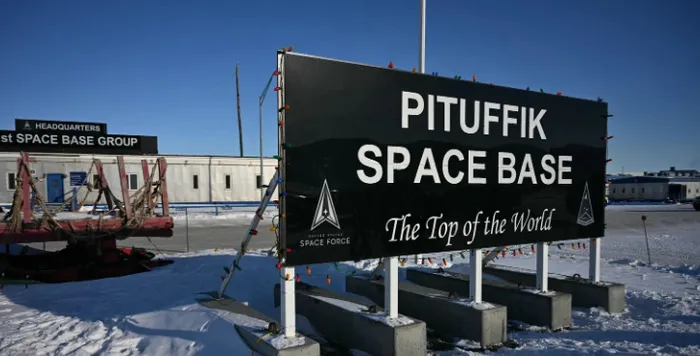
A common fear driving the recent sell-off was the prospect of the US seizing land for military purposes. However, a look at military history shows this fear is largely misplaced—because the US already has what it wants.
The US operates Pituffik Space Base (formerly Thule Air Base) in northern Greenland. As detailed by Wikipedia and military analysis from The Arctic Institute, this is the US Armed Forces' northernmost installation.
Capabilities: It houses the 12th Space Warning Squadron, which operates a Ballistic Missile Early Warning System (BMEWS) designed to detect ICBMs launched from Russia or China over the North Pole.
Treaty Status: The base exists under a 1951 defense treaty between the US and Denmark.
The Verdict: The US does not need to "conquer" Greenland to project power; it already does. The push for "ownership" or the "Golden Dome" is likely an economic play to lock out Chinese mining interests, rather than a military necessity for a new base.
Trading the Volatility: The TACO Playbook
For traders, the "Greenland Gap"—the drop in prices following the tariff threat—represented a classic TACO entry point.8
Note: Data reflects typical patterns observed during 2019 Trade War and 2026 Greenland events.
FAQ: Deep Dive into the Greenland Trade
Q: Could the "Golden Dome" initiative actually be a leasehold model like Hong Kong?
A: This is a plausible "middle ground" that saves face for all parties. Rather than a sovereignty transfer (which Denmark rejects), a 99-year lease on specific economic zones (for mining or logistics) would allow Trump to claim a "purchase" while Denmark maintains nominal sovereignty. This would be bullish for US industrial and mining stocks like those tracked on TradingView.
Q: Why did Natural Gas futures spike during this geopolitical event?
A: While partially due to the Arctic cold front mentioned in weather reports, geopolitical tension in the Arctic raises insurance premiums for shipping LNG. If the US controls Greenland's waters more aggressively, it impacts energy transit security for Europe, adding a risk premium to prices.
Q: Is the TACO trade foolproof?
A: No. The risk is that a threat is not a bluff. However, the "Trump Put"—the belief that Trump will not allow the market to crash in an election or legacy-building year—has historically provided a floor for asset prices during these spats.
Q: How does the "suspension of EU trade negotiations" affect the outlook?
A: As noted by CATO scholars, many of these "suspended deals" were fragile to begin with. The market often prices in the worst-case scenario (total trade war), so when the reality is just a return to the status quo (suspended talks but no new tariffs), the market rallies.

The AInvest News Editorial Team consists of experienced financial journalists and editors who oversee all published content. While our newsroom leverages advanced AI tools to assist in data gathering and draft generation, every article is reviewed, fact-checked, and approved by human editors to ensure accuracy, clarity, and transparency.
Latest Articles
Stay ahead of the market.
Get curated U.S. market news, insights and key dates delivered to your inbox.


AInvest
PRO
AInvest
PRO



Comments
No comments yet