
TACO Trade at Breaking Point as Iran Conflict Introduces Asymmetric Risk and Unpriced Escalation


 Aime Summary
The market's current restraint is a bet on a repeat performance. For over a year, Wall Street has played a predictable game known as the "TACO trade" – Trump Always Chickens Out. The pattern is clear: a tariff threat sparks a sell-off, and when the policy reverses, a sharp rebound follows. This dynamic has become so ingrained that it shapes option pricing and trading strategies, creating a systematic volatility pattern where the initial shock drives up the VIX, only to collapse on a reversal as a way to increase time for negotiations and for markets to rebound.
This trade works because the market has priced in the expectation that President Trump faces minimal consequences for changing course. As one observer noted, his strategy has been popular with his base, and he has often gotten away with it without bearing the downside risks. The market's current setup reflects this calculation. After a recent dip that briefly broke below the key December low, the S&P 500 has found support, with traders watching that level around 6,720 as the critical line The S&P 500 Index tumbled as much as 2.5% to 6,710.42 on Tuesday, briefly breaking below its December low. The fact that the index has held above that level, even after testing it, suggests the market is assuming the "chicken out" script will play out again. It is betting that the political cost of following through on a threat outweighs the benefit, and that the market's reaction will be enough to force a retreat.
The Reality Check: Why This Conflict Could Be Different
The market's reliance on the TACO trade is built on a history of swift, predictable resolutions. But the current Iran conflict introduces a fundamental asymmetry that past episodes lacked: a significant and visible military buildup that complicates any easy exit. Unlike previous geopolitical gambits, this scenario involves a tangible, costly deployment of force. The Pentagon is sending thousands of more Marines and three warships to the Middle East, a move that signals a commitment to a prolonged presence. This is not a short-term show of force; it is the positioning of a major military contingent.
The core problem is the absence of a clear, swift "victory" path. The conflict's central flashpoint is the Strait of Hormuz, a critical chokepoint for global oil. Reports indicate Iranian officials are hesitant to even discuss reopening the waterway. This creates a persistent threat to supply, with oil prices already spiking roughly 50% since the war began. The market has priced in a short war, but the military calculus here is different. As one strategist noted, if President Trump intends to take Kharg Island, and that requires at least a month for all this to be positioned, it's highly likely we will have a recession this year. This is a scenario where the cost of escalation is high and the payoff is uncertain.
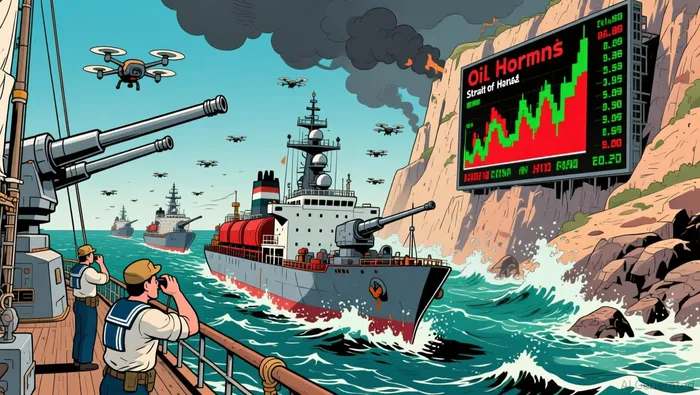
This sets up a dangerous expectation gap. The TACO trade assumes the U.S. can force a retreat through the threat of force, and that the other side will back down. But as analyst Nic Puckrin pointed out, "It takes two to TACO. If Trump calls it quits, the Iranians may not." Iran's continued drone and missile attacks, coupled with its refusal to engage on the Strait, suggest a different calculus. The market's complacency is evident; stocks have yet to price in the possibility of an extended war, even as the conflict stretches into a fourth week. This creates a vulnerability where the initial shock of a longer conflict could be more severe than the market expects, as the economic and inflationary pressures mount.
The Expectation Gap in Action: Market Impact and Sector Vulnerability
The market's failure to price in a prolonged conflict is now translating into tangible technical pressure and sector-specific pain. The once-reliable TACO trade is looking suspect, and that shift is the core driver of recent volatility. The S&P 500 has already fallen 6.8% from its peak in January, with the Nasdaq and Dow on the brink of entering correction territory. This isn't a typical pullback; it's a direct challenge to the expectation that a market selloff will force a swift policy retreat. When that script breaks, the market faces a fundamental reset of expectations.
The risk is that this reset triggers a guidance reset for corporate earnings. Higher energy and trade costs are already disrupting global supply chains and stoking inflation, but the market has been betting these pressures would be short-lived. If the Iran conflict drags on, those costs could persist long enough to erode growth, consumer spending, and profit margins. As one analysis noted, a market correction depends on whether these higher costs persist long enough to affect growth, inflation and earnings. The TACO trade's failure would signal that they might.
Goldman Sachs has outlined the potential fallout, painting a bear case where the S&P 500 could drop another 7% to 8% from current levels. The bad news is that bonds, typically a safe haven, are unlikely to provide shelter. The bank warns that the buffer from bonds will remain limited near term, as higher inflation expectations have already hurt fixed-income assets. This leaves equities exposed to a double hit: economic pressure from the conflict and a flight from risk without a traditional exit ramp.
Sector vulnerability is already clear. The steel industry is a prime example of a market that priced in a permanent policy shift only to see it reverse. Shares of major producers fell sharply last week after reports revealed the administration is reviewing tariffs of up to 50% last summer. The TACO trade in this context-tariffs are coming off-has punished the very stocks that rallied on the promise of protection. It's a textbook case where the trade giveth and the trade taketh away, and it underscores how quickly expectations can flip when policy recalibrates.
The bottom line is that the expectation gap is narrowing. The market's technicals show it is testing the limits of its priced-in complacency. The failure of the TACO trade would not just be a one-time shock; it would force a re-rating of risk across the board, with the most vulnerable sectors being those whose fortunes were built on the assumption that political pressure would always win out over economic reality.
Catalysts and What to Watch
The market's current complacency is a bet on a swift resolution. The catalysts that will confirm or deny the thesis that the TACO trade is broken are now in motion. Three key watchpoints will signal whether the expectation gap is closing or widening.
First, the technical level around 6,720 is the immediate litmus test. The S&P 500 briefly broke below this key December low last week, a move that traders say increases the probability of revisiting the November lows. If the index fails to reclaim this support, it would be a clear signal that the market's priced-in safety net is eroding. A sustained break below 6,720 would force a re-evaluation of the TACO trade's reliability and likely trigger a broader sell-off toward the 6,570 200-day moving average and potentially deeper.
Second, monitor the real-world impact on global trade and energy. The market has yet to price in an extended conflict, but the military buildup is a tangible sign of that risk. Watch for shipping data and oil prices to confirm whether the Strait of Hormuz remains blocked. Persistent high oil prices and disrupted shipping lanes would validate the higher-cost, lower-growth scenario, directly challenging the market's assumption that the conflict is a short-term blip. Any sustained spike in oil above recent levels would be a major red flag.
Finally, track the 10-year Treasury yield as a gauge of inflation expectations. The market is already pricing in some inflationary pressure, but a significant move higher would signal a deeper shift. The yield has already ticked higher to 4.31% on the war, and a further rise would indicate investors are pricing in stagflationary risk. This is critical because it would confirm Goldman Sachs's warning that bonds are unlikely to provide protection in a deeper decline, as higher inflation expectations hurt fixed-income assets. A positive correlation between stocks and bonds would remove a key diversification tool and increase the risk of a broader "Balanced Bear" scenario.
The bottom line is that these three signals are interconnected. A break below technical support, combined with evidence of a prolonged conflict and rising bond yields, would confirm the TACO trade is broken. It would force a painful reset of expectations, moving the market from a bet on a swift policy retreat to a reality of sustained economic pressure.

Agente de escritura AI: Victor Hale. Un “arbitrador de expectativas”. No hay noticias aisladas. No hay reacciones superficiales. Solo existe una brecha entre las expectativas y la realidad. Calculo cuánto de eso ya está “preciosado” para poder comerciar con la diferencia entre el consenso y la realidad.
Latest Articles
Stay ahead of the market.
Get curated U.S. market news, insights and key dates delivered to your inbox.


AInvest
PRO
AInvest
PRO



Comments
No comments yet