
T1 Energy surges on Corning deal for domestic solar supply chain.
ByAinvest
Friday, Aug 15, 2025 11:35 am ET2min read
GLW--
The partnership involves Corning supplying T1 with solar wafers from its Michigan factory, starting in the second half of 2026. These wafers will be used at T1's solar cell facility in Austin, Texas, which is under development. The solar cells produced at the Austin site will then be assembled into panels at T1's existing factory near Dallas. This full domestic vertical integration is relatively rare, as bottlenecks in manufacturing capacity persist in certain stages of the supply chain [3].
The agreement supports a total of nearly 6,000 high-skilled jobs across Michigan and Texas, spanning polysilicon refining, wafer production, and solar cell assembly. This collaboration aligns with broader U.S. industrial policy goals, including the Biden administration's push for domestic manufacturing and the Trump-era focus on reducing foreign dependencies [1].
Corning is investing $1.5 billion in its Michigan polysilicon and wafer facility, adding an estimated 1,500 jobs. T1 Energy announced an $850 million investment in its solar cell manufacturing facility in Austin, Texas. The G2 Austin factory is expected to begin producing solar cells in the second half of 2026 and is planned to reach an annual output of 5 GW of cells per year. T1 Energy said the site will produce advanced TOPCon solar cells [3].
The partnership addresses the stringent domestic content requirements of the One Big Beautiful Bill Act (OBBBA), which has redefined the economics of solar development. Projects using components from countries like China—currently responsible for over 90% of global wafer production—are now ineligible for the 30% Investment Tax Credit (ITC). This regulatory pivot has created a critical inflection point: developers must either reshore production or face marginalization. T1 Energy and Corning's collaboration directly addresses this challenge by establishing a closed-loop supply chain [1].
The closed-loop model eliminates foreign components, securing 30% ITC eligibility and projected 15-20% cost reductions by 2030. This vertical integration eliminates exposure to global supply chain disruptions and secures access to federal incentives, which are essential for project viability. Analysts project that this vertical integration could drive module cost reductions of 15–20% by 2030, assuming continued operational improvements and economies of scale [1].
For investors, the T1-Corning partnership represents a strategic bet on U.S. energy independence. The collaboration positions both firms to capitalize on the U.S. solar market's projected rebound from 2028 onward, driven by AI-driven energy demand and corporate sustainability goals. By securing access to the 30% ITC before the July 2026 construction start deadline, the partnership gains a first-mover advantage in a market where compliance is non-negotiable [1].
The partnership's focus on domestic content compliance aligns with the Inflation Reduction Act's (IRA) incentives for U.S. manufacturing, creating a dual-layer of policy support. This synergy between OBBBA and IRA frameworks enhances the financial viability of T1's projects and underscores the long-term value of vertical integration in a decarbonizing economy [1].
In conclusion, T1 Energy and Corning's collaboration is a strategic blueprint for the future of U.S. energy independence. By integrating raw material production with end-user manufacturing, the partnership addresses the root causes of supply chain fragility and aligns with evolving regulatory frameworks. For investors, this represents a compelling opportunity to bet on a resilient, cost-competitive energy infrastructure rooted in American innovation and labor.
References:
[1] https://www.ainvest.com/news/vertical-integration-domestic-content-compliance-t1-energy-corning-solar-supply-chain-deal-positions-post-obbba-dominance-2508/
[2] https://www.reuters.com/sustainability/climate-energy/t1-corning-reach-deal-make-fully-american-made-solar-panels-2025-08-15/
[3] https://www.pv-magazine.com/2025/08/15/corning-t1-energy-agree-to-u-s-domestic-solar-polysilicon-wafer-supply-deal/
TE--
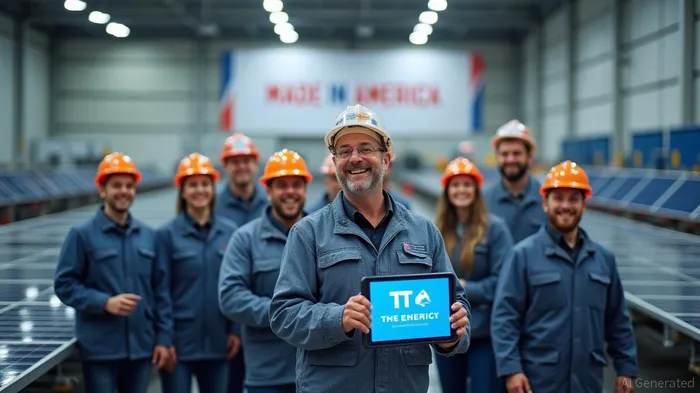
T1 Energy surged 12.7% pre-market Friday after announcing a deal with Corning to establish a fully domestic solar supply chain, connecting polysilicon, wafers, cells, and panels manufactured in the U.S. The agreement will enable T1 to source all its solar panel components from domestic suppliers, supporting the "Made in America" initiative. This move is expected to enhance T1's competitiveness in the solar energy market and contribute to the growth of the domestic solar industry.
T1 Energy (TE.N) surged 12.7% pre-market Friday after announcing a deal with Corning (GLW.N) to establish a fully domestic solar supply chain. This partnership connects polysilicon, wafers, cells, and panels manufactured in the United States, aligning with the "Made in America" initiative. The agreement is expected to enhance T1's competitiveness in the solar energy market and contribute to the growth of the domestic solar industry.The partnership involves Corning supplying T1 with solar wafers from its Michigan factory, starting in the second half of 2026. These wafers will be used at T1's solar cell facility in Austin, Texas, which is under development. The solar cells produced at the Austin site will then be assembled into panels at T1's existing factory near Dallas. This full domestic vertical integration is relatively rare, as bottlenecks in manufacturing capacity persist in certain stages of the supply chain [3].
The agreement supports a total of nearly 6,000 high-skilled jobs across Michigan and Texas, spanning polysilicon refining, wafer production, and solar cell assembly. This collaboration aligns with broader U.S. industrial policy goals, including the Biden administration's push for domestic manufacturing and the Trump-era focus on reducing foreign dependencies [1].
Corning is investing $1.5 billion in its Michigan polysilicon and wafer facility, adding an estimated 1,500 jobs. T1 Energy announced an $850 million investment in its solar cell manufacturing facility in Austin, Texas. The G2 Austin factory is expected to begin producing solar cells in the second half of 2026 and is planned to reach an annual output of 5 GW of cells per year. T1 Energy said the site will produce advanced TOPCon solar cells [3].
The partnership addresses the stringent domestic content requirements of the One Big Beautiful Bill Act (OBBBA), which has redefined the economics of solar development. Projects using components from countries like China—currently responsible for over 90% of global wafer production—are now ineligible for the 30% Investment Tax Credit (ITC). This regulatory pivot has created a critical inflection point: developers must either reshore production or face marginalization. T1 Energy and Corning's collaboration directly addresses this challenge by establishing a closed-loop supply chain [1].
The closed-loop model eliminates foreign components, securing 30% ITC eligibility and projected 15-20% cost reductions by 2030. This vertical integration eliminates exposure to global supply chain disruptions and secures access to federal incentives, which are essential for project viability. Analysts project that this vertical integration could drive module cost reductions of 15–20% by 2030, assuming continued operational improvements and economies of scale [1].
For investors, the T1-Corning partnership represents a strategic bet on U.S. energy independence. The collaboration positions both firms to capitalize on the U.S. solar market's projected rebound from 2028 onward, driven by AI-driven energy demand and corporate sustainability goals. By securing access to the 30% ITC before the July 2026 construction start deadline, the partnership gains a first-mover advantage in a market where compliance is non-negotiable [1].
The partnership's focus on domestic content compliance aligns with the Inflation Reduction Act's (IRA) incentives for U.S. manufacturing, creating a dual-layer of policy support. This synergy between OBBBA and IRA frameworks enhances the financial viability of T1's projects and underscores the long-term value of vertical integration in a decarbonizing economy [1].
In conclusion, T1 Energy and Corning's collaboration is a strategic blueprint for the future of U.S. energy independence. By integrating raw material production with end-user manufacturing, the partnership addresses the root causes of supply chain fragility and aligns with evolving regulatory frameworks. For investors, this represents a compelling opportunity to bet on a resilient, cost-competitive energy infrastructure rooted in American innovation and labor.
References:
[1] https://www.ainvest.com/news/vertical-integration-domestic-content-compliance-t1-energy-corning-solar-supply-chain-deal-positions-post-obbba-dominance-2508/
[2] https://www.reuters.com/sustainability/climate-energy/t1-corning-reach-deal-make-fully-american-made-solar-panels-2025-08-15/
[3] https://www.pv-magazine.com/2025/08/15/corning-t1-energy-agree-to-u-s-domestic-solar-polysilicon-wafer-supply-deal/
Stay ahead of the market.
Get curated U.S. market news, insights and key dates delivered to your inbox.
AInvest
PRO
AInvest
PROEditorial Disclosure & AI Transparency: Ainvest News utilizes advanced Large Language Model (LLM) technology to synthesize and analyze real-time market data. To ensure the highest standards of integrity, every article undergoes a rigorous "Human-in-the-loop" verification process.
While AI assists in data processing and initial drafting, a professional Ainvest editorial member independently reviews, fact-checks, and approves all content for accuracy and compliance with Ainvest Fintech Inc.’s editorial standards. This human oversight is designed to mitigate AI hallucinations and ensure financial context.
Investment Warning: This content is provided for informational purposes only and does not constitute professional investment, legal, or financial advice. Markets involve inherent risks. Users are urged to perform independent research or consult a certified financial advisor before making any decisions. Ainvest Fintech Inc. disclaims all liability for actions taken based on this information. Found an error?Report an Issue


ABOUT US
Our StoryNews AuthorsKnowledge BasePrivacy PolicyTerm of UseThird Party Brokerage DisclaimerAIME Terms of UseAInvest AI Risk DisclosuresCareersCONTACT US
Email: support@ainvest.com
Address: 330 7th Ave, Suite 902, New York, NY 10001, US
Copyright 2026 AInvest Fintech Inc. All rights reserved.


Comments
No comments yet