
The Systemic Risks of Stablecoins and the Need for Prudent Regulation


 Aime Summary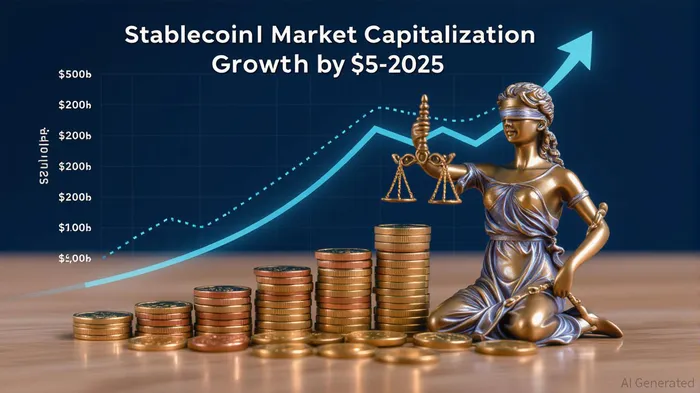
The stablecoin market has surged to unprecedented heights, with a total market capitalization exceeding $250 billion by mid-2025 [1]. This growth, driven by adoption in decentralized finance (DeFi) and cross-border payments, has positioned stablecoins as a critical component of the digital economy. However, beneath this veneer of stability lies a web of systemic risks that demand urgent attention from investors and regulators alike.
The Illusion of Stability
Stablecoins like Tether’s USDTUSDC-- and USD CoinBTC-- (USDC) dominate the market, with combined holdings surpassing $219 billion [1]. Yet their perceived safety is often a mirage. USDCUSDC--, for instance, is frequently lauded for its transparency and regulatory compliance, but its reliance on a narrow set of banking partners and rigid redemption mechanisms creates centralized vulnerabilities [2]. In contrast, USDT’s diversified reserves—including BitcoinBTC-- and secured loans—offer greater adaptability during liquidity shocks [2]. This paradox underscores a critical lesson: regulatory compliance does not inherently eliminate systemic risk.
Historical failures further expose these vulnerabilities. The 2022 collapse of TerraUSD (UST) serves as a stark reminder of the fragility of algorithmic stablecoins. A loss of confidence triggered a "death spiral," eroding $200 billion in value within 24 hours [3]. Even fiat-collateralized stablecoins are not immune. In 2023, USDC temporarily depegged from the dollar after its exposure to the failed Silicon Valley Bank created liquidity mismatches [3]. These events highlight how interconnectedness in the crypto ecosystem can amplify risks, with depegging events spilling over to destabilize other stablecoins and even Bitcoin [3].
Regulatory Progress and Persistent Gaps
The GENIUS Act of 2025 represents a landmark effort to address these risks. By mandating 1:1 reserves of liquid assets like U.S. Treasuries and demand deposits, the Act aims to prevent liquidity crises [4]. It also introduces a dual regulatory model, where issuers with over $10 billion in stablecoins face federal oversight, while smaller entities operate under state regimes [4]. These measures are designed to balance innovation with consumer protection, yet gaps remain. For example, the Act prohibits rehypothecation of reserves and prioritizes stablecoin holders in insolvency proceedings [4], but it does not fully address the risks posed by cross-border stablecoins or the potential for regulatory arbitrage.
Internationally, the landscape is fragmented. While the EU’s MiCA regulation imposes stringent capital adequacy requirements, the U.S. framework under the GENIUS Act lacks comparable protections for global users [3]. This divergence creates opportunities for bad actors to exploit weaker jurisdictions, as seen in China’s state-controlled stablecoins, which aim to challenge U.S. dollar dominance [3]. Investors must remain vigilant, as regulatory fragmentation increases the likelihood of market instability and illicit activity—63% of crypto-based crime now involves stablecoins [3].
Investor Safeguards in a High-Risk Environment
For investors, the key to navigating this landscape lies in diversification and due diligence. Diversifying stablecoin exposure across reserve structures—such as fiat-backed (USDC) and diversified (USDT)—can mitigate risks from single-point failures [2]. Monitoring reserve disclosures and redemption mechanisms is equally critical. The GENIUS Act’s requirement for monthly audits and transparency is a step forward, but investors should scrutinize the quality of underlying assets, not just their quantity [4].
Moreover, the Act’s prohibition on yield-bearing stablecoins is a prudent move to prevent artificial liquidity creation during market stress [4]. However, this does not eliminate the need for active risk management. Stress testing and capital adequacy requirements, borrowed from post-2008 banking regulations, are essential to identify vulnerabilities before they escalate [5].
Conclusion
The stablecoin market’s meteoric rise has outpaced its regulatory infrastructure, creating a precarious balance between innovation and systemic risk. While the GENIUS Act and international frameworks like MiCA have made strides in addressing historical failures, they remain incomplete. Investors must adopt a cautious, diversified approach, while regulators must close gaps in cross-border oversight and enforce stricter transparency standards. In a world where stablecoins increasingly underpin global finance, prudence is not just advisable—it is imperative.
Source:
[1] Stablecoins: 10 Things You Need to Know [https://business.cornell.edu/article/2025/08/stablecoins/]
[2] The Systemic Risk Paradox: Why USDC's Stability Could ... [https://www.ainvest.com/news/systemic-risk-paradox-usdc-stability-vulnerable-usdt-2508/]
[3] Stablecoin Systemic Risks and Regulatory Gaps [https://www.ainvest.com/news/stablecoin-systemic-risks-regulatory-gaps-implications-global-investors-2508/]
[4] The GENIUS Act: A Framework for U.S. Stablecoin Issuance [https://www.sidley.com/en/insights/newsupdates/2025/07/the-genius-act-a-framework-for-us-stablecoin-issuance]
[5] The GENIUS Act: A Primer - AAF [https://www.americanactionforum.org/insight/the-genius-act-a-primer/]

Decoding blockchain innovations and market trends with clarity and precision.
Latest Articles
Stay ahead of the market.
Get curated U.S. market news, insights and key dates delivered to your inbox.






Comments
No comments yet