
The Systemic Risks of Retail Leverage in Bitcoin Markets: A 2025 Analysis


 Aime Summary
The 2025 Liquidation Crisis: A Perfect Storm
The most dramatic liquidation event of 2025 occurred on October 10, when over $19 billion in leveraged crypto positions were wiped out in a single day. This collapse was fueled by a combination of Trump's tariff announcements, a hawkish Federal Reserve, and leverage ratios as high as 1,001:1. The self-reinforcing nature of leveraged long positions created a cascade effect: forced selling triggered further price declines, which in turn activated more margin calls. By November, Bitcoin had plummeted from $126,000 to $80,553, wiping out $2.2 billion in liquidations in a 24-hour period.
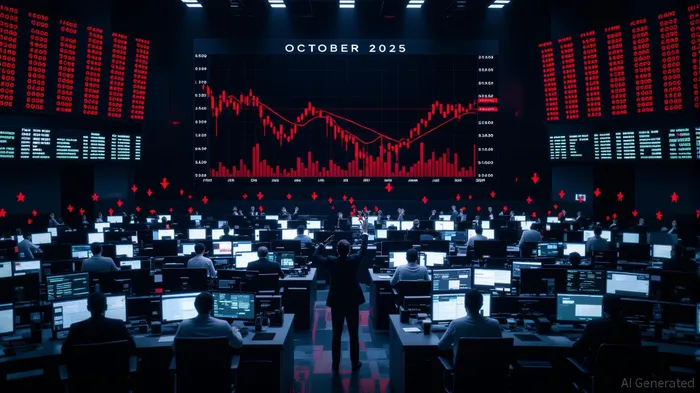 The crisis was compounded by a "liquidity singularity," where market makers withdrew from order books, leaving even small sell orders to cause disproportionate price drops. Synthetic stablecoins like USDeUSDe-- briefly de-pegged to $0.65, triggering additional forced liquidations and exposing the risks of relying on algorithmic or undercollateralized stablecoins.
Retail Traders: The Human Element in Systemic Risk
Retail traders and digital asset treasury firms (DATCos) were particularly vulnerable during these selloffs. Platforms like Binance accounted for 72% of forced unwinds during volatile swings, highlighting the outsized role of retail sentiment in crypto price dynamics. The Fear & Greed Index, a barometer of retail psychology, plummeted to an extreme fear reading of 11 during the October crash, illustrating how panic-driven behavior can exacerbate market turbulence.
The data reveals a troubling pattern: 86.3% of Bitcoin's December liquidations were long positions, and 71.66% of Ethereum's liquidations followed the same trend. This overexposure to bullish bets, combined with high leverage, created a fragile ecosystem where even minor price corrections could trigger mass defaults.
Institutional and Regulatory Responses
Institutional analysis has increasingly focused on the risks posed by non-bank financial intermediation in crypto. The EU's Non-bank Financial Intermediation Risk Monitor 2025 warns that excessive leverage in alternative investment funds (AIFs) and interconnected fund structures could amplify systemic shocks. Meanwhile, the Bank for International Settlements (BIS) has emphasized the need for a "next-generation monetary system" that addresses vulnerabilities in tokenized assets and cross-market interconnectedness.
According to research, crypto-collateralized lending, which reached $73.59 billion in Q3 2025, has become more conservative post-2021–2022 implosions. However, leverage in derivatives markets remains a concern. The October 10 liquidation event, though not tied to lending platforms, exposed the fragility of perpetual futures markets.
Implications for Investors and Risk Managers
For investors, the 2025 crisis serves as a stark reminder of the dangers of over-leveraging. According to market analysis, trend-following hedge funds and retail traders alike were caught in a downward spiral, with U.S. Spot Bitcoin ETFs recording $1.1 billion in outflows on November 20 alone. Risk managers must now account for the growing correlation between Bitcoin and traditional assets-the S&P 500 and Bitcoin's correlation hit 0.5 in 2025, up from 0.29 in 2024.
Regulators, meanwhile, face a balancing act. While the approval of spot BTC ETPs and the GENIUS Act in the U.S. have normalized institutional crypto exposure, gaps in oversight-particularly around stablecoins and derivatives-remain. The 2025 liquidation crisis has already prompted calls for stricter margin requirements and real-time liquidity monitoring.
Conclusion: A Call for Caution and Clarity
The 2025 Bitcoin leverage liquidation events are not just a cautionary tale for retail traders but a wake-up call for the broader financial system. As crypto markets integrate with traditional finance, the risks of leverage-driven contagion will only grow. Investors must approach leveraged products with extreme caution, while regulators must prioritize systemic resilience over short-term growth. The road ahead demands a blend of innovation and oversight-a lesson the market learned the hard way in 2025.

Una combinación de la sabiduría tradicional en el comercio con las perspectivas más actuales sobre las criptomonedas.
Latest Articles
Stay ahead of the market.
Get curated U.S. market news, insights and key dates delivered to your inbox.






Comments
No comments yet