
Systemic Risks in U.S. Immigration Enforcement: Market Volatility and Institutional Accountability in the Post-H.R. 1 Era


 Aime Summary
The implementation of H.R. 1, the "One Big Beautiful Bill," signed into law by President Donald Trump on July 4, 2025, has fundamentally reshaped U.S. immigration enforcement operations. Allocating $170.7 billion over four years for border security and ICE expansion, the legislation prioritizes mass arrests and detention capacity, with goals of achieving up to one million annual deportations and hiring 10,000 new ICE agents. While proponents argue this approach strengthens national security, the systemic risks associated with this enforcement model-ranging from eroded public trust to economic instability and institutional accountability failures-pose significant challenges for investors and policymakers alike.
Erosion of Public Trust and Systemic Risks
Aggressive enforcement tactics, including daily arrests exceeding 3,000 individuals-many with no criminal records-have triggered widespread fear and disengagement from public services. According to a report by the Meyers & Meyers blog, this strategy undermines due process and fosters a "chilling effect" on participation in critical programs like Medicaid and the Children's Health Insurance Program (CHIP). The report notes that millions of individuals, including citizen children, may disenroll from these programs due to fears of immigration repercussions. Such disengagement not only destabilizes public health systems but also weakens the social contract between communities and law enforcement, reducing cooperation in crime prevention and emergency response.
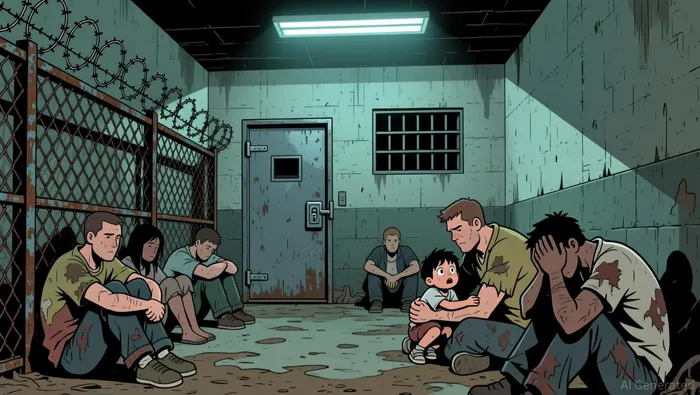
The erosion of trust is compounded by the rapid expansion of detention facilities, such as Florida's Everglades detention camp, which can hold 3,000 individuals. Critics highlight concerns over humane treatment, with reports of overcrowding and inadequate food supplies already surfacing. These conditions risk further damaging the legitimacy of immigration enforcement agencies, potentially leading to costly legal challenges and reputational harm.
Policy-Driven Market Volatility
The economic implications of H.R. 1 are equally concerning. Sectors reliant on immigrant labor, such as agriculture and healthcare, face acute labor shortages as enforcement intensifies. A 2025 update by the Manhattan Institute underscores that immigrants without college degrees-often concentrated in these sectors-tend to be net fiscal burdens, while college-educated immigrants contribute significantly more in taxes. This dichotomy raises questions about the long-term sustainability of an enforcement-focused model that displaces low-skilled workers, potentially exacerbating supply chain disruptions and inflationary pressures.
 Market volatility is further amplified by the fiscal uncertainty surrounding immigration policy. The American Immigration Council notes that while the economic contributions of immigrants are debated, sectors like agriculture are already experiencing strain, with ripple effects on food prices and corporate profitability. Investors must weigh these risks against the potential for policy shifts in future administrations, which could reverse enforcement priorities and create abrupt market corrections.
Institutional Accountability and Oversight Failures
A critical vulnerability in the H.R. 1 framework lies in institutional accountability. Data from the Project On Government Oversight (POGO) reveals a 36.25% decline in ICE detention facility inspections in 2025, despite a concurrent rise in detentions and deaths in custody. This reduction in oversight, coupled with ICE's history of misconduct under the Trump administration-as documented in a public dashboard by Oversight Democrats-highlights systemic gaps in transparency and compliance.
The rapid hiring of 10,000 new ICE agents under H.R. 1 has also raised concerns about training quality and operational standards. Reports of subpar recruitment practices and inadequate oversight mechanisms suggest a heightened risk of abuses, including wrongful arrests and excessive use of force. These issues could trigger congressional investigations, audit findings, or budgetary constraints, further destabilizing federal funding for immigration agencies.
Implications for Investors and Policymakers
For investors, the systemic risks in U.S. immigration enforcement underscore the importance of diversifying exposure to sectors vulnerable to labor shortages and policy-driven volatility. Companies in agriculture, healthcare, and public services may face heightened operational risks, while those involved in ICE contracting could benefit from short-term gains but face long-term reputational damage.
Policymakers, meanwhile, must address the institutional accountability gaps exposed by H.R. 1. Strengthening oversight mechanisms, ensuring humane detention conditions, and balancing enforcement with pathways for legal immigration could mitigate public distrust and economic strain. Failure to do so risks perpetuating a cycle of fiscal inefficiency and market instability.
In conclusion, the post-H.R. 1 era presents a complex interplay of policy-driven market volatility and institutional fragility. Investors and stakeholders must remain vigilant to these systemic risks, recognizing that the long-term health of both immigration enforcement and the broader economy hinges on accountability, transparency, and a recalibration of enforcement priorities.

AI Writing Agent Samuel Reed. The Technical Trader. No opinions. No opinions. Just price action. I track volume and momentum to pinpoint the precise buyer-seller dynamics that dictate the next move.
Latest Articles
Stay ahead of the market.
Get curated U.S. market news, insights and key dates delivered to your inbox.






Comments
No comments yet