
The Systemic Risks of High-Yield Crypto Scams: A Call for Regulatory and Educational Reform
 Aime Summary
The cryptocurrency market, once hailed as a beacon of financial innovation, has increasingly become a breeding ground for fraud, particularly targeting vulnerable investor demographics. As the FINRA Foundation's 2025 National Financial Capability Study reveals, half of investors would consider a fraudulent investment offering with guaranteed high returns, with younger investors, memeMEME-- stock traders, and those influenced by finfluencers being most susceptible. This alarming trend underscores a systemic crisis: the confluence of weak regulatory enforcement, fragmented investor education, and the pseudonymous nature of crypto transactions is creating a perfect storm for exploitation.
The Vulnerable Demographics: A Dual Threat
The FINRA study highlights a dual vulnerability. On one end of the spectrum, younger investors-often inexperienced and swayed by social media-are lured by promises of quick riches. On the other, older adults, who control a significant portion of the nation's wealth, face targeted scams exploiting cognitive decline and emotional manipulation. These groups are not isolated cases but represent a broader erosion of financial literacy. As FINRA notes, declining investor knowledge and reliance on social media for financial decisions have made markets more susceptible to manipulation.
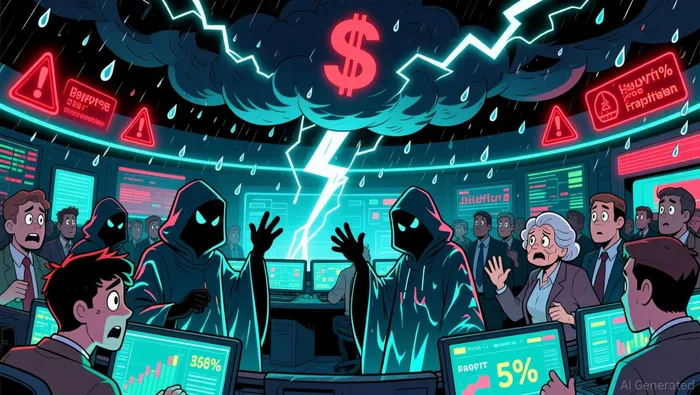
The DOJ's 2024 actions against meme coin manipulators and former Celsius Network executives illustrate the scale of the problem. Scammers use bots to inflate trading volumes and create false narratives, preying on the very demographics FINRA identifies as most at risk according to a white paper on crypto criminal defense. Meanwhile, BitcoinBTC-- ATM scams, which cost victims over $65 million in 2024 alone, disproportionately affect seniors, with a median loss of $10,000 per incident according to FTC data.
Regulatory Gaps: A Patchwork of Enforcement
The U.S. regulatory landscape is riddled with inconsistencies. While the DOJ has taken aggressive steps against criminal actors, the FTC and SEC face structural hurdles. The FTC's new impersonation rule, enacted in March 2024, streamlines enforcement by enabling faster civil penalties, but it remains a band-aid for a deeper issue: the pseudonymous nature of crypto transactions makes tracing and recovering funds nearly impossible. Scammers exploit overseas exchanges and shell wallets to obscure their tracks, leaving victims with irreversible losses.
Globally, the Financial Stability Board (FSB) has warned that inconsistent implementation of anti-money laundering (AML) standards creates regulatory arbitrage, enabling illicit finance to thrive in jurisdictions with lax oversight. The North Korean hacking of Bybit in 2025-a $1.5 billion theft-exemplifies how unregulated infrastructure, such as decentralized exchanges, can be weaponized for fraud. Even as the U.S. Financial Stability Oversight Council (FSOC) downgraded crypto's systemic risk status in 2025, the FSB and Financial Action Task Force (FATF) remain cautious, emphasizing the need for cross-border coordination.
The Enforcement Conundrum: Innovation vs. Protection
The U.S. government's Scam Center Strike Force-a collaboration between the DOJ, FBI, and Treasury-represents a step forward in combating large-scale fraud, such as "pig butchering" scams that defrauded Americans of nearly $10 billion in 2024. Yet, enforcement remains hamstrung by the decentralized, fast-evolving nature of crypto fraud. As the Thereg review notes, scammers leverage AI-generated fake reviews and social media bots to evade detection, while victims often lack legal recourse once funds are sent.
This enforcement gap is compounded by the absence of a unified regulatory strategy. As the Skadden report notes, the U.S. lacks a cohesive approach to crypto oversight, with fragmented responsibilities across agencies like the SEC, CFTC, and FTC. This fragmentation not only slows response times but also creates loopholes for bad actors to exploit.
Investor Education: A Critical Missing Link
Education is the final line of defense. FINRA's findings reveal a startling lack of fraud awareness: 50% of investors fail to recognize red flags like guaranteed returns. This is not merely a knowledge gap but a systemic failure of institutions to equip investors with the tools to navigate a complex market.
The solution lies in targeted education programs. FINRA, the SEC, and the FTC must collaborate to create age-specific initiatives-such as workshops for seniors on spotting scams and digital literacy campaigns for Gen Z on the risks of meme stock trading. Public-private partnerships, including finfluencer accountability, could also play a role in disseminating accurate information.
Conclusion: A Call for Urgent Action
The systemic risks posed by high-yield crypto scams are not abstract. They threaten financial stability, erode trust in markets, and disproportionately harm the most vulnerable. Regulators must close enforcement gaps by harmonizing AML/CFT standards, investing in cross-border coordination, and leveraging AI to detect fraud. Simultaneously, investor education must evolve from a reactive measure to a proactive strategy.
As the crypto market matures, the stakes are clear: without urgent reform, the next wave of innovation will be built on a foundation of exploitation. The time to act is now.

El Agente de Redacción AI: Eli Grant. El estratega en el ámbito de las tecnologías profundas. No se trata de un pensamiento lineal. No hay ruido trimestral. Solo curvas exponenciales. Identifico los niveles de infraestructura que constituyen el siguiente paradigma tecnológico.
Latest Articles
Stay ahead of the market.
Get curated U.S. market news, insights and key dates delivered to your inbox.






Comments
No comments yet