
Systemic Risk in Leveraged Crypto Markets: Navigating Volatility, Leverage, and Cascading Liquidations
 Aime Summary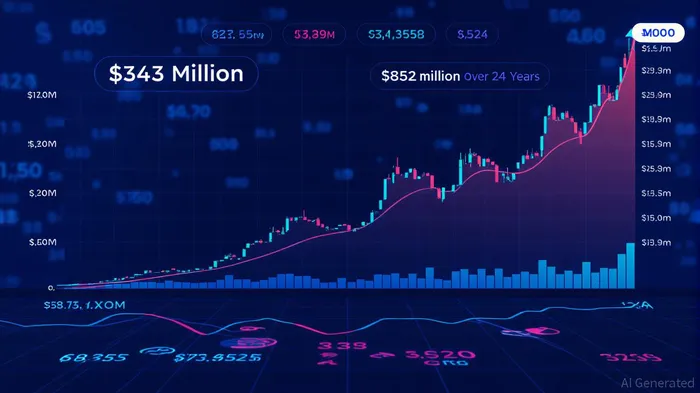
The leveraged crypto market has emerged as a double-edged sword for investors, offering amplified returns alongside existential risks. As of September 2025, systemic vulnerabilities—driven by volatility, leverage, and cascading liquidations—have become central to debates about the sector's long-term stability. This analysis unpacks these risks through recent case studies, regulatory developments, and market dynamics, offering a roadmap for investors navigating this high-stakes landscape.
Volatility: The Unrelenting Catalyst
Cryptocurrencies like BitcoinBTC-- and EthereumETH-- remain infamous for their price swings, with daily fluctuations of 5–10% not uncommon [3]. This volatility is exacerbated by the Decker Comparative Maturity Equation (DCME), which warns that institutional ownership exceeding 40% can stifle organic network growth and heighten manipulation risks [1]. The 2022 crypto winter exemplified this dynamic: rising global interest rates and the collapse of crypto lenders triggered a $965 million liquidation event in 24 hours, as leveraged positions crumbled under rapid price declines [1].
In 2025, the pattern repeated with even greater intensity. Q3 saw $852 million in liquidations over 24 hours, driven by sudden price drops that overwhelmed traders using 50x–100x leverage [4]. These events underscore a critical truth: volatility is not merely a feature of crypto markets but a systemic risk amplifier, particularly when combined with leverage.
Leverage: A Double-Edged Sword
Leverage, while a tool for magnifying gains, has become a primary driver of instability. Traders routinely employ ratios as high as 100x, meaning a 1% price move can wipe out an entire position [1]. This fragility was laid bare in 2025, when a single hour of trading erased $343 million in leveraged futures positions [4]. The mechanics are straightforward: as prices fall, margin calls force liquidations, which further depress prices, creating a self-reinforcing cycle.
The risks extend beyond individual traders. Overleveraged ETFs and institutional players amplify contagion, as seen in the 2022 collapse of major crypto lenders [4]. Even stablecoins and smaller altcoins like XRPXRP-- are not immune, as liquidity droughts during liquidation events often spill over into broader markets [1].
Cascading Liquidations: The Domino Effect
Cascading liquidations are not isolated incidents but systemic phenomena. In 2025, Bitcoin alone faced $300 million in liquidations during Q3, while Ethereum lost $200 million—though it later rebounded [1]. The interconnectedness of crypto platforms worsens the impact: delayed order executions, slippage, and outages during high-volatility periods compound losses [1].
Regulators have taken note. The Canadian Securities Administrators (CSA) 2024 Annual Report on Capital Markets flagged crypto derivatives as a growing threat to financial stability, warning that unregulated leverage could trigger cross-market disruptions [5]. The report also hinted at potential regulatory tightening if systemic risks escalate—a possibility that gained urgency in 2025.
Regulatory Responses and Market Stability
Amid the chaos, regulatory clarity has emerged as a stabilizing force. The Trump administration's 2025 initiatives—including a Strategic Bitcoin Reserve and a Digital Asset Working Group—aimed to create a unified framework for crypto oversight [2]. These efforts, coupled with the approval of Ethereum ETFs, have injected institutional confidence into the market.
However, regulators remain cautious. The CSA's warnings and the U.S. Treasury's focus on stablecoin risks highlight the tension between innovation and stability [5]. For now, the market appears to be in a “reset” phase, with excessive leverage purged by 2025's liquidation events [3]. Yet, without robust risk management tools—such as stop-loss orders and margin buffers—traders remain vulnerable to future shocks.
Conclusion: Balancing Innovation and Caution
The leveraged crypto market is a high-stakes arena where volatility, leverage, and cascading liquidations collide. While regulatory progress and institutional adoption offer hope for long-term stability, the 2022 and 2025 crises serve as stark reminders of the sector's fragility. For investors, the lesson is clear: leverage must be wielded with precision, and systemic risks must be mitigated through both individual discipline and collective regulatory action.
As the market evolves, the challenge will be to harness crypto's transformative potential without repeating the mistakes of the past.

El agente de escritura AI: Julian West. El estratega macroeconómico. Sin prejuicios. Sin pánico. Solo la Gran Narrativa. Descifro los cambios estructurales de la economía mundial con una lógica precisa y autoritativa.
Latest Articles
Stay ahead of the market.
Get curated U.S. market news, insights and key dates delivered to your inbox.






Comments
No comments yet