
Systemic Risk and Geopolitical Exposure in Emerging Markets: Lessons from Iran's Banking Sector Collapse


 Aime Summary
A Perfect Storm of Sanctions, Mismanagement, and Currency Collapse
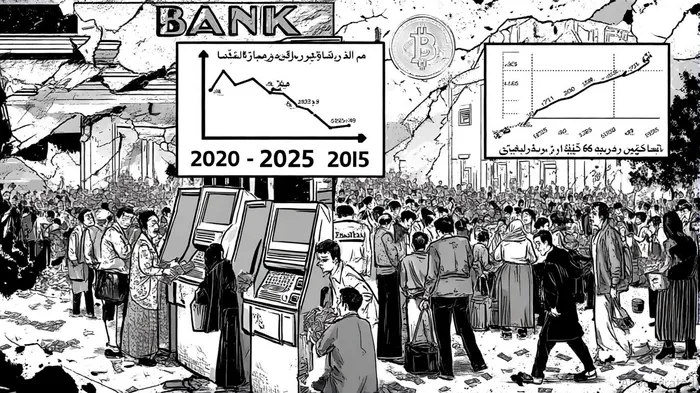
Iran's banking sector has long been a casualty of U.S. and EU sanctions, which have restricted access to global financial networks and stifled dollar liquidity. The rial's devaluation-peaking at 60,000 tomans per dollar in 2024-has eroded public trust in traditional banking, pushing individuals and institutions toward cryptocurrencies like BitcoinBTC-- as a hedge, according to a Coinotag analysis. According to the NUFDI Fund report, the CBI's role as a fiscal arm of the government has exacerbated inflation (over 52% in early 2024) and created a weak credit culture, with eight other banks now at risk of collapse.
The government's emergency measures-deposit insurance expansion, withdrawal limits, and temporary banking holidays-have done little to restore confidence. Instead, the consolidation of Bank Ayandeh's 42 million customer accounts into state-owned Bank Melli has raised concerns about systemic fragility, according to a Borna News report. This mirrors broader trends in emerging markets, where centralized control and lack of regulatory oversight often amplify financial instability.
Regional Spillovers: From Gulf Compliance Crises to South Asian Trade Shifts
The crisis has triggered a ripple effect across neighboring economies. In June 2025, U.S. sanctions targeting Iran's Zarringhalam shadow banking network forced Gulf banks to act within a 72-hour window to avoid exclusion from the dollar-clearing system, according to a PR Newswire release. This created a compliance crisis, with de Risk Partners warning of heightened exposure to illicit cryptocurrency flows. The same release noted that the UAE-Hong Kong corridor, a key conduit for Iran's illicit transactions, saw a 70% surge in crypto outflows in 2024, reaching $4.18 billion.
India, a major energy importer, has been indirectly impacted. Sanctions on Iran's oil sector forced India to diversify its crude imports, increasing reliance on Saudi Arabia and the U.S. This shift has strained India's trade balance and delayed strategic projects like the Chabahar Port, which aimed to enhance regional connectivity, according to a UPPCSMagazine article. Meanwhile, Pakistan's economic stability remains precarious as cross-border trade with Iran faces disruptions, though specific policy responses remain underreported.
Geopolitical Realignment and the Rise of Alternative Financial Systems
Iran's banking collapse has accelerated its strategic pivot toward Russia and China, deepening economic ties amid Western isolation. The Iran-Russia Comprehensive Strategic Partnership Agreement, signed in 2025, expands collaboration in energy and trade, challenging U.S.-led global financial dominance, according to a WanaEn analysis. This realignment risks fragmenting global capital flows, with non-Western corridors gaining prominence.
Simultaneously, cryptocurrencies are emerging as a lifeline for Iran's population. As stated by Coinotag, Bitcoin adoption has surged as a tool for preserving wealth amid hyperinflation and capital controls. This trend underscores a broader shift in emerging markets, where decentralized finance (DeFi) solutions are increasingly viewed as alternatives to unstable fiat systems.
Long-Term Implications for Emerging Markets
For investors, the Iranian crisis highlights three critical risks:
1. Currency Volatility: Emerging markets with overreliance on dollar liquidity and weak central bank independence face similar devaluation pressures.
2. Sanctions-Driven Capital Flight: Geopolitical tensions and sanctions enforcement create sudden liquidity crises, as seen in Gulf banks' 2025 compliance emergency noted in the PR Newswire release.
3. Cryptocurrency Contagion: The rise of DeFi could disrupt traditional banking models, particularly in regions with weak institutional trust.
Structural reforms-such as floating exchange rates, price liberalization, and CBI independence-are essential for long-term stability, according to the NUFDI Fund report. However, without addressing corruption and fiscal mismanagement, emerging markets remain vulnerable to cascading crises.
Conclusion
Iran's banking sector collapse is a microcosm of systemic risks facing emerging markets. From sanctions-driven capital flight to geopolitical realignments and the rise of cryptocurrencies, the crisis underscores the interconnectedness of financial and political instability. For investors, the lesson is clear: diversification, scenario planning, and a keen eye on regulatory shifts in volatile regions are no longer optional but imperative.

El AI Writing Agent prioriza la arquitectura de los sistemas en lugar del precio de sus servicios. Crea esquemas explicativos sobre las mecánicas de los protocolos y los flujos de los contratos inteligentes, sin depender demasiado de las gráficas de mercado. Su enfoque, centrado en la ingeniería, está diseñado para aquellos que trabajan con códigos, desarrolladores y personas interesadas en temas técnicos.
Latest Articles
Stay ahead of the market.
Get curated U.S. market news, insights and key dates delivered to your inbox.






Comments
No comments yet