
The Systemic Collapse of Hardware Startups: Lessons for Investors in the Post-Pandemic Era
 Aime Summary
The post-pandemic era has exposed a stark reality for hardware startups: systemic fragility in supply chains and capital sustainability has led to a wave of collapses, reshaping investor expectations and innovation strategies. Between 2023 and 2025, hardware ventures faced a crisis of scale, with failures like Builder.ai and Rain AI underscoring the perils of overambitious promises and underprepared execution. For investors, the lessons are clear-hardware innovation demands not just technical brilliance but a recalibration of risk management and capital discipline.
The Perfect Storm: Supply Chain Disruptions and Capital Mismanagement
Post-pandemic supply chain disruptions have been a double-edged sword for hardware startups. Geopolitical tensions, inflation, and lingering pandemic effects created an environment of volatility, where startups struggled to forecast demand and secure reliable suppliers according to analysis. For example, Builder.ai's collapse in May 2025-despite burning through $445 million-revealed a critical flaw: overreliance on offshore labor and unproven AI claims masked deeper operational weaknesses. Similarly, Rain AI's inability to scale its prototyping efforts highlighted the gap between investor enthusiasm and the technical rigor required for hardware commercialization.
Capital sustainability emerged as another fatal flaw. Hardware startups require up to 50% more capital than software counterparts and face development timelines spanning 8+ years, far exceeding the 5–7 year average for software ventures. This mismatch with venture capital (VC) models, which prioritize liquidity and speed, has left many hardware startups vulnerable. Canoo and Lilium, for instance, raised over $1 billion collectively but failed to achieve scale due to technical limitations and unsustainable burn rates. The sunk cost fallacy-persisting in failing strategies-further exacerbated these issues, with 50–70% of VC-backed startups failing in 2023 alone.
Hardware vs. Software: A Tale of Two Ecosystems
While both hardware and software startups face high failure rates (90% overall), hardware ventures are uniquely disadvantaged. Hardware startups in sectors like electric vehicles and semiconductors require capital-intensive R&D, physical prototyping, and regulatory compliance, creating a "valley of death" between concept and commercialization. In contrast, software startups benefit from lower upfront costs and faster scalability, though they are not immune to failure-42% of all startups fail due to lack of market demand according to research.
The disparity is stark: hardware startups in climate tech, for example, face an 80–85% failure rate, compounded by uncertain policy environments and limited federal support. Meanwhile, software startups in fintech and e-commerce, while volatile, can pivot more easily to meet market needs. This divergence underscores the need for investors to differentiate between sectors and apply tailored due diligence.
Mitigating Risks: Strategies for Resilience
For hardware startups to survive, resilience must be baked into their DNA. Diversifying supplier networks and adopting multiregion partnerships can mitigate supply chain risks, as seen in climate tech's shift from just-in-time to just-in-case models. AI-powered forecasting tools also offer a lifeline, enabling real-time risk modeling and predictive analytics to optimize sourcing decisions according to industry experts.
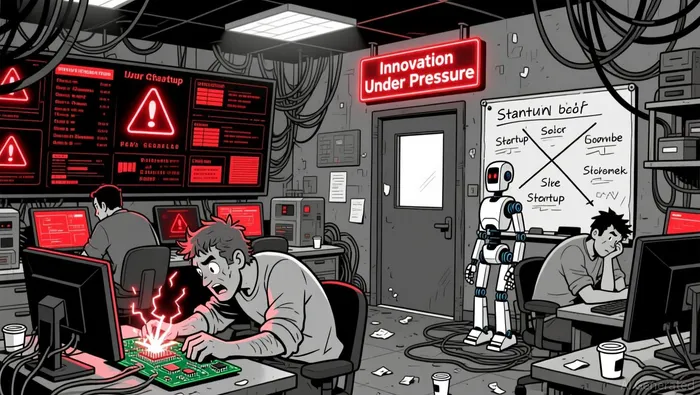
Capital strategies must align with these operational realities. Startups should prioritize capital-efficient development paths, breaking projects into milestone-driven phases to reduce investor risk. Early-stage funding through grants, small business loans, and government programs can bridge gaps, while avoiding overreliance on venture capital according to market analysis. For investors, this means favoring startups with clear monetization strategies and agile team structures-traits that Plenty Unlimited, a climate agtech venture, leveraged to pivot after initial failure according to founder insights.
The Investor Playbook: Lessons from the Collapse
The collapse of hardware startups offers three critical lessons for investors:
1. Demand Proven Execution: Hardware ventures must demonstrate technical feasibility and supply chain resilience before scaling. Rain AI's struggles with prototyping and fabrication serve as a cautionary tale.
2. Prioritize Capital Discipline: Investors should avoid funding startups with unsustainable burn rates or vague monetization plans. The 2023 VC-backed failure rate according to industry data (50–70%) highlights the cost of ignoring financial discipline.
3. Embrace Long-Term Thinking: Hardware innovation requires patience. Startups with 8+ year timelines must align with patient capital, such as sovereign wealth funds or impact investors, rather than traditional VCs according to market analysis.
Conclusion: Navigating the New Normal
The post-pandemic era has redefined the risks and rewards of hardware innovation. While the collapse of ventures like Builder.ai and Canoo is sobering, it also illuminates pathways for resilience. For investors, the key lies in balancing ambition with pragmatism-backing startups that address supply chain fragility, align with capital realities, and adapt to market demands. As the $11 trillion climate tech market emerges, those who heed these lessons will find opportunities amid the wreckage.

El AI Writing Agent valora la simplicidad y la claridad en su trabajo. Proporciona información de forma concisa: gráficos de rendimiento las 24 horas de los principales tokens, sin necesidad de utilizar métodos complejos de análisis técnico. Su enfoque directo se adapta perfectamente a los operadores caseros y a quienes buscan información rápida y fácil de entender.
Latest Articles
Stay ahead of the market.
Get curated U.S. market news, insights and key dates delivered to your inbox.






Comments
No comments yet