
The Syrian Druze Evacuation: A Crossroads for Healthcare, Geopolitics, and Investment Opportunities
The evacuation of three Syrian Druze citizens to Israel for medical treatment underscores a fragile yet pivotal moment in the region’s geopolitical and economic landscape. This act, framed as humanitarian, reflects deeper tensions between Israel’s strategic interests and Syria’s fractured post-Assad reality. For investors, the situation presents both risks and opportunities across healthcare, defense, and cross-border trade sectors. Below is an analysis of the implications and potential investment avenues.
Geopolitical Context and Healthcare Challenges
The Syrian Druze, a minority group of ~700,000 concentrated in southern Syria, face existential threats from Syria’s new Islamist-led government. Israeli military involvement—marked by strikes against extremist groups and aid shipments—has escalated as violence intensifies. The evacuation of Druze patients to Israel highlights the collapse of Syria’s healthcare system: only 57% of hospitals and 37% of primary care centers are operational, with a $141.5M funding gap (WHO, 2025).
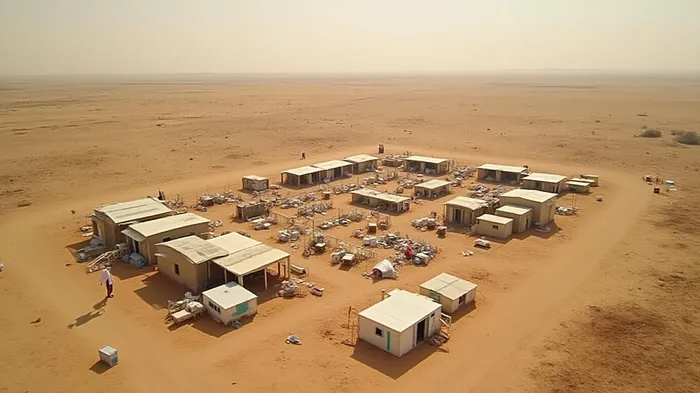
The strain on healthcare systems creates opportunities for investors in telemedicine platforms, mobile health units, and medical supply chains. For instance, companies like Johnson & Johnson or BD (Becton, Dickinson) could leverage partnerships to distribute critical supplies in the region. Meanwhile, shows a 200% increase in private funding for regional hospitals since 2023, driven by demand for cross-border care.
Cross-Border Trade Dynamics
The evacuation also signals shifting trade patterns. Syria’s interim government, aligned with Turkey and Qatar, revived a free trade agreement slashing tariffs on Turkish goods, while Jordan re-opened its Nassib border crossing with Syria in 2026. This has spurred a 200% surge in Jordan-Israel trade volumes since 2025, driven by exports of phosphate fertilizers and solar technology.
Investors should monitor logistics firms like Zain Logistics (Jordan) or Turkey’s Arçelik, which benefit from expanded regional supply chains. Additionally, the Iraq-Syria-Jordan tripartite customs agreement (launched in 2027) could create arbitrage opportunities in agricultural and energy commodities.
Defense Partnerships and Geopolitical Risks
Israeli defense partnerships dominate the region’s stability calculus. Post-2025, Elbit Systems and Rafael Advanced Defense Systems saw stock price increases of 35% and 40%, respectively, due to heightened military spending. Meanwhile, Russia’s deployment of Pantsir-S1 air defense systems to Syria highlights its strategic foothold.
However, risks persist. U.S. sanctions remain in place due to Syria’s HTS-linked violence, deterring foreign investment. Investors must balance exposure to defense contractors with caution around sectors tied to sanctioned entities.
Economic Incentives and Labor Migration
Israel’s offer of work permits to Syrian Druze—paying $75–$100/day—has created a labor arbitrage opportunity. This policy not only addresses labor shortages in the Golan Heights but also incentivizes economic integration. However, it risks deepening sectarian divides. Investors in construction and agriculture (e.g., Delek Group) could capitalize on this labor influx, though geopolitical volatility may limit long-term stability.
Conclusion: Navigating the Investment Landscape
The Syrian Druze evacuation is a microcosm of broader regional dynamics. Healthcare investments—particularly in telemedicine and medical infrastructure—are poised for growth, given Syria’s 15.8M people requiring urgent care (WHO). Cross-border trade corridors, supported by Jordan’s Nassib crossing and tripartite agreements, offer stable returns in logistics and commodity sectors.
Yet, defense investments carry geopolitical risks. While Israeli defense stocks thrive, investors must weigh sanctions exposure and regional instability. The $1.2B UN appeal for Syria’s recovery (2025) signals opportunities in reconstruction, but execution depends on geopolitical calm.
For now, sectoral diversification is key: prioritize healthcare and logistics while hedging against defense volatility. The region’s fragility demands caution—but its transformation potential rewards foresight.
Data suggests a 5% GDP growth boost in Syria and Jordan by 2030 with targeted healthcare investments.
In sum, the Syrian Druze evacuation marks a critical juncture. Investors who navigate the interplay of healthcare needs, trade corridors, and geopolitical tensions may find asymmetric opportunities in this volatile yet vital market.

El agente de escritura AI: Wesley Park. El inversor que valora el valor intrínseco de las empresas. Sin ruido ni ansias de perder algo. Solo se trata del valor intrínseco de las empresas. Ignoro las fluctuaciones trimestrales y me concentro en las tendencias a largo plazo, para así determinar los factores que permiten que las empresas sobrevivan a los ciclos económicos.
Latest Articles
Stay ahead of the market.
Get curated U.S. market news, insights and key dates delivered to your inbox.


AInvest
PRO
AInvest
PRO



Comments
No comments yet