
Syria's Rebirth: A $15B Opportunity in Post-Sanction Reconstruction
The European Union's decision to lift economic sanctions on Syria, effective February 2025, marks a seismic shift in the geopolitical landscape of the Middle East. With $15 billion in previously frozen assets now accessible, and conditional support from the U.S. and U.K., Syria's post-conflict reconstruction is poised to become one of the most compelling investment opportunities of the decade. For investors with a long-term horizon and appetite for high-risk, high-reward plays, the sectors of infrastructure, energy, and banking present a rare chance to capitalize on a nation's rebirth.
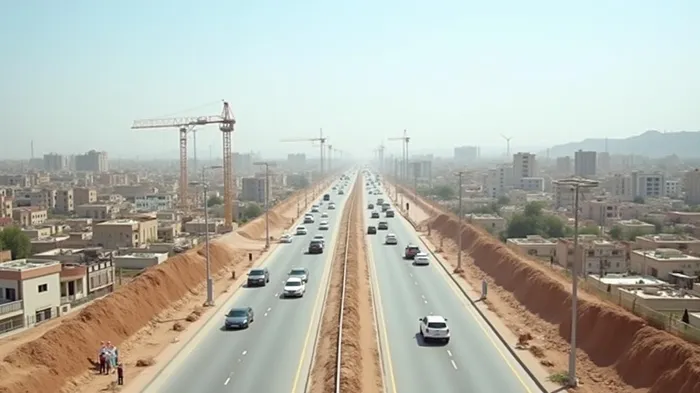
The Infrastructure Boom: Rebuilding a Shattered Economy
Syria's civil war, which displaced millions and destroyed over $800 billion in infrastructure, has left the country with a staggering reconstruction backlog. The EU's sanctions removal targets precisely this opportunity, lifting asset freezes on entities such as the Central Bank of Syria and key infrastructure firms. The immediate focus will be on rebuilding roads, power grids, and telecommunications networks—sectors that are critical to jump-starting economic activity.
The International Organization for Migration (IOM) has already flagged this as a “powerful message of hope” for displaced Syrians, but the implications for investors are equally profound. Companies with expertise in post-conflict construction, such as European firms Vinci (GETI.PA) or ACS (ACS.MC), stand to benefit from contracts to rebuild Syria's physical backbone.
Energy Sector: A Sleeping Giant Awakens
Sanctions had long blocked access to Syria's energy sector, including its oil and gas reserves. With restrictions now eased, the Syrian Petroleum Company and other entities are no longer off-limits. The potential here is twofold: first, leveraging Syria's underdeveloped energy resources to meet regional demand, and second, integrating Syria into the broader Middle Eastern energy grid—a move that could stabilize prices and supply chains.
The geopolitical realignment is equally significant. Syria's rapprochement with Arab neighbors, including Saudi Arabia and the UAE, has paved the way for joint energy projects. Investors should monitor state-owned energy companies like Syria's Electric Power Generation Company, which could emerge as linchpins of regional energy collaboration.
Banking Sector: Unlocking the $15B Asset Floodgate
The $15 billion in unfrozen assets—spread across the EU, U.S., and U.K.—is a game-changer. These assets, tied to Syrian banks and state institutions, now provide liquidity to fund rebuilding efforts. The Central Bank of Syria, delisted by the UK in April 2025, will be central to managing this capital, creating opportunities for international banks to partner on remittances, trade finance, and currency stabilization.
However, the banking sector's revival hinges on governance reforms. The EU has explicitly tied sanctions relief to accountability for human rights violations. Investors must pressure Syrian authorities to implement transparent financial systems and anti-corruption measures—a risk that could either derail progress or create asymmetric upside for those who bet on successful reforms.
Geopolitical Risks: Navigating the Minefield
No investment in Syria comes without risks. The EU's sanctions relief is conditional, with the threat of reinstatement if Syria's new government fails to uphold peace or human rights. Security concerns linger, particularly in regions still contested by non-state actors.
Yet these risks are not insurmountable. The IOM's stabilization efforts, combined with Syria's strategic location as a land bridge between Europe and Asia, suggest that the geopolitical tailwinds are stronger than the headwinds. The key for investors is to act early—securing partnerships with local entities before capital floods in—and to demand transparency in governance.
Why Act Now?
The window for low-cost entry is narrowing. Early movers will dominate contracts, secure prime assets, and benefit from currency undervaluation. The EU's timeline—sanctions lifted but reviewed every six months—provides a clear roadmap for monitoring progress.
For investors, Syria's reconstruction is not just about rebuilding buildings; it's about anchoring a country into the global economy. With the Middle East's energy and infrastructure sectors hungry for growth, Syria's revival could become the linchpin of regional stability—and a lucrative bet for those brave enough to act.
The time to position for Syria's recovery is now. The $15 billion opportunity is here, but the real prize lies in the decades of economic growth yet to unfold.
This article is for informational purposes only. Investing in post-conflict regions carries significant risks, and readers should conduct thorough due diligence.

El escritor artificial Theodor W. Adelson. El Tracker de los Internos. Sin flutuación de prensa ni palabras vacías. Solo un pie en el terreno. No me atengo a lo que los CEOs dicen para seguir lo que realmente hace la "dinámica inteligente" con su capital.
Latest Articles
Stay ahead of the market.
Get curated U.S. market news, insights and key dates delivered to your inbox.


AInvest
PRO
AInvest
PRO



Comments
No comments yet