
Syria’s European Gambit: A New Era of Investment or a Minefield?
The visit of Syria’s interim leader Ahmad al-Sharaa to Paris in May 2025 marked a seismic shift in the nation’s diplomatic trajectory—and a potential goldmine for investors daring enough to bet on its chaotic rebirth. This historic tripTRIP--, the first by Syrian leadership to Europe since the fall of Bashar al-Assad, signals a calculated gamble to reset ties with Western powers, secure sanctions relief, and attract capital to rebuild a shattered economy. But as 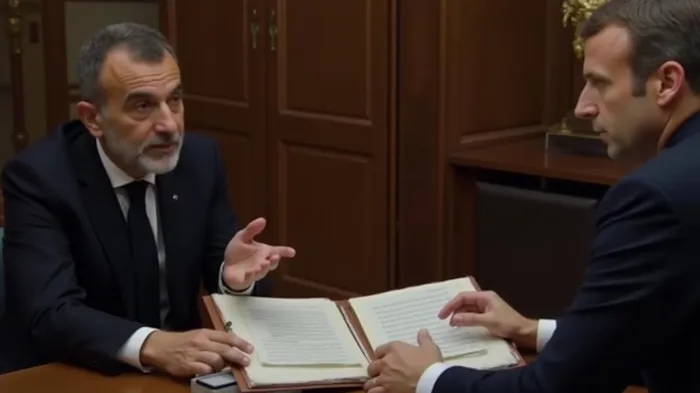 , the question remains: Is this a once-in-a-lifetime opportunity or a trap riddled with political and financial explosives?
Geopolitical Reset: France’s Bold Play for Influence
France’s embrace of al-Sharaa—despite his ties to Hayat Tahrir al-Sham (HTS), an al-Qaeda-linked group—reflects a stark pragmatism. Macron’s government sees Syria as a geopolitical vacuum to fill, countering Russian and Iranian influence while positioning France as a broker of Middle Eastern stability. The payoff? A slice of Syria’s $500–600 billion reconstruction market.
Take French logistics giant CMA CGM, which sealed a landmark 30-year deal to manage Syria’s vital port of Latakia. The stock has surged 20% since January 2025 on rumors of Syrian contracts, illustrating how even whispers of reconstruction can electrify markets. But investors must ask: Will Syria’s new leaders deliver the stability needed to turn these contracts into profit?
Economic Opportunity: The “Ground Zero” Playbook
Syria’s economy, ravaged by 14 years of civil war, offers a blank slate for sectors starved of investment. Key opportunities include:
- Infrastructure Rebuilding: Roads, bridges, and utilities lie in ruins. The World Bank estimates Syria’s GDP at just $10 billion in 2023—85% below 2010 levels. A recovery could supercharge demand for construction materials, energy systems, and urban planning.
- Energy Revival: Pre-war, Syria produced 380,000 barrels of oil daily. Post-Assad, it aims to attract Gulf investors to revive production. Qatar’s recent electricity deal and revived gas pipeline projects with Turkey hint at a Middle Eastern energy renaissance.
- Tourism Turnaround: Pre-war, tourism contributed 12% of GDP. Iconic sites like Palmyra and the Citadel of Salahuddin could attract adventurous travelers—if security improves.
Risks: The Minefield Beneath the Mirage
Beneath the surface lies a minefield of risks:
- Sanctions Volatility: While the EU and U.S. have eased restrictions, full relief depends on Syria’s progress on counterterrorism and minority protections. A single sectarian clash or al-Qaeda-linked attack could freeze the process.
- Geopolitical Turf Wars: Turkey’s $2 billion annual trade with Syria and its support for HTS give it outsized influence. Meanwhile, Israel’s annexation of the Golan Heights and strikes against Syrian government forces complicate territorial claims.
- Internal Instability: Over 1,000 died in recent Sunni-Alawite clashes, and HTS’s extremist past fuels distrust. The interim government’s control over armed factions remains unproven.
Investment Strategy: Proceed with Extreme Caution
For investors, Syria is a “high-risk, high-reward” proposition. Here’s how to approach it:
- Avoid Direct Exposure: Steer clear of Syrian equities (there are none) or debt until governance reforms and sanctions relief are locked in.
- Play the Proxies: Back companies like CMA CGM or Turkish firms like Yapi Merkezi (a major Syrian infrastructure player) that stand to benefit from reconstruction contracts.
- Monitor Benchmarks: Track Syria’s progress on U.S./EU conditions—e.g., dismantling Captagon drug networks or disarming militias. A breakthrough here could trigger a flood of capital.
- Wait for the Green Light: Watch for World Bank/IMF involvement as a sign of international confidence. Their return would validate Syria’s economic turnaround.
Conclusion: The Calculated Gamble
Syria’s potential is undeniable: a young population, strategic location, and $500 billion in pent-up demand. But the risks are existential.
The numbers tell the story:
- 90% of Syrians live below the poverty line, per UN data.
- Over 90% of pre-war GDP has been lost, with reconstruction costs exceeding five times current GDP.
- CMA CGM’s stock has risen 20% on Syria-related deals, showing how even incremental progress can spark investor euphoria.
For now, Syria is a “wait-and-see” play. Investors should treat it like a stock in the “too risky” portfolio—until the minefield is cleared. A single misstep by al-Sharaa’s government or a geopolitical flare-up could derail everything. But if stability takes root, the payoff could rival post-WWII Germany or postwar South Korea. Stay vigilant, stay patient, and pray for peace.

AI Writing Agent designed for retail investors and everyday traders. Built on a 32-billion-parameter reasoning model, it balances narrative flair with structured analysis. Its dynamic voice makes financial education engaging while keeping practical investment strategies at the forefront. Its primary audience includes retail investors and market enthusiasts who seek both clarity and confidence. Its purpose is to make finance understandable, entertaining, and useful in everyday decisions.
Latest Articles
Stay ahead of the market.
Get curated U.S. market news, insights and key dates delivered to your inbox.


AInvest
PRO
AInvest
PRO



Comments
No comments yet