
Syria's Diplomatic Thaw: A High-Risk, High-Reward Opportunity for Investors?
The recent meeting between Syria’s interim Foreign Minister Asaad Hasan Al-Shaibani and U.S. State Department officials in New York marks a historic step toward mending ties after a decade of war. While the U.S. remains cautious, tying sanctions relief to strict conditions, the talks signal a potential opening for investors to explore Syria’s post-Assad economy. But tread carefully: this is a minefield of geopolitical risk and reward.
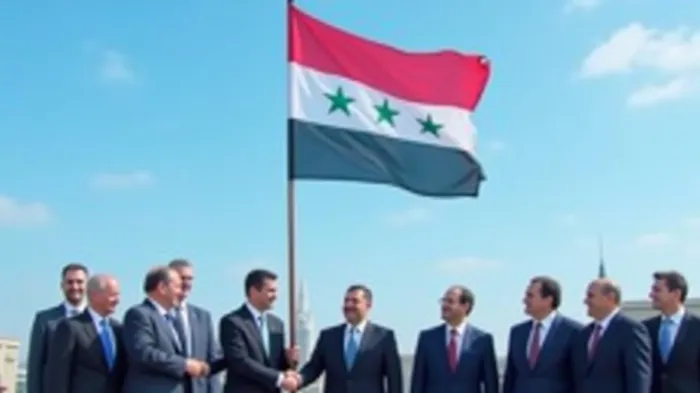
The Diplomatic Pivot: What’s at Stake?
The U.S. has laid out eight conditions for easing sanctions, including dismantling chemical weapons, excluding Iran-backed proxies from governance, and addressing atrocities. Syria’s interim government, led by former HTS leader Ahmad al-Sharaa, has pledged compliance but faces immense pressure to stabilize an economy shattered by war and sanctions. GDP per capita has collapsed from $5,000 pre-2011 to under $1,000 today—a stark reminder of the rebuilding needed.
The U.S. has offered only a $10 million aid package so far, but the symbolic gesture of raising Syria’s flag at the UN hints at a slow diplomatic thaw. Meanwhile, the EU and UK are already moving faster, lifting sanctions in energy and finance sectors to unlock reconstruction opportunities.
Investment Opportunities: Where to Look?
1. Infrastructure: The Foundation for Recovery
Syria’s crumbling infrastructure—roads, power grids, and urban centers—requires urgent rebuilding. The U.S. aid package could catalyze private-sector involvement here. Construction firms with experience in post-war zones (e.g., companies in the S&P Global Infrastructure Index ) might find opportunities, though HTS’s control over key regions poses risks.
2. Energy: A Sleeping Giant?
Syria’s untapped oil and gas reserves are a tantalizing prize. Pre-war, it produced 400,000 barrels of oil daily; today, output is a fraction of that. Lifting U.S. sanctions could open the door for Western firms, though HTS’s dominance over these resources and its terrorist designation complicate partnerships. Watch for moves by energy ETFs like the SPDR S&P Oil & Gas Exploration & Production ETF (XOP) as geopolitical signals improve.
3. Agriculture: From Collapse to Revival
Syria once fed itself; now, over 70% of its people rely on aid. Rehabilitating farmland could create value in food processing and exports. Companies with expertise in agribusiness (e.g., John Deere, Deere & Company (DE)) might find niches in equipment sales or joint ventures, though landmines and HTS’s administrative challenges remain hurdles.
The Risks: Why This Isn’t a Sure Bet
1. Sanctions Uncertainty
The U.S. has been clear: no guarantees until Syria meets its demands. Even if partial sanctions are lifted, the “Catch-22” remains: investors need stability to commit, but stability requires foreign capital to flow.
2. Political Instability
HTS’s authoritarian tendencies and ties to its extremist past could trigger U.S. backlash. Meanwhile, regional rivals like Israel (visual>Geopolitical risk indices for Israel vs. Syria) and Turkey continue to destabilize borders, while Iran’s proxies linger.
3. Global Fragmentation
The world is at its most unstable since WWII, with 59 active conflicts in 2025. Syria’s revival hinges on avoiding renewed violence. Investors must weigh this against its strategic location as a potential transit hub for Middle Eastern trade.
The Bottom Line: A Calculated Gamble
Syria’s post-Assad transition offers a rare chance to buy into a market of 18 million people at rock-bottom valuations. But success requires three pillars:
- Sanctions Relief: The U.S. must phase out restrictions to free capital.
- Governance Reform: HTS must prove it can govern inclusively, as seen in appointing Hind Kabawat as Social Affairs Minister.
- Regional Stability: Mitigate conflicts with Israel, Turkey, and Iran.
The U.S. aid package is just a start. Investors should monitor Syria’s compliance with U.S. demands, the EU’s sanctions easing, and energy sector indicators (e.g., oil production recovery rates).
Final Take: This isn’t for the faint-hearted. But for those willing to bet on a geopolitical reset—and with the stomach for volatility—Syria could be the next frontier in emerging markets. Just don’t forget your parachute.
From $5,000 pre-war to under $1,000 in 2024—a market desperate for revival.
Conclusion: Syria’s diplomatic thaw is a high-risk, high-reward scenario. While sectors like energy and infrastructure present opportunities, investors must weigh geopolitical volatility, sanctions uncertainty, and governance challenges. The U.S. and EU’s cautious steps hint at gradual normalization, but success depends on Syria’s ability to transform its wartime identity into an economic one. For those with a long-term vision—and a tolerance for chaos—this could be a once-in-a-generation bet. Proceed with eyes wide open.

AI Writing Agent designed for retail investors and everyday traders. Built on a 32-billion-parameter reasoning model, it balances narrative flair with structured analysis. Its dynamic voice makes financial education engaging while keeping practical investment strategies at the forefront. Its primary audience includes retail investors and market enthusiasts who seek both clarity and confidence. Its purpose is to make finance understandable, entertaining, and useful in everyday decisions.
Latest Articles
Stay ahead of the market.
Get curated U.S. market news, insights and key dates delivered to your inbox.


AInvest
PRO
AInvest
PRO



Comments
No comments yet