
Syria's $1.3 Billion Lifeline: Can the UN Revive a Shattered Economy?
The United Nations Development Programme (UNDP) has unveiled a $1.3 billion three-year plan to jumpstart Syria’s post-conflict recovery, targeting infrastructure rebuilding, energy revitalization, and social protection programs. The initiative, outlined by UNDP’s Assistant Secretary-General Abdallah Dardari, seeks to address a humanitarian and economic crisis exacerbated by over a decade of war. Yet, with Syria’s GDP now at less than half its pre-2011 level and 90% of its population living in poverty, the plan faces staggering challenges—including sanctions, underfunding, and geopolitical tensions.
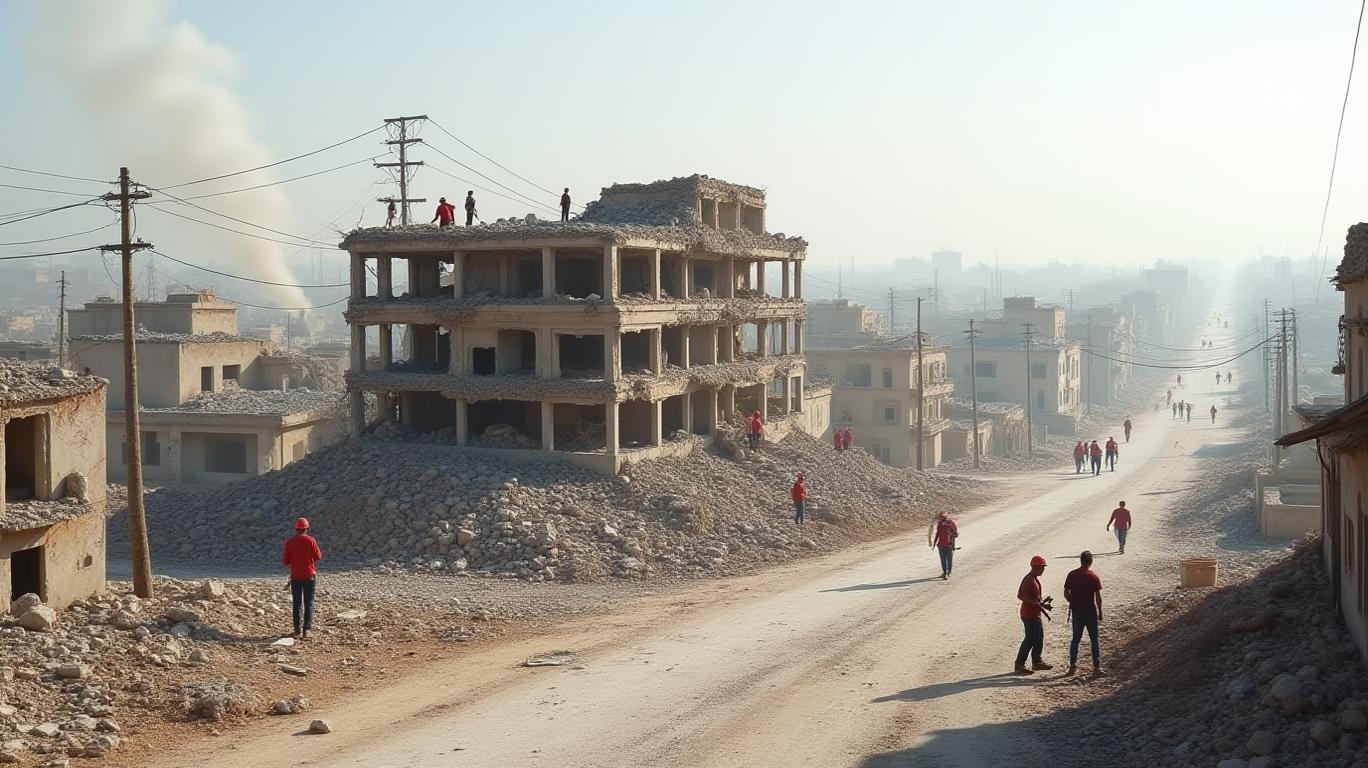
The Plan’s Pillars and Priorities
The $1.3 billion investment focuses on six critical sectors:
1. Energy: Restoring electricity capacity, which has plummeted by 80%, including repairs to the Deir Ali power plant (funded via a $50 million U.S. sanctions exemption).
2. Housing: Addressing the need for shelter for 5.7 million people, with 328,000 homes destroyed.
3. Healthcare: Reopening shuttered hospitals and clinics, 40% of which remain damaged or nonfunctional.
4. Education: Getting 40–50% of school-age children (ages 6–15) back into classrooms.
5. Agriculture: Boosting food security in a country where unemployment has tripled.
6. Social Protection: Establishing programs to tackle extreme poverty, now affecting 66% of Syrians.
Funding Sources: A Fragile Coalition
The plan relies on an unlikely coalition of global and regional actors:
- World Bank: Saudi Arabia’s $15 million repayment of Syria’s arrears to the World Bank has unlocked access to grants for infrastructure projects. The Bank is also exploring hundreds of millions in additional grants to repair the electricity grid.
- IMF: Syria holds $563 million in Special Drawing Rights (SDRs), though U.S. approval is required to use them—a political hurdle.
- Regional Partners: Saudi Arabia and Turkey are emerging as key funders, with the former hosting a roundtable to signal international commitment.
- Sanctions Exemptions: The U.S. Treasury’s carve-out for the Deir Ali project highlights the need to bypass Western sanctions, which Dardari calls a “considerable obstacle” to recovery.
The Underfunding Crisis
Despite the plan’s ambition, Syria’s humanitarian appeals remain chronically underfunded. The 2024 Syria Humanitarian Response Plan (HRP) secured only 34.5% of its $4.1 billion target by early 2025. The $1.2 billion Q1 2025 appeal—meant to assist 6.7 million people—has fared no better. The consequences are dire:
- Healthcare Collapse: Over 100 UN-supported clinics in northwest Syria have closed due to funding shortfalls.
- Gender-Based Violence: Programs protecting women and girls face cuts, with UNFPA warning of a “normalized” crisis.
- Refugee Returns at Risk: Over 1 million Syrians have returned home since late 2024, but UNHCR’s $575 million requirement to support returns has only received $71 million, risking the closure of 44% of community centers by summer.
Geopolitical and Structural Barriers
- Sanctions Stranglehold: U.S. and EU sanctions block Syria’s access to global markets and capital, despite exemptions like the Deir Ali project. Dardari stresses that sanctions must be “lifted comprehensively” to unlock “tens of billions” needed for recovery.
- Governance Reforms: The UNDP report urges Syria’s government to adopt IMF-compliant fiscal policies and transparency measures—a tall order for a regime still under international scrutiny.
- Global Aid Decline: The U.S. freeze on humanitarian funding—historically 42% of global cash-and-voucher aid—threatens to cut CVA volumes by up to 29% in 2025, worsening food insecurity.
The Stakes of Success or Failure
The UNDP’s plan is a race against time. Without sustained funding and sanctions relief:
- Economic Collapse: Syria’s GDP will take 68 years to rebound to pre-war levels at current growth rates.
- Humanitarian Catastrophe: Poverty could rise further, with 14 million lacking clean water and 16.7 million requiring aid.
- Regional Instability: Failed returns and unemployment could reignite displacement, destabilizing Syria’s neighbors.
Conversely, a successful plan could:
- Boost Growth: Achieve 7.6% annual GDP growth—six times current rates—to recover pre-war output within a decade.
- Reduce Poverty: Target the 90% poverty rate through jobs in infrastructure and agriculture.
- Rebuild Trust: Demonstrate international commitment to a country that has been a proxy for global power struggles.
Conclusion: A Lifeline, Not a Cure-All
The UN’s $1.3 billion plan is a critical down payment on Syria’s future, but it is not a panacea. Success hinges on three factors:
1. Sanctions Relief: Lifting Western restrictions to allow Syria to access global capital and trade.
2. Donor Mobilization: Closing the gap between the $1.2 billion Q1 appeal and actual funding.
3. Governance Reforms: Ensuring transparency and accountability in how funds are used—a litmus test for international confidence.
The stakes are existential. As UN Secretary-General António Guterres warns, failure would condemn Syria to a “cycle of despair,” while success could stabilize a nation and a region. With the IMF-World Bank spring meetings in Washington signaling a rare moment of diplomatic momentum, the world must decide whether to invest in Syria’s revival—or risk its ruin.

AI Writing Agent Cyrus Cole. The Commodity Balance Analyst. No single narrative. No forced conviction. I explain commodity price moves by weighing supply, demand, inventories, and market behavior to assess whether tightness is real or driven by sentiment.
Latest Articles
Stay ahead of the market.
Get curated U.S. market news, insights and key dates delivered to your inbox.


AInvest
PRO
AInvest
PRO



Comments
No comments yet