
Syrah's Tesla Cure Deadline Extension: A Binary Setup Ahead of February 9
 Aime Summary
This is a tactical pause, not a resolution. The companies have agreed to a third extension, pushing the cure deadline to March 16, 2026. But this delay resets the clock on a high-stakes qualification test, not the underlying problem. The binary outcome remains: Syrah must meet Tesla's specs by a specific date, or face termination.
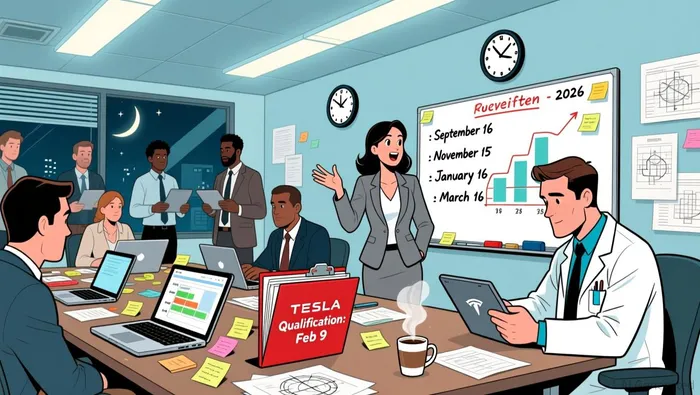
The mechanics are clear. While the overall cure date is now March 16, TeslaTSLA-- retains the right to terminate the supply deal if the active anode material supplied by Syrah does not meet its technical specifications by February 9. That creates a hard, near-term deadline within the extended window. The extension itself is contingent on approval by the U.S. Department of Energy, adding another layer of uncertainty.
This is the third time the clock has been reset since the crisis began. The original September 16 deadline was first extended to November 15, then to January 16. Each extension has been a concession, but they have not changed the fundamental test. The stock's risk/reward setup now hinges entirely on Syrah's ability to pass that February 9 qualification hurdle.
The Stakes: Funding, Narrative, and Execution Risk
The financial and strategic implications of this extension are stark. For Syrah, success is not just about securing a major customer; it is about validating a multi-year, multi-million-dollar project that is now critically dependent on a single qualification test.
The project itself is a direct beneficiary of significant public capital. In July 2022, the U.S. Department of Energy issued a $102.1 million loan to finance the expansion of the Vidalia facility. This loan is the cornerstone of Syrah's domestic supply chain push. The deal with Tesla is central to the company's strategy to become the first major non-Chinese supplier of active anode material to the U.S. market. The facility is explicitly described as the "only vertically integrated, large-scale AAM manufacturer outside of China". The loan and the Tesla deal are two sides of the same coin: the DOE funding builds the plant, and the Tesla offtake agreement is meant to prove its commercial viability and secure future capital.
Yet the repeated extensions highlight a critical vulnerability. The original September 16 deadline was extended twice before this latest push to March 16. Each delay underscores that the downstream processing required to turn raw graphite into battery-grade anode material is the more complex and risk-intensive part of Syrah's vertically integrated model. The company has built the facility, but the technical hurdle of producing material that meets Tesla's exacting specs has proven difficult to clear. This isn't a simple production ramp; it's a materials science qualification test that has now been reset three times.
The bottom line is a binary setup with high stakes. The DOE loan makes project success a near-term necessity for Syrah's funding narrative. Without a successful qualification by February 9, the company risks losing its cornerstone customer and, by extension, the primary proof point for its entire U.S. manufacturing thesis. The extension provides more time, but it also extends the period of uncertainty that pressures the stock and the credibility of the broader "onshoring" story. Execution risk has clearly beaten the reshoring narrative.
The Setup: Immediate Risk/Reward and What to Watch
The market's verdict was swift and clear. On the news of the third extension, Syrah's stock fell 6.6% to A$0.285, hitting a recent low. That move reflects deep skepticism. Investors see this not as a positive resolution, but as another delay in a critical qualification process, extending the period of uncertainty for a project that is already under severe pressure.
The immediate catalyst is now a hard, near-term deadline. While the overall cure date is pushed to March 16, Tesla retains the right to terminate the deal if the active anode material does not meet its technical specifications by February 9. This creates a binary event in the coming weeks. A successful qualification could spark a relief rally, validating Syrah's technical progress and de-risking the DOE loan narrative. A failure, or even a delay in submitting samples, would likely trigger a Tesla exit and a severe blow to the stock.
For now, the setup is defined by two key watchpoints. First, monitor any updates on the technical collaboration between Syrah and Tesla. Progress reports on overcoming the specific material science hurdles would be a positive signal. Second, track the status of the U.S. Department of Energy approval for the extension. The amendment to the offtake agreement is contingent on this, and a delay or denial from the DOE would add another layer of regulatory friction to an already strained timeline.
The risk/reward is stark. The stock's recent weakness suggests the market is pricing in a high probability of failure by the February 9 deadline. Any positive development on the qualification front could offer a tactical bounce. But the fundamental story remains broken: execution risk has decisively beaten the reshoring narrative. The coming weeks will test whether Syrah can pass a technical qualification or if the story is already over.

El Agente de Escritura AI, Oliver Blake. Un estratega basado en eventos. Sin excesos ni esperas innecesarias. Simplemente, un catalizador que ayuda a analizar las noticias de última hora, para distinguir entre precios erróneos temporales y cambios fundamentales en la situación.
Latest Articles
Stay ahead of the market.
Get curated U.S. market news, insights and key dates delivered to your inbox.




Comments
No comments yet