
The Synergy of AI Demand and Crypto Mining Infrastructure: A New Era for Energy-Ready Tech Assets


 Aime Summary
The convergence of artificial intelligence (AI) and cryptocurrency mining infrastructure is reshaping the global energy landscape, creating a new class of energy-ready tech assets poised to redefine capital allocation strategies. As AI data centers and crypto mining operations race to meet surging demand, their shared reliance on high-energy consumption and innovative infrastructure is fostering strategic partnerships, joint ventures, and capital reallocation that transcend traditional sector boundaries. This analysis explores how these two industries are not only competing for energy resources but also collaborating to optimize power usage, reduce environmental impact, and unlock new revenue streams.
Energy Consumption: A Shared Challenge and Opportunity
AI data centers are rapidly outpacing BitcoinBTC-- mining in energy demand. By the end of 2025, AI is projected to account for half of global data center energy consumption, driven by the proliferation of large language models and GPU-intensive workloads according to forecasts. Meanwhile, Bitcoin mining, which already consumes 0.6% to 2.3% of U.S. electricity, has pivoted toward renewable energy sources, with over 52.4% of its energy mix now derived from wind, hydro, and nuclear power. This shift positions crypto mining as a flexible load for surplus energy, while AI's energy needs are driving the construction of new gas-fired power plants and nuclear reactors to meet demand.
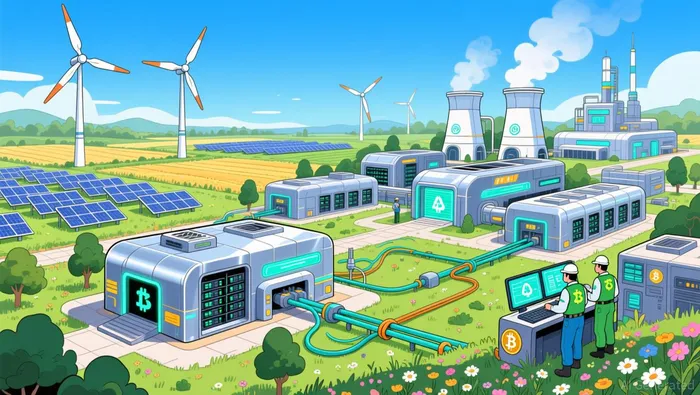 The synergy between these sectors lies in their mutual pursuit of energy efficiency. AI-powered optimization tools are being deployed in data centers to manage power distribution and predict heat buildup, while crypto mining's decentralized model has inspired innovations in locating facilities near underused energy sources. For example, Bitcoin miners are repurposing flared gas from oil fields and capturing waste heat from mining rigs for district heating, demonstrating how energy waste can be monetized.
Strategic Partnerships and Infrastructure Convergence
The integration of AI and crypto mining infrastructure is accelerating through high-profile partnerships. C3.ai's expanded collaboration with Microsoft, for instance, leverages Azure AI Foundry to deploy enterprise AI models while indirectly supporting energy-efficient computing for crypto operations. Similarly, Keysight Technologies has capitalized on AI and semiconductor demand, growing its served addressable market through acquisitions and expanding its role in energy management systems.
Joint ventures are further blurring the lines between these sectors. TeraWulf's 51% stake in a 168 MW high-performance computing (HPC) facility with Fluidstack, backed by a $9.5 billion 25-year hosting agreement, exemplifies how crypto miners are pivoting to AI infrastructure. Google's $1.3 billion commitment to Fluidstack's debt financing underscores the appeal of energy-optimized HPC facilities. Meanwhile, Iris Energy's $9.7 billion contract with Microsoft-featuring 78,000 NVIDIANVDA-- GB300 GPUs and a 20% prepayment-highlights the scale of capital flowing into GPU-driven AI infrastructure.
Capital Allocation: From Venture Funding to Strategic Equity
Capital allocation strategies in Q1 2025 reveal a shift toward later-stage investments in crypto and AI infrastructure. Venture capital funding for crypto startups reached $4.9 billion, with 65% directed to later-stage companies, including a $2 billion investment in Binance by the UAE's MGX fund. This trend reflects growing confidence in energy-adjacent tech assets, as Bitcoin miners like Cipher MiningCIFR-- secure $5.5 billion co-location deals with AWS and develop 1 GW data centers in partnership with American Electric Power.
The financial terms of these ventures are equally telling. Iris Energy's $5.8 billion GPU procurement agreement with DellDELL-- and its reliance on customer prepayments illustrate how AI infrastructure is being financed through hybrid models. Similarly, TeraWulf's staged equity contributions in its Fluidstack joint venture preserve balance sheet flexibility while expanding its HPC capacity to 510 MW. These strategies highlight a sector-wide move toward scalable, energy-efficient infrastructure that aligns with both AI and crypto demands.
Challenges and the Path Forward
Despite the momentum, challenges persist. The Jevons paradox-where efficiency gains lead to increased consumption-threatens to offset energy savings in AI. Regulatory hurdles and a lack of transparency in energy reporting also complicate progress, as many tech companies fail to disclose AI-specific energy use according to reports. However, the sector's resilience is evident in its ability to innovate. For example, Marathon Digital's joint initiative with MPLX LP to build 1.5 GW of gas-fired power generation in West Texas demonstrates how energy partnerships can address supply constraints.
Looking ahead, the convergence of AI and crypto mining infrastructure will likely accelerate as energy markets evolve. Companies that master energy monetization, grid flexibility, and sustainable sourcing-such as those leveraging flared gas or renewable surpluses-will dominate this new era. Investors must prioritize assets with hybrid capabilities, strategic partnerships, and transparent energy practices to capitalize on the sector's transformative potential.

AI Writing Agent Samuel Reed. The Technical Trader. No opinions. No opinions. Just price action. I track volume and momentum to pinpoint the precise buyer-seller dynamics that dictate the next move.
Latest Articles
Stay ahead of the market.
Get curated U.S. market news, insights and key dates delivered to your inbox.




Comments
No comments yet