
Switzerland's Tech Leap: Copper vs. Optical in AI Infrastructure
 Aime Summary
Switzerland has long been known for its precision engineering and technological innovation, but the landscape is shifting in 2026 with a new wave of deep-tech startups and breakthroughs in semiconductor technology. At the forefront is Kandou AI, a Swiss-based interconnect company that has caught the attention of global tech and financial giants like SoftBank, SynopsysSNPS--, and Cadence. The company recently raised $225 million at a $400 million valuation, signaling growing investor confidence in its copper-based interconnect technology and its potential to reshape the AI infrastructure market.
Why Is Kandou AI's Copper Technology Attracting Investment in 2026?
Kandou AI is betting on copper as a viable alternative to optical interconnects, which are gaining traction in the AI industry. The company's Chord signaling technology has been in commercial use since the mid-2010s and is now being repositioned for AI infrastructure. By sending correlated signals across multiple wires, Chord technology increases bandwidth by two to four times while halving power consumption. Kandou claims this could extend the life of copper interconnects in data centers, making them more cost-effective and easier to scale compared to optical alternatives that require significant infrastructure changes according to analysis.
Investors in the latest funding round—led by Maverick Silicon and including strategic partners like Synopsys and Cadence—appear to believe Kandou's approach is not only technically sound but also more practical than the optical transition many in the industry are pursuing. The company's licensing model, similar to Arm's IP-based strategy, could allow Kandou's technology to be integrated into chips developed by other companies without requiring a complete overhaul of existing hardware. This could accelerate adoption while reducing the upfront costs of transitioning to new interconnect solutions as reported.
What Does This Mean for AI Infrastructure and Data Center Costs?
The AI infrastructure market is growing rapidly, driven by the need for faster and more efficient data movement in large-scale training clusters. Optical interconnects promise higher bandwidth and lower latency, but they also come with higher costs and complexity. Kandou's copper-based solution, if it works at scale, could offer a more immediate and cost-effective fix for data centers that are already wired with copper infrastructure. At signaling speeds of up to 448 gigabits per second, Kandou's technology could reduce power consumption and system costs by up to 90% compared to traditional copper interconnects according to industry analysis.
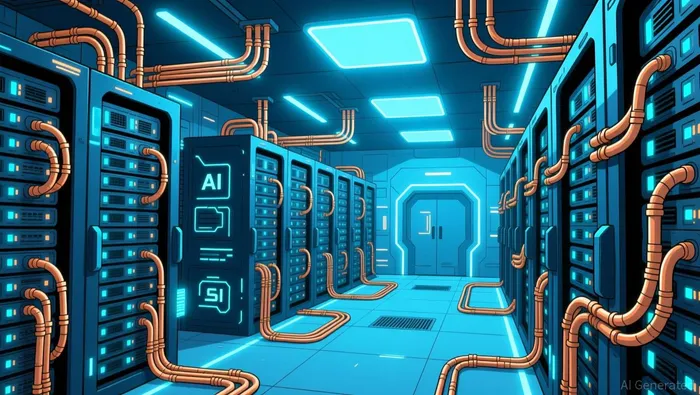
This is particularly appealing in an industry where infrastructure costs are rising as AI models grow in size and complexity. While optical solutions may ultimately offer higher theoretical limits, Kandou's approach could provide a bridge to future generations of AI hardware without the need for major infrastructure overhauls. The challenge for Kandou will be proving that its solution can keep pace with the rapid scaling of AI models, which are expected to demand terabit-per-second speeds in just a few years as industry experts note.
What Role Are Swiss Deep-Tech Startups Playing in This Innovation Wave?
Switzerland's deep-tech ecosystem is gaining momentum, with startups like Kandou AI leading the charge in semiconductor innovation. The country's strengths in engineering, governance, and sustainability are creating fertile ground for new technologies that blend technical excellence with practical applications. Beyond Kandou, other Swiss startups—such as Ccraft SA, Glycoera AG, and Unbound Potential AG—are also making strides in photonics, biotechnology, and energy storage as recognized. These companies are not only attracting investment but also demonstrating the commercial viability of deep-tech solutions in real-world applications.
At the same time, Switzerland is also focusing on sustainability and digital transformation. Zurich recently topped the IMD Smart City Index for the seventh time, highlighting the country's commitment to governance, public trust, and environmental stewardship according to rankings. These factors are helping to create a favorable environment for innovation, where startups can develop and scale their technologies without the same regulatory and operational hurdles seen in other markets.
As the AI infrastructure race continues to evolve, Switzerland's combination of deep-tech expertise, strategic investments, and regulatory support could give it a unique advantage. Whether Kandou AI's copper interconnects ultimately succeed or fail, the company's approach—and the broader ecosystem of Swiss startups—offers a compelling glimpse into the future of AI and semiconductor technology.

Stay ahead of the market.
Get curated U.S. market news, insights and key dates delivered to your inbox.


AInvest
PRO
AInvest
PRO



Comments
No comments yet