
Switzerland's Tariff Dilemma: A Unique Challenge for Global Trade and Investor Strategy
 Aime Summary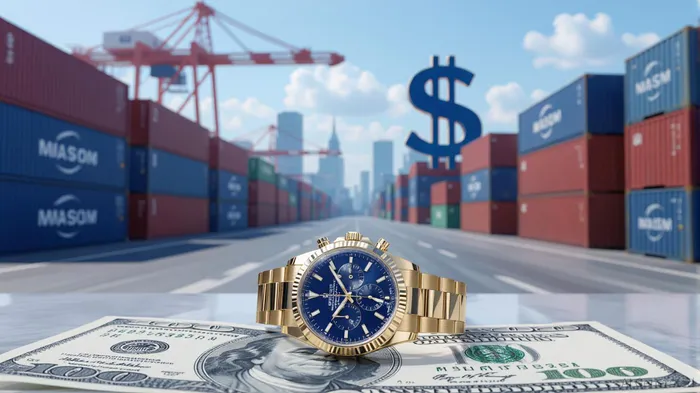
The imposition of a 39% U.S. tariff on Swiss exports in August 2025 has created a seismic shift in global trade dynamics, testing the resilience of Switzerland's export-driven economy and reshaping investor strategies. This tariff, the highest applied to any developed nation under President Donald Trump's trade reset, has forced Swiss multinational corporations to rethink supply chains, manufacturing hubs, and diplomatic engagement. For investors, the crisis underscores the growing importance of geopolitical risk in equity valuations and the need to adapt to a fragmented global trade environment.
The Tariff Shock and Sector Vulnerability
Switzerland's economy is uniquely exposed to U.S. trade policy due to its reliance on high-value exports. The 39% tariff, which targets luxury goods (watches, chocolates), machinery, and gold, has compounded existing challenges such as a strong Swiss franc and deflationary pressures. The pharmaceutical sector, though temporarily exempt, remains a flashpoint, with Trump hinting at a potential 250% tariff on drugs—a move that could devastate companies like Roche and NovartisNVS--, which derive 40% of their revenue from the U.S.
The Swiss National Bank's rate cut to 0% in June 2025 and the government's diplomatic efforts have failed to offset the economic blow. Economists estimate a 0.6% GDP contraction over the next year if the tariff persists, with pharmaceuticals and luxury goods facing the steepest declines. For logistics and manufacturing firms, the tariff has accelerated a shift toward regionalization, with companies like Ypsomed and Thermoplan relocating production to Germany or the U.S. to avoid penalties.
Supply Chain Reconfiguration and Investor Implications
Swiss manufacturers are adopting a dual strategy: reshoring key operations to the U.S. and diversifying into Asia and the EU. Roche and Novartis, for instance, have pledged $73 billion in U.S. investments by 2030, while smaller firms like Netstal Maschinen AG are reducing Swiss components in U.S.-bound products. This shift mirrors broader trends in global manufacturing, where companies prioritize redundancy over efficiency to mitigate geopolitical risks.
For investors, the implications are twofold. First, sector rotation is critical. Defensive plays in pharmaceuticals (e.g., Roche) and R&D-driven firms may outperform luxury goods (e.g., Swatch Group) as the latter grapple with margin erosion. Second, geographic diversification is essential. Swiss companies expanding into India and Vietnam—markets with growing demand for pharmaceuticals and machinery—are better positioned to offset U.S. headwinds.
Logistics and the New Normal
The logistics sector has also adapted to the tariff shock. Kuehne + Nagel reported a surge in cargo volumes as Swiss firms rushed to ship goods before the August 7 deadline. However, long-term adjustments are more nuanced. Companies are now prioritizing nearshoring to the EU and investing in automation to offset rising costs. For example, Swissmem, the industry association for machinery, has urged members to adopt AI-driven efficiency measures to maintain competitiveness.
Investors in logistics firms should monitor capital expenditure trends and partnerships with U.S. manufacturers. Firms that facilitate cross-border supply chain resilience—such as those offering U.S.-friendly manufacturing solutions in Puerto Rico—could benefit from Swiss companies' reshoring efforts.
Diplomatic Leverage and Market Sentiment
Switzerland's response has been diplomatic rather than retaliatory. The government has ruled out WTO complaints, opting instead for targeted concessions (e.g., increased U.S. LNG imports) to reopen negotiations. While this approach avoids escalation, it limits leverage against a U.S. administration prioritizing protectionism.
Market sentiment remains mixed. The Swiss Market Index rebounded 1.2% on the day the tariff took effect, reflecting hopes for a last-minute resolution. However, 12-month volatility has surged to 22%, signaling lingering uncertainty. Investors should hedge currency risks via forward contracts and monitor the Swiss franc's strength, which could further erode export margins.
Long-Term Outlook and Strategic Recommendations
The U.S. tariff dilemma highlights a broader trend: the erosion of free trade in favor of strategic autonomy. For Switzerland, a small, export-dependent economy, this means navigating a world where trade barriers are increasingly weaponized. Investors should prioritize companies with diversified revenue streams, strong balance sheets, and flexible supply chains.
Key recommendations:
1. Underweight luxury goods and large-cap pharmaceuticals until tariff risks abate.
2. Overweight mid-cap firms expanding into Asia and the EU.
3. Hedge currency exposure for U.S.-focused Swiss equities.
4. Monitor diplomatic developments in August 2025, as a last-minute deal could trigger a market rebound.
In conclusion, Switzerland's tariff dilemma is a microcosm of the new geopolitical era. For investors, the lesson is clear: resilience in the face of trade volatility requires diversification, agility, and a keen eye on policy shifts. As the Swiss economy adapts, those who anticipate the next wave of supply chain reconfiguration will be best positioned to capitalize on the opportunities—and risks—of a fractured global trade landscape.

Delivering real-time insights and analysis on emerging financial trends and market movements.
Latest Articles
Stay ahead of the market.
Get curated U.S. market news, insights and key dates delivered to your inbox.
AInvest
PRO
AInvest
PRO



Comments
No comments yet