
Switzerland Postpones Crypto Data Sharing Until Global Partners Align


 Aime Summary
Switzerland has postponed the implementation of its plan to automatically share cryptocurrency tax information with foreign authorities until at least 2027, despite enshrining the legal framework for the initiative on January 1, 2026. The delay, announced by the Swiss Federal Council and State Secretariat for International Finance, stems from the suspension of deliberations on partner countries with which data will be exchanged under the OECD's Crypto-Asset Reporting Framework (CARF). The government cited the need to finalize agreements with jurisdictions before commencing data sharing, a move that highlights the complexities of aligning global tax transparency standards for digital assets.
The CARF, endorsed by the OECD in 2022, aims to combat tax evasion by requiring countries to share crypto account details with partner nations. Switzerland, a signatory to the framework, had previously planned to begin data exchanges in 2027 but now faces uncertainty over the exact timeline. The delay underscores the challenges of harmonizing regulatory approaches among nations, particularly as 75 countries-including all EU members, the UK, and most G20 economies-have committed to implementing CARF over the next four years. Notably, major economies like the U.S., China, and Saudi Arabia remain outside the framework due to either non-compliance or pending agreements according to reports.
Swiss authorities have introduced transitional measures to ease the burden on domestic crypto firms, including amendments to local reporting laws. These provisions, part of the broader CARF implementation, aim to give businesses time to adapt to new compliance requirements, such as mandatory registration and due diligence for crypto service providers with a "sufficient link" to Switzerland. The government also emphasized that the legal framework for data sharing will remain dormant until partner countries are finalized, a decision that reflects the political sensitivity of cross-border financial cooperation.
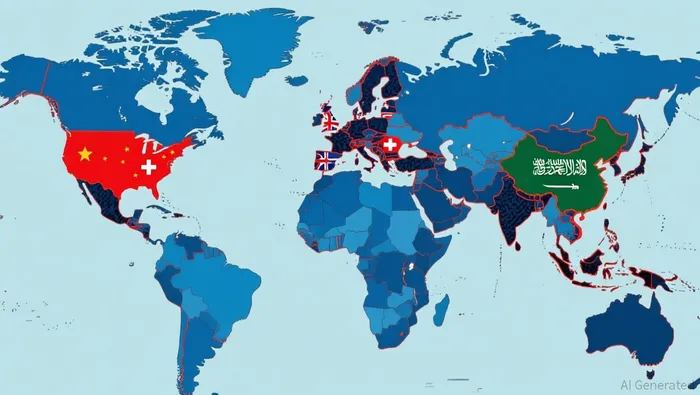
The delay has sparked debate about the pace of global crypto regulation. While Switzerland's cautious approach may allow for more robust safeguards, it also risks lagging behind jurisdictions that have already advanced similar measures. For instance, South Korea recently expanded its anti-money laundering (AML) rules to cover smaller crypto transactions, demonstrating a parallel push to close regulatory gaps. These efforts highlight the dual pressures on governments to balance innovation with accountability in the crypto sector according to recent analysis.
As the OECD continues to promote CARF adoption, Switzerland's extended timeline underscores the logistical and diplomatic hurdles of multinational data sharing. The Swiss government's focus on refining compliance mechanisms and securing partner agreements suggests a strategic, albeit slower, path toward integration. However, the absence of a clear implementation schedule for 2027 leaves crypto firms and tax authorities in a state of anticipation, navigating a rapidly evolving regulatory landscape.

Stay ahead of the market.
Get curated U.S. market news, insights and key dates delivered to your inbox.






Comments
No comments yet