
Switchboard Halts Oracle Operations On Sui And Aptos After Potential Compromise
 Aime Summary
- Switchboard suspended operations on its Move-based oracle deployments across AptosAPT--, Sui, IOTAIOTA--, and Movement following a potential security compromise detected between August 28 and 29.
- The incident involved a key-level breach on the IOTA network, where an attacker manipulated the IOTA price feed to $10 million, allowing the minting of approximately 4.94 million VUSD stablecoins.
- The exploit triggered the liquidation of 45 users on the Virtue CDP protocol and forced the temporary freezing of exchange addresses, highlighting critical vulnerabilities in decentralized finance infrastructure.
Switchboard, a prominent multi-chain oracle protocol, abruptly halted its data feeds on several major blockchain networks after identifying a significant security vulnerability within its Move-based implementations. The suspension affects deployments on Aptos, Sui, IOTA, and the Movement network, all of which share a common architectural foundation built on the Move programming language. This coordinated shutdown marks a severe disruption for decentralized finance applications that rely exclusively on Switchboard for critical price data and collateral valuation updates.
The immediate catalyst for the emergency halt was a confirmed breach on the IOTA network. An attacker successfully exploited a compromised oracle key to artificially inflate the price feed for IOTA to an unprecedented $10 million. This manipulated data was leveraged within the Virtue Collateralized Debt Position (CDP) protocol, which allows users to borrow stablecoins against locked collateral assets. By presenting the inflated collateral value, the attacker minted approximately 4.94 million VUSD stablecoins, causing immediate financial distress and operational paralysis within the protocol.
The fallout from the IOTA incident was swift and severe. The artificial inflation of collateral values triggered the automated liquidation of 45 users who held positions based on the false price data. In response to the chaos, the Virtue CDP protocol was forced to halt operations entirely, and exchange addresses associated with the exploit were frozen. While Switchboard has stated that user funds remain intact outside of this specific incident, the event underscores the fragility of DeFi systems that depend on single points of failure for critical data feeds.
The decision to shut down all Move-based implementations suggests that the vulnerability is likely architectural rather than isolated to a single blockchain. Move, originally developed for Meta’s Diem project, underpins the smart contract infrastructure of Aptos, Sui, and their derivative ecosystems, including Movement. The shared code vector across these networks implies that the exploit could potentially affect any protocol built on this language, prompting a precautionary suspension across the entire ecosystem to prevent further losses.
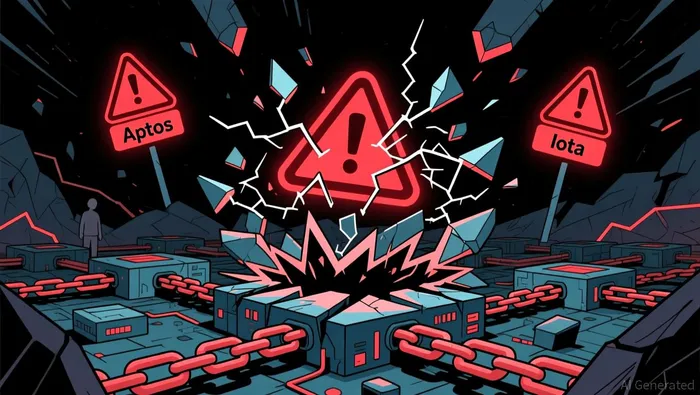
How Did The Oracle Key Compromise Impact DeFi Protocols?
The compromise highlights the critical role oracles play as the bridge between off-chain data and on-chain execution. Unlike market manipulation exploits that require complex trading strategies, a key-level compromise allows an attacker to directly rewrite data without interacting with the broader market. This capability enables the creation of artificial price signals that smart contracts automatically trust, leading to immediate and irreversible financial consequences for users and protocols alike.
Protocols that relied solely on Switchboard for price feeds are currently unable to process liquidations or update collateral ratios effectively. This dependency creates a systemic risk where a single infrastructure failure can cascade through multiple decentralized applications. The incident serves as a stark reminder of the dangers inherent in relying on a single oracle source for critical financial operations.
Why Do Redundant Oracle Sources Matter For Investor Safety?
The incident starkly contrasts the operational status of protocols utilizing redundant oracle sources. DeFi applications that employ multiple data providers, such as Pyth, ChainlinkLINK--, or Redstone, were able to continue functioning normally despite the Switchboard outage. These redundant systems allow protocols to cross-reference data and maintain stability even when one source is compromised or goes offline.
In contrast, protocols dependent exclusively on Switchboard faced a complete loss of price-dependent functionality. This divergence underscores the necessity for oracle redundancy in decentralized finance. Investors and developers must prioritize infrastructure that incorporates multiple, independent data sources to mitigate the risk of single points of failure. The Switchboard event demonstrates that while architectural vulnerabilities can be unpredictable, robust oracle design can significantly enhance resilience against such breaches.
Switchboard is currently collaborating with security agencies to investigate the root cause of the breach. While the protocol’s Solana deployment remains unaffected due to its different underlying code infrastructure, the company has advised all users, including those on Solana, to temporarily migrate to alternative oracle solutions as a precaution. This advisory reflects a broader industry concern regarding the security of Move-based implementations and the need for heightened vigilance in decentralized infrastructure.
The suspension of services leaves many decentralized applications without access to external pricing data essential for collateral valuations. This disruption prevents these applications from performing automated liquidations or updating user balances, effectively freezing key financial activities. The event serves as a critical lesson on the importance of oracle redundancy and deviation limits in DeFi systems, emphasizing the need for robust safeguards against unexpected data anomalies.

Blending traditional trading wisdom with cutting-edge cryptocurrency insights.
Latest Articles
Stay ahead of the market.
Get curated U.S. market news, insights and key dates delivered to your inbox.


AInvest
PRO
AInvest
PRO




Comments
No comments yet