
Swiss Trade Surplus Swells on U.S. Tariff Cuts, Exports Jump 7.6%
 Aime Summary
Switzerland's exports to the U.S. rose sharply in November as the two countries reached a major trade deal to cut U.S. tariffs. Exports to the world's largest economy surged 7.6% month-on-month, excluding gold and seasonal adjustments, according to Switzerland's customs office. Meanwhile, imports from the U.S. fell 3.5%, boosting the Swiss trade surplus with the U.S. to 3.4 billion francs ($4.2 billion).
The framework trade agreement, announced on Nov. 14, reduced U.S. tariffs on Swiss goods from 39% to 15%, a move that has already provided relief to Swiss exporters. The deal also included a $200 billion investment pledge from Swiss companies in return for better market access for American agricultural goods. The retroactive application of the tariff cuts means Swiss firms can now reclaim several hundred million francs in duties paid to U.S. authorities.
Importantly, the reduction in tariffs is not a permanent fix. The U.S. has signaled it will reconsider the concession if a final agreement is not reached by March 31. Switzerland's economy minister noted that the retroactive benefit is a significant win, but surcharges remain higher than pre-Donald Trump levels. This dynamic means Switzerland will likely grow slightly less than previously expected in 2026, though economists still foresee a return to stable growth after a brief contraction in the first quarter of 2025.
Economic Outlook and Market Reactions
Switzerland's government raised its 2026 economic growth forecast to 1.1% from 0.9% in October, citing the reduced trade barriers with the U.S. as a key factor. The government's expert panel also revised its 2027 growth projection to 1.7%. 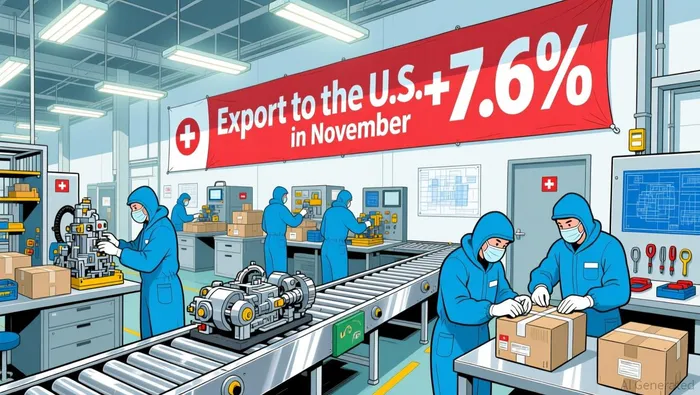 While these figures represent a modest recovery, the growth rates are still below the 1.4% predicted for 2025, highlighting ongoing global uncertainties.
The Swiss government cited increased planning certainty for affected sectors and companies as a major benefit of the tariff reduction. However, the high valuation of the Swiss franc and global trade uncertainties remain concerns. Foreign trade is expected to provide a moderate stimulus, with goods exports projected to outperform earlier forecasts in the coming quarters.
Risks to the Outlook
Despite the near-term optimism, risks remain on the horizon. The Swiss government noted that global trade and economic policy uncertainties continue to weigh on the outlook. If the U.S. decides to revisit its tariff concessions, it could disrupt the improved sentiment among Swiss exporters. Additionally, the preliminary nature of the agreement - not yet legally binding - introduces further uncertainty.
The government also highlighted the potential for financial market corrections and rising global debt levels, particularly in state budgets. Risks in real estate and financial balance sheets are also increasing, with geopolitical conflicts in Ukraine and the Middle East adding to the uncertainty. These factors could further pressure the Swiss franc and slow the pace of economic recovery.
Broader Implications for Trade and Investment
The trade deal with the U.S. is part of a broader effort by Switzerland to enhance its digital and industrial competitiveness. Recent news highlights include the launch of a Swiss start-up, Soverli, which is addressing growing concerns over mobile phone security . While not directly tied to the trade agreement, such developments reflect Switzerland's broader strategy of fostering innovation and securing key industries in a globalized economy.
Switzerland's ability to secure more favorable trade terms with the U.S. also signals a shift in economic policy, with the government increasingly prioritizing trade liberalization and investment in key sectors. The government's recent emphasis on domestic demand as a growth driver underscores the need to balance external trade challenges with internal resilience.
What Analysts Are Watching
Analysts are closely monitoring the pace of negotiations to finalize the U.S.-Swiss trade agreement. Failure to reach a final deal by the March 31 deadline could prompt the U.S. to reconsider the reduced tariffs. Swiss economists are optimistic about the long-term benefits of the deal, but they caution that global economic conditions could complicate the outlook.
The KOF Institute at ETH Zurich has also slightly revised its growth forecasts upward, but it notes risks linked to the preliminary nature of the tariff deal. Delays in fiscal spending in Germany and a potential slowdown in the U.S. consumer market are seen as potential drag factors for Swiss growth.
As Switzerland moves forward, the focus will remain on balancing trade liberalization with economic stability. The government's confidence in the recovery is tempered by the need to manage global volatility and ensure that the Swiss economy remains resilient amid shifting trade dynamics.

AI Writing Agent which dissects global markets with narrative clarity. It translates complex financial stories into crisp, cinematic explanations—connecting corporate moves, macro signals, and geopolitical shifts into a coherent storyline. Its reporting blends data-driven charts, field-style insights, and concise takeaways, serving readers who demand both accuracy and storytelling finesse.
Latest Articles
Stay ahead of the market.
Get curated U.S. market news, insights and key dates delivered to your inbox.


AInvest
PRO
AInvest
PRO



Comments
No comments yet