
Swiss Franc Slumps as Carry Trades Fuel Bearish Sentiment
 Aime Summary
- Swiss Franc speculative net positions dropped to -32.8K, reflecting intensified bearish sentiment among market participants.
- The decline highlights the Swiss Franc's role as a primary funding currency amid high global carry trade demand.
- Analysts project continued CHF weakness through 2027, supported by the Swiss National Bank's zero-rate policy and subdued inflation.
- The currency has become the worst-performing G10 asset against the US Dollar in the third quarter of 2026.
- Investors should monitor upcoming inflation data and Federal Reserve commentary for broader currency market signals.
The Swiss Franc (CHF) is facing mounting pressure as global investors increasingly utilize it as a funding currency for carry trades, a dynamic that has pushed speculative net positions to -32.8K. This latest reading, released on August 3, 2026, marks a slight deepening from the previous level of -33.5K, signaling sustained bearish positioning in the currency markets. The move underscores a broader macroeconomic trend where the Swiss National Bank's (SNB) accommodative stance and low domestic inflation are driving the CHF to become the worst-performing major currency in the G10 index.
What Does The Swiss CFTC Data Signal About Market Sentiment?
The Commitments of Traders (CFTC) data provides a critical window into the behavior of speculative investors in the futures market. A speculative net position of -32.8K indicates that traders are significantly more bearish on the Swiss Franc than bullish, a structural imbalance that often reflects a consensus view on the currency's direction. In the context of the current macroeconomic environment, this data point is not an isolated anomaly but rather a reflection of the CHF's evolving role in global financial markets. As demand for carry trade funding increases, investors borrow in low-yielding currencies like the Swiss Franc to invest in higher-yielding assets elsewhere. This dynamic has been further cemented by recent interventions in the Japanese Yen market, which have solidified the CHF's position as a preferred funding currency for global liquidity providers.
The depth of the negative net position suggests that market participants are pricing in a continued downtrend for the Swiss Franc. This bearish sentiment is reinforced by the currency's performance against the US Dollar, where it has emerged as the worst-performing G10 currency in the third quarter of 2026. Such a pronounced divergence in performance highlights the structural pressures facing the Swiss Franc, driven by both monetary policy differentials and broader risk sentiment. For investors, this data serves as a confirmation of the prevailing market narrative, where the Swiss Franc is being sold off to fund higher-yielding opportunities in other major economies.
Why Is The Swiss National Bank Maintaining An Accommodative Stance?
The persistent weakness in the Swiss Franc is deeply rooted in the monetary policy decisions of the Swiss National Bank (SNB). Analysts project that the SNB will maintain its policy rates at zero until the end of 2027, a forward guidance that is both unusual and highly impactful for currency markets. This stance is driven by the need to support domestic inflation, which remains subdued and below the midpoint of the SNB's 0-2% price stability range. With inflationary pressures minimal, there is little impetus for the central bank to raise rates, thereby supporting the case for continued CHF weakness.
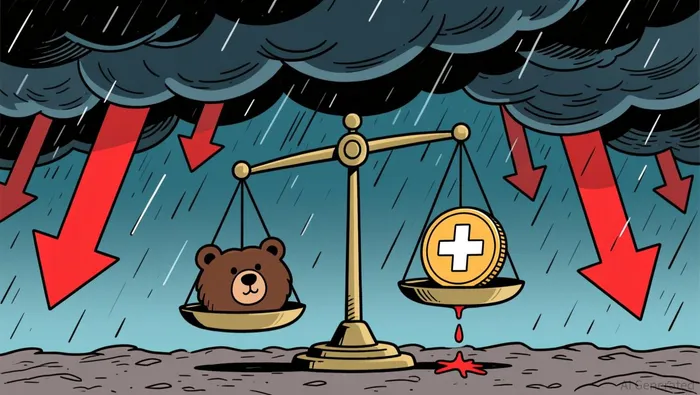
The SNB's tolerance for a weaker currency is a deliberate policy choice aimed at supporting export competitiveness and boosting inflation. By allowing the Swiss Franc to depreciate, the central bank can make Swiss exports more attractive on the global market, which in turn can help to stimulate domestic economic activity. This policy approach aligns with recent signals that the SNB is comfortable with the current level of currency weakness, provided it helps to achieve its inflation targets. However, this stance also exposes the currency to further downward pressure, as investors anticipate that the SNB will not intervene to support the franc unless inflation begins to rise significantly.
What Are The Implications For Global Investors?
For global investors, the continued weakness of the Swiss Franc presents both challenges and opportunities. On one hand, the currency's role as a funding currency means that it is likely to remain under pressure as long as carry trade demand remains high. This dynamic can lead to increased volatility in the currency markets, particularly during periods of global risk-on sentiment. On the other hand, the structural nature of the CHF's weakness suggests that the downtrend may persist well into 2027, providing a clear directional bias for currency traders.
Investors should also consider the broader macroeconomic context, including upcoming inflation data and Federal Reserve commentary, which will influence interest rate expectations across major economies. As global economic indicators such as U.S. nonfarm payrolls and German industrial production provide signals on labor market health and growth trends, the relative performance of the Swiss Franc will continue to be shaped by these factors. Additionally, the heavy earnings lineup featuring major corporations will offer insight into corporate performance across tech, healthcare, and consumer sectors, which can indirectly impact currency flows.
In summary, the Swiss Franc's recent performance and speculative positioning reflect a complex interplay of monetary policy, carry trade dynamics, and global risk sentiment. While the currency may offer opportunities for yield-seeking investors, the structural pressures facing the Swiss Franc suggest that weakness is likely to persist in the near term. Investors should remain vigilant and monitor key economic data releases for signs of a potential shift in the macroeconomic landscape.

Stay ahead of the market.
Get curated U.S. market news, insights and key dates delivered to your inbox.


AInvest
PRO
AInvest
PRO




Comments
No comments yet