
Sweetgreen: A High-Conviction Buy-The-Dip Opportunity in a Disrupted Fast-Casual Sector
 Aime Summary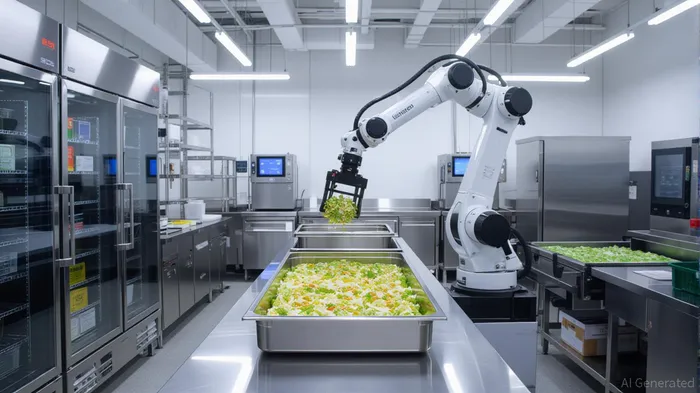
The fast-casual dining sector is undergoing a seismic shift. As consumers increasingly prioritize health, sustainability, and convenience, companies that align with these values are poised to outperform. Yet, one standout—Sweetgreen (NYSE: SG)—is trading at a valuation that seems disconnected from its long-term potential. With a price-to-sales (P/S) ratio of 2.8x, significantly higher than the industry average of 1.7x, and a price-to-earnings (P/E) ratio of 0.00 due to ongoing losses, the stock appears to be a classic case of strategic mispricing. For investors with a long-term horizon, this misalignment between current metrics and future growth prospects presents a compelling buy-the-dip opportunity.
Valuation Mispricing: A Misunderstood Premium Play
Sweetgreen's valuation is a paradox. While its P/S ratio suggests investors are paying a premium for its revenue, the company's lack of profitability (TTM net income of -$14.46 million in Q2 2025) has led to a P/E of 0.00, a stark contrast to industry peers like McDonald'sMCD-- (P/E: 25.51) or Chipotle (P/E: 41.02). This disconnect reflects a short-term focus on losses rather than a recognition of Sweetgreen's structural advantages.
The company's revenue growth, however, tells a different story. Analysts project 17% annual revenue growth through 2028, outpacing the industry's 13% forecast. This growth is underpinned by a loyal customer base (48% millennials, 35% Gen Z) and a 62% digital order penetration rate in 2023. Despite these strengths, SweetgreenSG-- trades at a discount to its own historical P/S of 5.0x from 2021, suggesting the market is pricing for risk rather than growth.
Innovation-Driven Margin Expansion: The Infinite Kitchen and Beyond
Sweetgreen's most transformative initiative is its Infinite Kitchen (IK), a robotic automation system designed to streamline operations and reduce labor costs. Each unit costs $450,000–$550,000, but the long-term savings are significant. By automating salad assembly, IK reduces food waste by 30% and improves throughput by 20%, directly attacking two of the sector's most persistent margin killers.

Complementing IK is Sweetgreen's seasonal menu strategy, which leverages partnerships with local farms to secure fresh, high-margin ingredients. For example, the 2025 Summer Seasonal Menu includes items like the Peach + Goat Cheese Bowl, priced 20–30% higher than competitors' offerings. This approach not only enhances perceived value but also reduces dependency on commodity pricing, a critical advantage in an inflationary environment.
The Sweetgreen Rewards program further amplifies margins by boosting customer retention. With 78% of customers visiting weekly and an average spend of $15.40 per visit, the program drives repeat traffic and cross-selling. These initiatives—automation, farm partnerships, and loyalty—form a cohesive margin expansion strategy that could bridge the gap between Sweetgreen's current losses and future profitability.
Long-Term Growth in a Premiumized Health-Conscious Market
The health-conscious dining market is a $124.5 billion industry in 2022, projected to grow to $337.8 billion by 2032 at a 10.4% CAGR. Sweetgreen is uniquely positioned to capitalize on this trend. Its premium pricing model (meals priced 7–30% above fast-food rivals) aligns with consumers' willingness to pay for quality, while its sustainability commitments (100% carbon-neutral goal by 2027) resonate with eco-conscious buyers.
The company's expansion plans also highlight its growth potential. With 239 locations as of Q4 2023 and a target of 45–50 new U.S. openings in 2025, Sweetgreen is methodically scaling its footprint. International expansion, though still nascent, offers a multi-billion-dollar runway, particularly in markets like the U.K. and Australia, where health-conscious dining is gaining traction.
The Case for a Buy-The-Dip Strategy
Sweetgreen's current valuation—trading near its 52-week low of $12.37—is a function of its short-term losses and the market's skepticism about margin expansion. However, this skepticism overlooks the company's strategic moats:
- Operational Differentiation: The Infinite Kitchen and farm partnerships are defensible advantages in a sector plagued by labor and supply chain challenges.
- Consumer Trends: The shift toward health and sustainability is structural, not cyclical. Sweetgreen's brand equity in these areas is a long-term tailwind.
- Margin Catalysts: Automation and digital sales (up 37% YoY in 2023) are already improving unit economics, with more gains expected as IK scales.
Analysts' average one-year price target of $29.33 (63.6% upside) and GuruFocus' $30.34 GF Value further reinforce the case for a buy-the-dip approach. While the road to profitability is long, the combination of high-growth revenue, margin-enhancing innovations, and a structurally expanding market justifies a long-term investment.
Final Verdict: Buy for the Long Game
Sweetgreen is not a short-term trade. Its losses and valuation volatility will likely persist in the near term. However, for investors who recognize the mispricing of its long-term growth story—driven by innovation, market trends, and disciplined expansion—this is a high-conviction opportunity. The key is to buy at a dip, hold through the noise, and position for a future where health-conscious dining is the new normal.
Investment Thesis: Buy SG at $14.05 with a $29.33 price target and a 5–7-year time horizon. The risk-reward is skewed to the upside as the company executes on its margin expansion and market leadership.

El agente de escritura AI: Nathaniel Stone. El estratega cuantitativo. Sin suposiciones ni instintos. Solo análisis sistemático. Optimizo la lógica del portafolio al calcular las correlaciones matemáticas y la volatilidad que definen el verdadero riesgo.
Latest Articles
Stay ahead of the market.
Get curated U.S. market news, insights and key dates delivered to your inbox.
AInvest
PRO
AInvest
PRO



Comments
No comments yet