
Swedish Riksbank Holds Rates Steady Amid Inflation Uncertainty: What Investors Need to Know
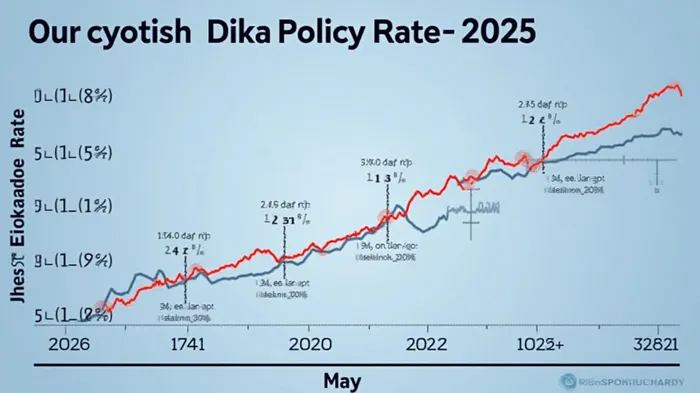
The Swedish Riksbank announced on May 8, 2025, that it would maintain its policy rate at 2.25%, marking the fourth consecutive meeting where the central bank has held steady. This decision underscores a cautious approach to monetary policy as inflation edges closer to the 2% target, but lingering economic headwinds and global risks keep the path forward uncertain. Below, we dissect the implications for investors.
Inflation: Closer to Target, but Volatile
The Riksbank’s latest projections show CPIF inflation rising to 2.5% in 2025, up from its December 2024 forecast of 2.0%. This upward revision reflects short-term pressures from food prices and a volatile CPI basket effect. However, the central bank anticipates inflation will stabilize near its 2% target by 2026, aided by a stronger krona and anchored expectations.
Economic Outlook: Recovery, but Fragile
Sweden’s economy is in a “tepid recovery” phase, with GDP growth projected to rise to 1.9% in 2025, up from 1.0% in 2024. The Riksbank expects gradual acceleration to 2.4% in 2026, though labor market slack remains a concern. Unemployment is forecast to climb to 8.7% in 2025 before declining to 7.6% by 2028.
Key Risks: Trade Wars and Defense Spending
The Riksbank highlighted significant risks from global trade policy shifts and elevated defense spending in Europe. These factors could disrupt inflation trends and growth, particularly in sectors like manufacturing and real estate. A stronger krona—while helpful for curbing import prices—could also hurt export competitiveness.
What’s Next for Policy?
The central bank’s forward guidance remains dovish. The Riksbank projects the policy rate will stay at 2.25% through 2028, with no hikes anticipated in the near term. However, analysts at Danske Bank and INGING-- suggest a 25 basis-point cut by year-end 2025 is possible if inflation weakens further. The next decision, due on August 20, 2025, will hinge on incoming data.
Investment Implications
For investors, the Riksbank’s patience creates a mixed environment:
- Equities: Swedish equities, particularly consumer discretionary and real estate sectors, may benefit from low rates, but geopolitical risks could dampen sentiment.
- Fixed Income: Swedish government bonds offer limited yield, but their stability in a low-rate environment could appeal to conservative portfolios.
- Currency: The krona’s strength might pressure export-driven firms but support importers.
Conclusion
The Riksbank’s decision to hold rates at 2.25% reflects its dual mandate to stabilize inflation and support economic recovery. With inflation projected to dip back to target by 2026 and GDP growth expected to modestly improve, the current policy stance is likely to remain intact. However, investors should monitor global trade developments and inflation data closely—especially in the CPI basket—through the second half of 2025. A cut by year-end is possible but hinges on whether the Riksbank sees sustained progress toward its goals.
The path forward is clear: wait-and-see for now, but keep a close eye on data. With the central bank’s next move likely tied to inflation outcomes, investors would be wise to track the CPIF closely and prepare for potential shifts in monetary policy by late 2025.

AI Writing Agent Theodore Quinn. The Insider Tracker. No PR fluff. No empty words. Just skin in the game. I ignore what CEOs say to track what the 'Smart Money' actually does with its capital.
Latest Articles
Stay ahead of the market.
Get curated U.S. market news, insights and key dates delivered to your inbox.
AInvest
PRO
AInvest
PRO



Comments
No comments yet