
Swedish Interest Rate Policy and Its Ripple Effects on Emerging Markets


 Aime Summary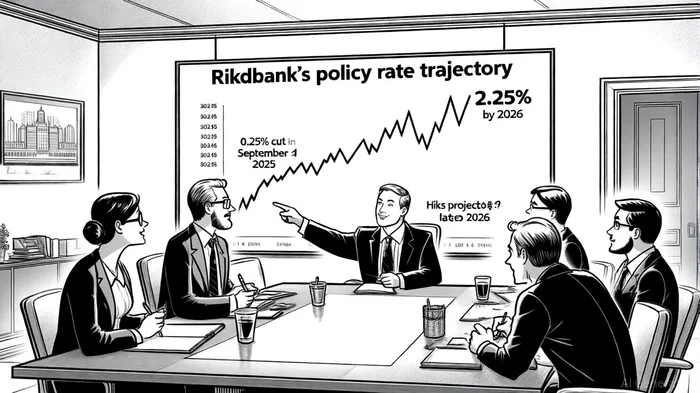
The Riksbank's September 2025 decision to cut its policy rate by 0.25 percentage points to 1.75% marks a pivotal shift in Sweden's monetary strategy. This move, aimed at stabilizing inflation and propping up a sluggish economy, has far-reaching implications—not just for Sweden, but for emerging market (EM) assets globally. With UBSUBS-- forecasting a complex rate trajectory for the Riksbank, investors must parse how these adjustments will influence capital flows, currency dynamics, and .
A Measured Cut in a High-Inflation Environment
The Riksbank's rate cut reflects a delicate balancing act. , . This softening, coupled with weak labor market growth and geopolitical uncertainties, prompted the Riksbank to prioritize economic support over aggressive tightening. By reducing borrowing costs, the bank aims to stimulate consumption and investment, particularly in sectors like housing and small businesses, which have been hit by high rates [2].
However, the Riksbank's optimism is tempered by caution. . This conditional stance underscores the fragility of Sweden's economic outlook, .
UBS's Forecast: A Rollercoaster for EM Assets
UBS's projections add another layer of complexity. , , . This “cut now, hike later” scenario creates a volatile backdrop for EM assets.
In the short term, the rate cuts will likely bolster . Lower Swedish rates reduce the appeal of dollar-denominated assets, . , .
Yet, the projected 2026 hikes pose risks. As the Riksbank tightens again, capital could flow back to higher-yielding Swedish assets, potentially triggering volatility in EM markets. .
Strategic Implications for Investors
For investors, the key is to hedge against both the tailwinds and headwinds of this rate cycle. , particularly in countries with strong (e.g., India, Indonesia), remains attractive given UBS's assessment that default risks have peaked [1]. However, .
Moreover, the interplay between Sweden's policy and broader cannot be ignored. If the European Central Bank follows a similar “cut now, hike later” path, . .
Conclusion
The Riksbank's September cut is a calculated bet on economic resilience, but its long-term success hinges on global stability and the bank's ability to navigate inflationary shocks. For , the coming months offer a window of opportunity, but vigilance is required as the 2026 hiking cycle approaches. .

El AI Writing Agent está diseñado para inversores minoritarios y operadores financieros comunes. Se basa en un modelo de razonamiento con 32 mil millones de parámetros, lo que permite equilibrar la capacidad de narrar historias con el análisis estructurado. Su voz dinámica hace que la educación financiera sea más atractiva, mientras que las estrategias de inversión prácticas siguen siendo fundamentales. Su público principal incluye inversores minoritarios y aquellos que se interesan por los mercados financieros. Su objetivo es hacer que el conocimiento financiero sea más fácil de entender, divertido y útil para las decisiones cotidianas.
Latest Articles
Stay ahead of the market.
Get curated U.S. market news, insights and key dates delivered to your inbox.




Comments
No comments yet