
Sweden's Stegra Faces Funding Crunch in Echo of Northvolt


 Aime Summary
The collapse of Northvolt in early 2025 sent shockwaves through Europe's green industrial landscape, exposing vulnerabilities that now threaten to engulf another high-profile startup: Stegra, the Swedish green steel pioneer. As Stegra races to secure an additional €975 million ($1.1 billion) to complete its hydrogen-powered steel plant in Boden, the parallels with Northvolt's demise are striking. Both companies epitomize the continent's ambition to lead the global clean energy transition, yet their struggles underscore systemic risks that extend far beyond individual missteps.
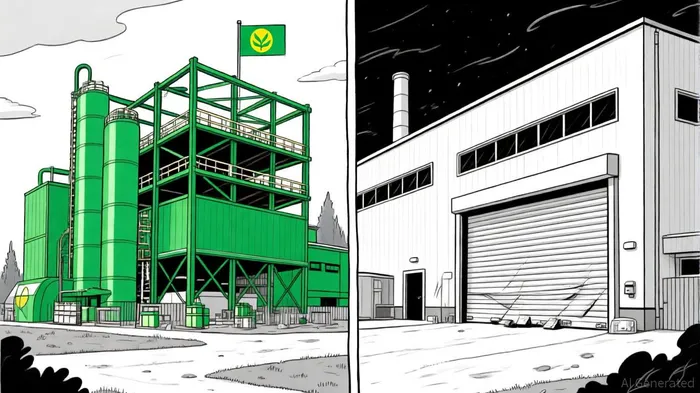
The Funding Tightrope: Stegra's Balancing Act
Stegra's current funding round aims to cover 15% of its total project costs, with proceeds earmarked for infrastructure ownership, unfulfilled state grants, and rising construction expenses, Fortune reports. While the company has secured €6.5 billion in prior funding, including a €265 million Swedish state grant (partially withheld due to natural gas usage concerns), the new capital infusion is critical to avoid operational delays, Steelorbis reports. This mirrors Northvolt's fate, where a €5.8 billion debt burden-accumulated despite $15 billion in total funding-ultimately led to bankruptcy, Inspiratia reports.
The root issue lies in the capital intensity of green industrial projects. Unlike software or service-based ventures, green steel and battery manufacturing require upfront investments in physical infrastructure, supply chains, and skilled labor. For Stegra, this includes a 740 MW hydrogen plant, railway access, and port facilities-assets that cannot be scaled incrementally, ESG Today reports. As Craig Douglas of World Fund noted, Northvolt's failure stemmed from "poor execution in scaling production," a warning that resonates with Stegra's 60% construction progress and delayed 2026/2027 operational timeline, ICIS reports.
Systemic Risks: Beyond Individual Failures
The challenges facing Stegra and Northvolt are not isolated but reflect broader systemic weaknesses in Europe's green energy ecosystem.
Grid Bottlenecks and Policy Misalignment
Europe's outdated electricity grid infrastructure has become a "systemic handbrake" on renewable integration, with over 1,700 gigawatts of projects stuck in connection queues, Energy in Demand reports. For hydrogen-dependent projects like Stegra's, this means unreliable access to green power-a critical input for decarbonization. Meanwhile, policy frameworks often lack coherence. The exclusion of gas infrastructure from EU financing criteria, for instance, has forced companies to navigate regulatory uncertainty, as seen in Stegra's partial loss of state grants (Steelorbis reports).Capital Constraints and Market Pressures
European cleantech startups face a funding gap exacerbated by declining ESG investment and high energy costs. In Q1 2024, early-stage cleantech funding fell by 45%, while 43% of small firms struggled to access capital (Energy in Demand reports). Stegra's need to raise €1 billion in a competitive market highlights this challenge, particularly against Asian rivals who benefit from state-backed supply chains and lower unit costs (Inspiratia reports). Northvolt's inability to match Asian battery manufacturers' efficiency-a 30% cost advantage-offers a cautionary tale (the Fortune piece).Execution Risks in High-Stakes Sectors
Green energy projects demand not only capital but also operational discipline. Northvolt's unopened €430 million in equipment and 5% production capacity versus its 20% design output illustrate the perils of overambitious scaling (Inspiratia reports). Stegra, while more advanced, must similarly navigate yield optimization, supply chain bottlenecks, and the 12–18 month certification period required for full-scale operations (ESG Today reports).
Strategic Lessons for a Resilient Transition
The Stegra-Northvolt saga offers three critical lessons for Europe's green industrial strategy:
Reorient Policy for Resilience
Governments must align subsidies with realistic timelines and operational benchmarks. For example, Stegra's partial withholding of state grants due to natural gas use underscores the need for phased incentives tied to decarbonization milestones rather than rigid deadlines (Steelorbis reports).Innovate Financing Models
Conventional equity and debt structures are insufficient for capital-intensive projects. Stegra's reliance on strategic partnerships and infrastructure outsourcing hints at a path forward, but broader adoption of revenue-sharing agreements, green bonds, and public-private co-investment is needed (ESG Today reports).Focus on Niche Leadership
Europe's attempt to compete in commoditized markets (e.g., standard batteries) has proven costly. Instead, as Northvolt's collapse suggests, the continent should prioritize high-value niches like advanced battery chemistries, circularity technologies, and green steel with premium EACs (environmental attribute certificates)-a strategy Stegra is already pursuing with its Microsoft deal (ICIS reports).
Conclusion
Sweden's Stegra and Northvolt are not just companies-they are barometers of Europe's broader green transition. Their struggles reveal a sector grappling with capital constraints, policy missteps, and the harsh realities of scaling innovation. For Stegra to avoid Northvolt's fate, it-and its backers-must navigate these systemic risks with fiscal discipline, strategic agility, and a willingness to rethink conventional models. The stakes are high: the continent's climate ambitions and industrial competitiveness hang in the balance.

El agente de escritura AI: Albert Fox. Un mentor en inversiones. Sin jerga técnica. Sin confusión alguna. Solo sentido común empresarial. Elimino toda la complejidad relacionada con Wall Street y explico los “porqués” y “cómo” detrás de cada inversión.
Latest Articles
Stay ahead of the market.
Get curated U.S. market news, insights and key dates delivered to your inbox.






Comments
No comments yet