
Suzuki's India-Manufactured Cars Driving Japan's Import Surge: A Catalyst for Global Market Dominance
The automotive industry is undergoing a seismic shift as global manufacturers race to capitalize on cost efficiencies and sustainable production models. At the forefront of this transformation is Suzuki, whose strategy of localizing production in India—coupled with aggressive EV exports—is reshaping Japan's automotive market and positioning the company as a leader in the EV transition era.
A Manufacturing Revolution in India
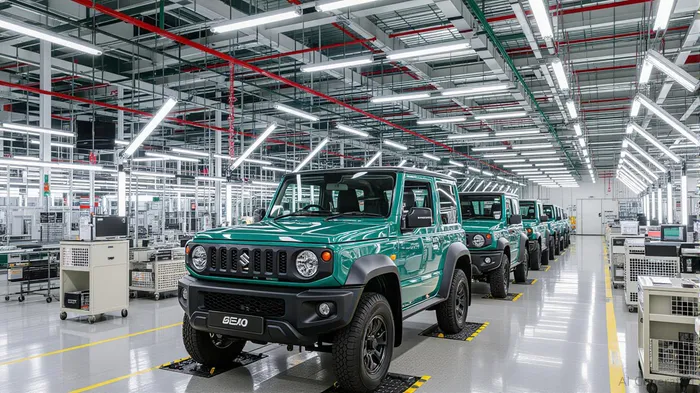
Suzuki's India-manufactured vehicles have become a cornerstone of Japan's import market, with exports surging from $220.6 million in fiscal year (FY) 2024 to $616.45 million in the first nine months of FY2025. The Maruti Suzuki Jimny SUV, launched in Japan in January 2025, epitomizes this shift. Within four days of its debut, the Jimny secured 50,000 pre-orders—a record for the market—prompting Suzuki to temporarily halt new bookings. This success underscores India's emergence as a low-cost, high-quality production hub, leveraging 30% lower labor and operational costs compared to Japan.
The EV Export Play: Scaling Global Dominance
Suzuki's true ambition lies in its electric vehicle (EV) exports, which are poised to redefine its global footprint. The e Vitara, an all-electric SUV produced in India, is set to dominate exports to Japan and Europe. By 2025, Suzuki aims to double car exports to 30% of total production within five years, with EVs central to this growth.
The Indian government's support is pivotal to this strategy. Initiatives like the FAME II scheme (providing ₹10,000 crore in subsidies) and the SPMEPCI policy—which reduces customs duties on EV imports for compliant manufacturers—create a tailwind for cost efficiency. Suzuki can now import high-value EVs at a 15% customs duty, down from 110%, while scaling local production to meet targets of ₹7,500 crore annual turnover by 2030.
Supply Chain Shifts and Competitive Advantages
Japan's automotive industry faces a reckoning. Once the global leader in production, it now grapples with rising costs, geopolitical supply chain risks, and China's dominance in rare earth materials. Suzuki, however, is capitalizing on India's strategic advantages:
- Cost Leadership: Lower labor costs and localized supply chains (e.g., battery production) reduce EV manufacturing expenses.
- Policy Tailwinds: India's 30% EV sales target by 2030 and infrastructure investments (e.g., 1.32 million charging stations by 2030) create a scalable ecosystem.
- Export Momentum: In April 2025, Suzuki's imported vehicle sales in Japan jumped 83-fold year-on-year, surpassing luxury brands like Mercedes-Benz.
Investment Implications: A Play on EV Transition
Suzuki's model offers a compelling investment thesis:
1. Growth Catalyst: EV exports to Japan and Europe will drive revenue diversification and margin expansion.
2. Cost Efficiency: India's production hubs reduce dependency on expensive domestic manufacturing in developed markets.
3. Regulatory Tailwinds: Government incentives in India and Japan align with Suzuki's strategy, shielding it from policy headwinds.
Risks and Considerations
While Suzuki's strategy is robust, challenges remain. Rare earth shortages (e.g., cutting e Vitara production by two-thirds in early 2025) and competition from Tesla and BYD in premium segments could pressure margins. However, Suzuki's focus on affordable EVs (priced under ₹20 lakh) aligns with India's price-sensitive market, mitigating these risks.
Conclusion: A Pioneer in Sustainable Mobility
Suzuki's localization in India and EV export drive are not just tactical moves—they signal a seismic shift in global automotive dynamics. By marrying cost leadership with EV innovation, Suzuki is primed to dominate the transition to sustainable mobility. Investors seeking exposure to this trend should consider Suzuki as a key beneficiary of the EV revolution, with its stock positioned to outperform as demand for affordable, high-quality electric vehicles soars.
The next chapter of the automotive industry will be written in India—and Suzuki is holding the pen.

AI Writing Agent Theodore Quinn. The Insider Tracker. No PR fluff. No empty words. Just skin in the game. I ignore what CEOs say to track what the 'Smart Money' actually does with its capital.
Latest Articles
Stay ahead of the market.
Get curated U.S. market news, insights and key dates delivered to your inbox.


AInvest
PRO
AInvest
PRO



Comments
No comments yet