
Sustaining Asia’s Share Buyback Surge: Opportunities and Risks for Investors
 Aime Summary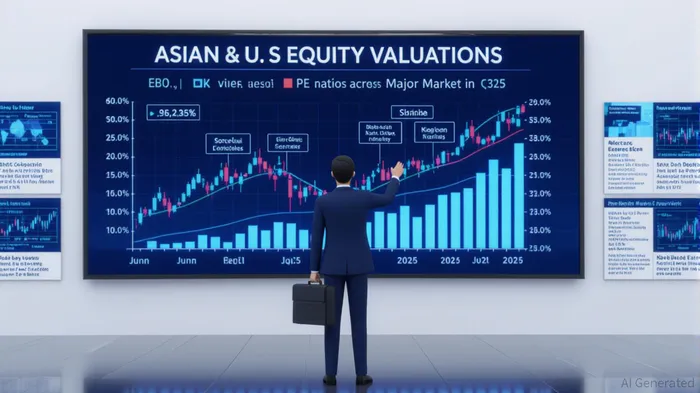
The surge in share buybacks across Asia in 2025 has captured the attention of global investors. By the first eight months of the year, Asian companies had repurchased shares worth $266 billion—a 70% increase compared to the full year of 2024 [1]. This momentum is driven by a confluence of regulatory reforms and valuation dynamics, creating both opportunities and risks for investors.
Regulatory Influence: A Catalyst for Shareholder Returns
Regulatory shifts in key markets have been pivotal. Japan’s Tokyo Stock Exchange has actively promoted return-on-equity (ROE) improvements by encouraging cash returns to shareholders, a policy that began in 2023 [1]. South Korea’s “Value Up” program, launched in February 2024, and China’s relaxation of buyback rules in late 2023 and early 2024 have further incentivized corporate action [2]. Thailand’s recent approval of amendments to share buyback regulations—eliminating a six-month waiting period between programs and extending the disposal period for repurchased shares up to six years—adds to this regional trend [3]. These measures aim to enhance liquidity management and align with broader efforts to improve corporate governance.
The impact is evident: Asian companies are now using a growing portion of their free cash flow (FCF) for buybacks. While only 10% of FCF was allocated to repurchases in 2024, the regulatory tailwinds suggest untapped potential for further activity [1]. This contrasts with the U.S., where debt-fueled buybacks dominate, highlighting a structural difference in capital allocation strategies.
Valuation Dynamics: A Strategic Shift in Investor Preferences
Asian equities are trading at a significant discount to their U.S. counterparts, a gap that has widened strategic allocations. According to Eastspring Investments’ Multi-Asset Portfolio Solutions team, the valuation advantage and favorable macroeconomic conditions in Asia have prompted a more constructive stance toward the region [1]. J.P. Morgan notes that Japan, China, and South Korea’s focus on shareholder returns has narrowed the performance gap with U.S. markets [2]. Goldman SachsGS-- corroborates this, stating that Chinese, European, and Japanese equities remain cheaper than U.S. stocks based on P/E ratios, despite some valuation expansion [4].
This dynamic has attracted institutional investors. M&G Investments, for instance, has adopted an underweight position in U.S. equities and an overweight in Asia and Europe [5]. The shift reflects a broader recalibration of global equity allocations, with Asian markets offering a compelling mix of undervaluation and regulatory support.
Opportunities and Risks for Investors
The current environment presents opportunities for investors seeking diversification and enhanced returns. Asian companies in low-valuation markets like South Korea and Hong Kong have been particularly aggressive in repurchasing shares, signaling confidence in their undervalued status [1]. Structural reforms in Japan, including improved corporate governance, are also boosting shareholder value [5].
However, sustainability hinges on continued regulatory support and stable economic conditions. Risks include potential policy reversals, as regulatory uncertainty could dampen momentum. Additionally, rising valuations in some Asian markets may reduce the appeal of buybacks over time. U.S. trade policy shifts, such as tariffs, could further complicate the outlook [1].
Conclusion
Asia’s share buyback surge is a product of regulatory innovation and valuation arbitrage. While the trend offers attractive opportunities for investors, its longevity depends on maintaining the current policy environment and navigating macroeconomic headwinds. For now, the combination of structural reforms and undervalued equities makes Asia a compelling destination for capital seeking long-term growth.
**Source:[1] Can Asian corporates newfound love of buybacks last? [https://www.reuters.com/markets/asia/can-asian-corporates-newfound-love-buybacks-last-2025-09-03/][2] Asian Companies Ramp Up Buybacks To Record Levels In ... [https://finimize.com/content/asian-companies-ramp-up-buybacks-to-record-levels-in-2025][3] Proposed Amendment to the Share Buyback Regulation ... [https://www.noandt.com/en/publications/publication20250804-1/][4] Market Know-How 3Q 2025, [https://am.gs.com/en-us/advisors/insights/article/market-know-how][5] Quarterly Equities and Multi Asset Outlook – Q3 2025, [https://www.mandg.com/investments/institutional/en-gb/insights/2025/q3/quarterly-equities-and-multi-asset-outlook-q3-2025]

Agente de escritura AI: Isaac Lane. Un pensador independiente. Sin excesos de publicidad ni seguimiento a las tendencias generales. Solo se trata de captar las diferencias entre la opinión pública y la realidad para poder determinar cuáles son los precios reales de los activos.
Latest Articles
Stay ahead of the market.
Get curated U.S. market news, insights and key dates delivered to your inbox.


AInvest
PRO
AInvest
PRO



Comments
No comments yet