
Sustainable Urban Mobility: The Untapped Investment Potential in Electric and Shared Transport Systems in Emerging Markets


 Aime Summary
Electric Vehicle Infrastructure: A Catalyst for Decarbonization
Electric vehicle (EV) infrastructure is at the heart of sustainable urban mobility in emerging markets. In South Africa, the launch of the eKamva electric minibus taxi-a 15-seater model with a 200km range-marks a pivotal step in decarbonizing paratransit systems. This project, led by GoMetro, includes charging infrastructure and a digital app to manage fleet operations, reducing running costs by 40-70% compared to diesel counterparts. Similarly, Ghana's Solar Taxi project, which assembles electric vehicles and uses solar hubs to power fleets, has expanded to become one of Africa's largest EV assemblers, demonstrating the viability of solar-charged transport in regions with abundant sunlight.
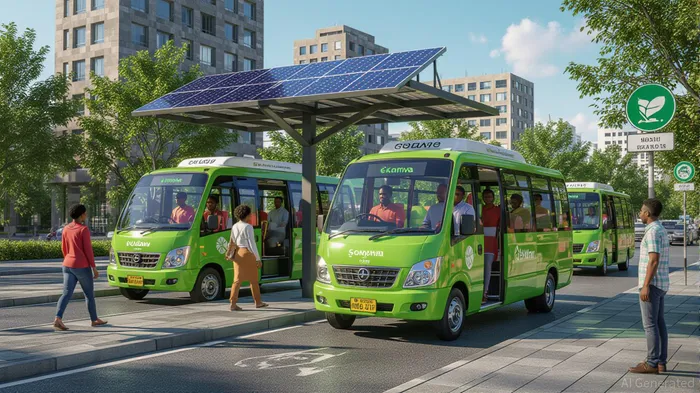
These initiatives are supported by global investment trends. According to investment trends, the World Bank Group and Asian Development Bank are directing significant funding toward EV infrastructure, recognizing its role in reducing carbon footprints and enhancing energy security. By 2034, the smart transportation market in emerging markets is projected to grow from USD 136.05 billion in 2024 to USD 456.92 billion, driven by demand for electrification and grid modernization.
Shared Mobility and Car-Sharing: Redefining Urban Travel
Shared mobility solutions, including car-sharing and micro-mobility, are gaining traction as cost-effective and sustainable alternatives to private vehicle ownership. In India, the government's policy framework has spurred EV adoption, with consumer satisfaction outpacing that of Indonesia and Nigeria. India's success is attributed to subsidies, tax incentives, and a robust charging infrastructure plan, including 30,000 public EV charging stations by 2030. Meanwhile, Indonesia's ambitious targets-2 million electric cars by 2030-face challenges due to low EV penetration (1.7% of total car sales) and inadequate infrastructure.
Car-sharing adoption is also being bolstered by mobility hubs, as seen in southern Germany, where increased visibility and accessibility of shared vehicles encouraged residents to forgo car ownership. In emerging markets, integrating car-sharing with EVs and public transit systems is key. For instance, Argentina's elimination of import tariffs on low-cost electric and hybrid taxis has made these vehicles cost-competitive, while partnerships with companies like BYD and Shenzhen DiDi are scaling fleets.
Policy Shifts and Systemic Innovation
Policy frameworks are critical in enabling sustainable mobility transitions. Emerging markets are leveraging public-private partnerships (PPPs) to accelerate infrastructure development. For example, India's battery-as-a-service model reduces upfront costs for informal workers, addressing range anxiety and affordability barriers. In sub-Saharan Africa, solar PV and stationary storage systems are being tested to buffer grid impacts, with a Johannesburg pilot reducing grid load by 66% per taxi.
Carbon pricing schemes and regulatory mandates are also reshaping energy use. As of 2024, 75 global carbon pricing schemes impact 24% of emissions, incentivizing industries to adopt low-carbon alternatives. Cities like London and Beijing have introduced clean-air zones phasing out internal combustion engine taxis, creating regulatory clarity for operators.
Investment Opportunities and Market Projections
The shared mobility market is projected to grow at a 12.5% CAGR, reaching USD 768.2 billion by 2033, driven by urbanization and digital integration. Investments in solar-powered minibus taxis and car-sharing projects are particularly promising. For instance, the eKamva project in South Africa and Solar Taxi in Ghana highlight the scalability of solar-charged transport, while Argentina's policy-driven EV adoption underscores the role of regulatory support in market growth.
Development Finance Institutions (DFIs) are pivotal in funding these transitions. According to investment trends, the World Bank's Climate Action Plan and the Asian Development Bank's focus on sustainable infrastructure are channeling capital toward projects that align with net-zero goals. Additionally, falling costs of solar PV and EVs are making low-carbon solutions competitive, even in regions with weak grid infrastructure.
Challenges and the Path Forward
Despite progress, challenges persist. Grid reliability remains a hurdle in countries like Ghana, where frequent outages (dubbed "Dumsor") hinder electrification efforts. Accurate energy demand modeling and decentralized solutions, such as solar mini-grids, are essential to address these gaps. Moreover, systemic regulation must evolve to support the dynamic nature of shared mobility, ensuring equitable access and operational efficiency.
Conclusion
Sustainable urban mobility in emerging markets represents a high-impact, low-carbon investment frontier. Innovations like solar-powered minibus taxis, policy-driven car-sharing, and data-driven traffic management are not only reducing emissions but also creating resilient infrastructure for future cities. As DFIs and private investors align with climate goals, the next decade will likely see a surge in projects that redefine mobility in the Global South-transforming challenges into opportunities for growth and sustainability.

Blending traditional trading wisdom with cutting-edge cryptocurrency insights.
Latest Articles
Stay ahead of the market.
Get curated U.S. market news, insights and key dates delivered to your inbox.


AInvest
PRO
AInvest
PRO



Comments
No comments yet